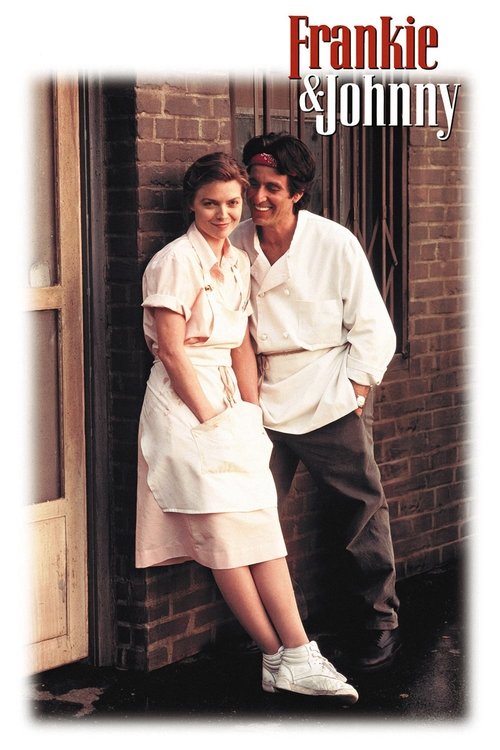
Frankie and Johnny
When Johnny is released from prison following a forgery charge, he quickly lands a job as a short-order cook at a New York diner. Following a brief fling with waitress Cora, he develops an attraction for Cora's friend and fellow waitress Frankie. While Frankie resists Johnny's charms initially, she eventually relents when her best friend, Tim, persuades her to give Johnny a chance.
The film struggled financially against its respectable budget of $29.0M, earning $22.8M globally (-21% loss).
1 BAFTA Award4 wins & 3 nominations


Plot Structure
Story beats plotted across runtime


Narrative Arc
Emotional journey through the story's key moments
Story Circle
Blueprint 15-beat structure
Arcplot Score Breakdown
Weighted: Precision (70%) + Arc (15%) + Theme (15%)
Frankie and Johnny (1991) reveals deliberately positioned narrative design, characteristic of Garry Marshall's storytelling approach. This structural analysis examines how the film's 15-point plot structure maps to proven narrative frameworks across 1 hour and 58 minutes. With an Arcplot score of 7.3, the film balances conventional beats with creative variation.
Characters
Cast & narrative archetypes

Frankie
Johnny
Cora
Tim
Nedda
Main Cast & Characters
Frankie
Played by Michelle Pfeiffer
A wary, emotionally guarded waitress scarred by past relationships who resists opening her heart to love again.
Johnny
Played by Al Pacino
An optimistic, recently paroled short-order cook who believes he's found his soulmate in Frankie and pursues her with relentless romantic conviction.
Cora
Played by Hector Elizondo
Frankie's neighbor and friend, a worldly-wise woman who offers advice and support through the romantic turmoil.
Tim
Played by Nathan Lane
A flamboyant, kind-hearted gay waiter at the diner who works alongside Frankie and Johnny.
Nedda
Played by Kate Nelligan
The diner's no-nonsense owner who manages the daily chaos of her working-class establishment.
Structural Analysis
The Status Quo at 1 minutes (1% through the runtime) establishes Frankie works as a waitress at a New York diner, emotionally isolated and guarded. Johnny is released from prison and arrives to start work as a short-order cook at the same establishment, hoping for a fresh start.. Of particular interest, this early placement immediately immerses viewers in the story world.
The inciting incident occurs at 15 minutes when Johnny becomes instantly infatuated with Frankie and boldly asks her out despite her clear disinterest. His persistence disrupts her carefully controlled emotional isolation.. At 12% through the film, this Disruption aligns precisely with traditional story structure. This beat shifts the emotional landscape, launching the protagonist into the central conflict.
The First Threshold at 30 minutes marks the transition into Act II, occurring at 25% of the runtime. This indicates the protagonist's commitment to Frankie reluctantly agrees to have dinner with Johnny, making the conscious choice to lower her defenses and risk emotional connection despite her fears., moving from reaction to action.
At 59 minutes, the Midpoint arrives at 50% of the runtime—precisely centered, creating perfect narrative symmetry. Notably, this crucial beat False victory: Frankie and Johnny share a genuine moment of intimacy and emotional honesty. Frankie seems to be opening up, but the raised stakes mean her fears are also intensifying. The easy courtship phase ends; now the real work of trust begins., fundamentally raising what's at risk. The emotional intensity shifts, dividing the narrative into clear before-and-after phases.
The Collapse moment at 89 minutes (75% through) represents the emotional nadir. Here, Frankie definitively rejects Johnny, telling him to leave her alone and that she cannot be what he needs. The death of hope: Johnny's dream of connection appears shattered, and Frankie retreats fully into her protective isolation., shows the protagonist at their lowest point. This beat's placement in the final quarter sets up the climactic reversal.
The Second Threshold at 95 minutes initiates the final act resolution at 80% of the runtime. Frankie has a moment of clarity—she realizes that being alone and safe is not the same as being whole. She understands that Johnny's love, while imperfect and intense, is genuine, and that her need for connection is stronger than her fear., demonstrating the transformation achieved throughout the journey.
Emotional Journey
Frankie and Johnny's emotional architecture traces a deliberate progression across 15 carefully calibrated beats.
Narrative Framework
This structural analysis employs structural analysis methodology used to understand storytelling architecture. By mapping Frankie and Johnny against these established plot points, we can identify how Garry Marshall utilizes or subverts traditional narrative conventions. The plot point approach reveals not only adherence to structural principles but also creative choices that distinguish Frankie and Johnny within the drama genre.
Garry Marshall's Structural Approach
Among the 14 Garry Marshall films analyzed on Arcplot, the average structural score is 6.9, demonstrating varied approaches to story architecture. Frankie and Johnny represents one of the director's most structurally precise works. For comparative analysis, explore the complete Garry Marshall filmography.
Comparative Analysis
Additional drama films include After Thomas, South Pacific and Dirty Dancing: Havana Nights. For more Garry Marshall analyses, see Raising Helen, New Year's Eve and The Princess Diaries.
Plot Points by Act
Act I
SetupStatus Quo
Frankie works as a waitress at a New York diner, emotionally isolated and guarded. Johnny is released from prison and arrives to start work as a short-order cook at the same establishment, hoping for a fresh start.
Theme
A coworker mentions that "everybody needs somebody" and discusses the risks and rewards of opening your heart, foreshadowing the central question of whether love is worth vulnerability.
Worldbuilding
Introduction to the diner community, Frankie's lonely apartment routine, and Johnny's optimistic but awkward attempts to connect with coworkers. Establishes Frankie's emotional walls and Johnny's determination to change his life.
Disruption
Johnny becomes instantly infatuated with Frankie and boldly asks her out despite her clear disinterest. His persistence disrupts her carefully controlled emotional isolation.
Resistance
Frankie resists Johnny's advances while he continues his earnest pursuit. She debates whether to give him a chance, haunted by past relationship failures. Johnny shares glimpses of his troubled past and genuine desire for connection.
Act II
ConfrontationFirst Threshold
Frankie reluctantly agrees to have dinner with Johnny, making the conscious choice to lower her defenses and risk emotional connection despite her fears.
Mirror World
Johnny and Frankie's first intimate conversation reveals their parallel wounds—both are damaged people afraid of being hurt again. Their relationship becomes the arena where the theme of risking vulnerability for love will be tested.
Premise
The promise of the premise: watching two damaged souls tentatively explore connection. Moments of tenderness alternate with Frankie's reflexive retreats. Johnny's unwavering optimism clashes with Frankie's deep-seated fear of abandonment.
Midpoint
False victory: Frankie and Johnny share a genuine moment of intimacy and emotional honesty. Frankie seems to be opening up, but the raised stakes mean her fears are also intensifying. The easy courtship phase ends; now the real work of trust begins.
Opposition
Frankie's defenses mount as intimacy deepens. Her past trauma and fear of abandonment cause her to push Johnny away repeatedly. Johnny's intensity begins to feel overwhelming to her, and she questions whether she can truly change or trust anyone.
Collapse
Frankie definitively rejects Johnny, telling him to leave her alone and that she cannot be what he needs. The death of hope: Johnny's dream of connection appears shattered, and Frankie retreats fully into her protective isolation.
Crisis
Both Frankie and Johnny process their loss separately. Johnny faces the reality that love may not conquer all. Frankie sits alone with her fear and loneliness, forced to confront whether her self-protection is actually self-destruction.
Act III
ResolutionSecond Threshold
Frankie has a moment of clarity—she realizes that being alone and safe is not the same as being whole. She understands that Johnny's love, while imperfect and intense, is genuine, and that her need for connection is stronger than her fear.
Synthesis
Frankie seeks out Johnny and takes the vulnerable step of expressing her feelings honestly. They confront the reality that love requires risk and that neither can guarantee they won't hurt each other, but they choose to try anyway.
Transformation
Frankie and Johnny together in her apartment, now emotionally open and committed to facing uncertainty as a couple. The final image mirrors the opening isolation but shows transformation: Frankie is no longer alone by default, but choosing connection despite the risk.