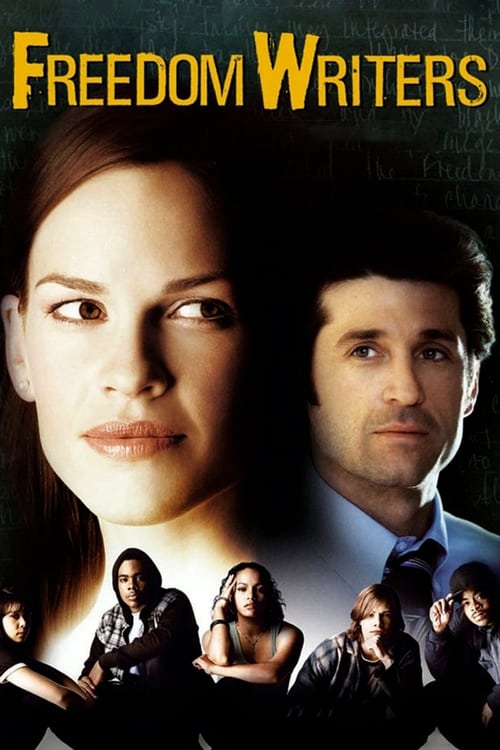
Freedom Writers
A young teacher inspires her class of at-risk students to learn tolerance, apply themselves, and pursue education beyond high school.
Despite a moderate budget of $21.0M, Freedom Writers became a financial success, earning $43.1M worldwide—a 105% return.
2 wins & 1 nomination


Plot Structure
Story beats plotted across runtime


Narrative Arc
Emotional journey through the story's key moments
Story Circle
Blueprint 15-beat structure
Arcplot Score Breakdown
Weighted: Precision (70%) + Arc (15%) + Theme (15%)
Freedom Writers (2007) exemplifies meticulously timed narrative design, characteristic of Richard LaGravenese's storytelling approach. This structural analysis examines how the film's 15-point plot structure maps to proven narrative frameworks across 2 hours and 3 minutes. With an Arcplot score of 7.6, the film showcases strong structural fundamentals.
Characters
Cast & narrative archetypes

Erin Gruwell
Marcus
Eva Benitez
Andre Bryant
Scott Casey
Margaret Campbell
Gloria Munez
Ben Samuels
Main Cast & Characters
Erin Gruwell
Played by Hilary Swank
An idealistic first-year English teacher who inspires her at-risk students through journaling and literature.
Marcus
Played by Jason Finn
A gang-affiliated student who initially resists Erin but gradually opens up through the writing program.
Eva Benitez
Played by April Lee Hernandez
A Latina student torn between gang loyalty and her desire for a better future.
Andre Bryant
Played by Mario
An African-American student dealing with violence in his community and finding hope through education.
Scott Casey
Played by Patrick Dempsey
Erin's husband who struggles with her commitment to teaching over their marriage.
Margaret Campbell
Played by Imelda Staunton
The department head who doubts Erin's methods and refuses to support her unconventional teaching.
Gloria Munez
Played by Deance Wyatt
A Latina student and Eva's best friend who navigates gang pressures while trying to succeed.
Ben Samuels
Played by Hunter Parrish
A student who initially appears disengaged but finds his voice through writing.
Structural Analysis
The Status Quo at 2 minutes (1% through the runtime) establishes Erin Gruwell prepares excitedly for her first day as a teacher at Wilson High, applying makeup and dressing professionally. She's optimistic, idealistic, and eager to make a difference, representing the naive "before" state.. Significantly, this early placement immediately immerses viewers in the story world.
The inciting incident occurs at 13 minutes when Erin intercepts a racist caricature drawing of Jamal being passed around class. The students laugh at her attempts to teach. She realizes her idealistic lesson plans are completely ineffective—these students see her as just another white teacher who doesn't understand their reality.. At 11% through the film, this Disruption aligns precisely with traditional story structure. This beat shifts the emotional landscape, launching the protagonist into the central conflict.
The First Threshold at 30 minutes marks the transition into Act II, occurring at 24% of the runtime. This illustrates the protagonist's commitment to Erin makes the active choice to abandon the standard curriculum. She takes a second job to buy new books herself and commits to teaching The Diary of Anne Frank and other books about young people facing violence and oppression. She crosses into a new world where she'll sacrifice everything for her students., moving from reaction to action.
At 62 minutes, the Midpoint arrives at 50% of the runtime—precisely centered, creating perfect narrative symmetry. Notably, this crucial beat False victory: The students raise money and successfully bring Miep Gies (Anne Frank's protector) to visit from Amsterdam. It's a triumphant moment where the students see themselves as capable and worthy. But the stakes raise—now Erin must maintain this momentum while her personal life crumbles., fundamentally raising what's at risk. The emotional intensity shifts, dividing the narrative into clear before-and-after phases.
The Collapse moment at 91 minutes (74% through) represents the emotional nadir. Here, Scott leaves Erin, telling her she's chosen her students over their marriage. Her marriage dies. Simultaneously, Eva must decide whether to tell the truth in court, risking her boyfriend's freedom. This is Erin's darkest moment—she's losing everything personally for a system that doesn't appreciate her sacrifice., indicates the protagonist at their lowest point. This beat's placement in the final quarter sets up the climactic reversal.
The Second Threshold at 97 minutes initiates the final act resolution at 79% of the runtime. Eva chooses to tell the truth in court, even though it means her boyfriend goes to prison. This breakthrough shows that Erin's teaching worked—the students have internalized the lessons about moral courage. Erin sees proof that her sacrifice mattered and gains renewed determination for the final battle with the school system., demonstrating the transformation achieved throughout the journey.
Emotional Journey
Freedom Writers's emotional architecture traces a deliberate progression across 15 carefully calibrated beats.
Narrative Framework
This structural analysis employs proven narrative structure principles that track dramatic progression. By mapping Freedom Writers against these established plot points, we can identify how Richard LaGravenese utilizes or subverts traditional narrative conventions. The plot point approach reveals not only adherence to structural principles but also creative choices that distinguish Freedom Writers within the crime genre.
Richard LaGravenese's Structural Approach
Among the 4 Richard LaGravenese films analyzed on Arcplot, the average structural score is 7.1, reflecting strong command of classical structure. Freedom Writers represents one of the director's most structurally precise works. For comparative analysis, explore the complete Richard LaGravenese filmography.
Comparative Analysis
Additional crime films include The Bad Guys, Rustom and The Whole Ten Yards. For more Richard LaGravenese analyses, see P.S. I Love You, Living Out Loud and Beautiful Creatures.
Plot Points by Act
Act I
SetupStatus Quo
Erin Gruwell prepares excitedly for her first day as a teacher at Wilson High, applying makeup and dressing professionally. She's optimistic, idealistic, and eager to make a difference, representing the naive "before" state.
Theme
Erin's father tells her, "You're going to show these kids that they're going to live beyond the age of eighteen." This statement encapsulates the film's theme: young people trapped by violence and low expectations can be saved through education and someone believing in them.
Worldbuilding
Setup of Wilson High School post-integration. Erin meets department head Margaret Campbell who is dismissive and cynical. We see the racial tensions, gang divisions, and low academic expectations. Erin's Room 203 is filled with at-risk students divided by race who refuse to engage.
Disruption
Erin intercepts a racist caricature drawing of Jamal being passed around class. The students laugh at her attempts to teach. She realizes her idealistic lesson plans are completely ineffective—these students see her as just another white teacher who doesn't understand their reality.
Resistance
Erin struggles to connect with students who won't participate. She faces resistance from Margaret Campbell who refuses to provide new books. Her husband Scott becomes frustrated with her obsession. Erin researches, visits a Holocaust museum, and begins formulating a new approach using literature about teenagers in crisis.
Act II
ConfrontationFirst Threshold
Erin makes the active choice to abandon the standard curriculum. She takes a second job to buy new books herself and commits to teaching The Diary of Anne Frank and other books about young people facing violence and oppression. She crosses into a new world where she'll sacrifice everything for her students.
Mirror World
Introduction of the "Freedom Writers" journal project. Erin gives each student a journal and asks them to write their stories. This subplot becomes the thematic heart—through writing, students discover their voices matter. The journals represent the transformative relationship between teacher and students.
Premise
The "fun and games" of unconventional teaching. Erin uses games like the "Line Game" to build empathy. Students begin reading and connecting to Anne Frank. Small breakthroughs happen: Eva starts to trust, Marcus participates, students cross racial lines. Erin's passion transforms the classroom into a safe space.
Midpoint
False victory: The students raise money and successfully bring Miep Gies (Anne Frank's protector) to visit from Amsterdam. It's a triumphant moment where the students see themselves as capable and worthy. But the stakes raise—now Erin must maintain this momentum while her personal life crumbles.
Opposition
Pressure intensifies from all sides. Margaret Campbell actively undermines Erin, refusing to let her teach the students junior year. Erin's marriage deteriorates as Scott feels abandoned. The system pushes back against her methods. Eva faces pressure to lie in court to protect her boyfriend, testing everything Erin taught her.
Collapse
Scott leaves Erin, telling her she's chosen her students over their marriage. Her marriage dies. Simultaneously, Eva must decide whether to tell the truth in court, risking her boyfriend's freedom. This is Erin's darkest moment—she's losing everything personally for a system that doesn't appreciate her sacrifice.
Crisis
Erin processes the collapse of her marriage. She questions whether the sacrifice is worth it. Her father provides perspective, reminding her of the impact she's having. Eva internally struggles with her testimony decision, representing the ultimate test of whether Erin's lessons about truth and courage took root.
Act III
ResolutionSecond Threshold
Eva chooses to tell the truth in court, even though it means her boyfriend goes to prison. This breakthrough shows that Erin's teaching worked—the students have internalized the lessons about moral courage. Erin sees proof that her sacrifice mattered and gains renewed determination for the final battle with the school system.
Synthesis
Erin confronts the superintendent to fight for her students. She presents the Freedom Writers' journals and successfully argues to teach them junior and senior year. The students' transformation is complete—they graduate, attend college, and break the cycle. Erin combines her idealism with hard-won wisdom to create lasting change.
Transformation
Closing image: Erin stands before her class, now a confident and seasoned educator. The students are engaged, transformed, and hopeful. Text reveals all 150 Freedom Writers graduated and attended college. The image mirrors the opening but shows complete transformation—from naive idealist to proven changemaker.