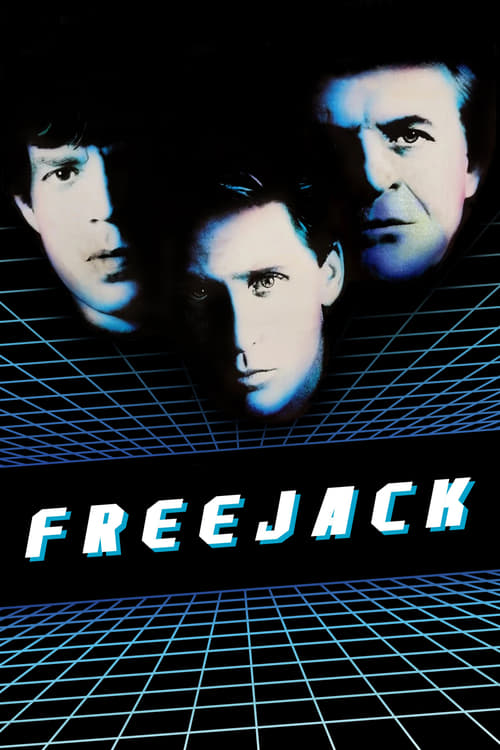
Freejack
Time-traveling bounty hunters find a doomed race-car driver in the past and bring him to 2009 New York, where his mind will be replaced with that of a terminally ill billionaire.
The film disappointed at the box office against its respectable budget of $30.0M, earning $17.1M globally (-43% loss). While initial box office returns were modest, the film has gained appreciation for its compelling narrative within the science fiction genre.


Plot Structure
Story beats plotted across runtime


Narrative Arc
Emotional journey through the story's key moments
Story Circle
Blueprint 15-beat structure
Arcplot Score Breakdown
Weighted: Precision (70%) + Arc (15%) + Theme (15%)
Freejack (1992) exemplifies strategically placed story structure, characteristic of Geoff Murphy's storytelling approach. This structural analysis examines how the film's 15-point plot structure maps to proven narrative frameworks across 1 hour and 50 minutes. With an Arcplot score of 7.4, the film balances conventional beats with creative variation.
Characters
Cast & narrative archetypes

Alex Furlong
Julie Redlund
Ian McCandless
Victor Vacendak
Brad Carter
Michelette
Main Cast & Characters
Alex Furlong
Played by Emilio Estevez
A race car driver snatched from 1991 moments before death and brought to 2009, fighting to survive and reclaim his identity.
Julie Redlund
Played by Rene Russo
Alex's former fiancée, now a high-powered executive who never stopped loving him despite 18 years passing.
Ian McCandless
Played by Anthony Hopkins
Ruthless corporate titan who orchestrated Alex's abduction to steal his body for his dying consciousness.
Victor Vacendak
Played by Mick Jagger
A mercenary "bonejacker" hired to capture Alex, who develops a conscience and helps him escape.
Brad Carter
Played by David Johansen
Julie's current lover and McCandless's protégé, ambitious corporate player caught between loyalty and survival.
Michelette
Played by Amanda Plummer
Vacendak's partner and fellow bonejacker, loyal and ruthless in pursuit of their targets.
Structural Analysis
The Status Quo at 2 minutes (2% through the runtime) establishes Alex Furlong races his Formula One car at peak performance, living his dream as a successful driver with his girlfriend Julie waiting for him. He embodies freedom, speed, and life in the present moment.. Structural examination shows that this early placement immediately immerses viewers in the story world.
The inciting incident occurs at 13 minutes when Alex's car crashes at 300 mph. In the moment before death, he is "freejacked" - snatched from 1991 and transported to 2009. He awakens in a dystopian future, targeted for "spiritual switchboard" body theft.. At 12% through the film, this Disruption aligns precisely with traditional story structure. This beat shifts the emotional landscape, launching the protagonist into the central conflict.
The First Threshold at 27 minutes marks the transition into Act II, occurring at 24% of the runtime. This indicates the protagonist's commitment to Alex actively chooses to find Julie rather than simply flee. He decides to confront his fate and reclaim his identity instead of remaining a fugitive victim. This choice commits him to navigating the dangerous future world., moving from reaction to action.
At 56 minutes, the Midpoint arrives at 50% of the runtime—precisely centered, creating perfect narrative symmetry. Notably, this crucial beat Alex discovers Julie works for McCandless Corporation and is complicit in the system that wants to steal his body. False defeat: the one person he trusted in this nightmare future is part of the conspiracy. Stakes escalate as the dying McCandless accelerates his plan., fundamentally raising what's at risk. The emotional intensity shifts, dividing the narrative into clear before-and-after phases.
The Collapse moment at 82 minutes (75% through) represents the emotional nadir. Here, Alex is captured and brought to McCandless for the "spiritual switchboard" procedure. All seems lost - he's strapped down, helpless, about to have his consciousness erased and replaced. Literal death of self imminent., indicates the protagonist at their lowest point. This beat's placement in the final quarter sets up the climactic reversal.
The Second Threshold at 88 minutes initiates the final act resolution at 80% of the runtime. Major revelation: McCandless is already dead, operating as a computer construct. Julie chooses love and identity over corporate survival, actively helping Alex escape. Together they understand that consciousness and soul cannot be truly stolen - humanity resides in choice., demonstrating the transformation achieved throughout the journey.
Emotional Journey
Freejack's emotional architecture traces a deliberate progression across 15 carefully calibrated beats.
Narrative Framework
This structural analysis employs systematic plot point analysis that identifies crucial turning points. By mapping Freejack against these established plot points, we can identify how Geoff Murphy utilizes or subverts traditional narrative conventions. The plot point approach reveals not only adherence to structural principles but also creative choices that distinguish Freejack within the science fiction genre.
Geoff Murphy's Structural Approach
Among the 3 Geoff Murphy films analyzed on Arcplot, the average structural score is 7.1, reflecting strong command of classical structure. Freejack represents one of the director's most structurally precise works. For comparative analysis, explore the complete Geoff Murphy filmography.
Comparative Analysis
Additional science fiction films include The Postman, Mad Max 2 and AVP: Alien vs. Predator. For more Geoff Murphy analyses, see Under Siege 2: Dark Territory, Young Guns II.
Plot Points by Act
Act I
SetupStatus Quo
Alex Furlong races his Formula One car at peak performance, living his dream as a successful driver with his girlfriend Julie waiting for him. He embodies freedom, speed, and life in the present moment.
Theme
Discussion about identity and the soul: "What makes you you?" The film questions whether consciousness can be separated from the body, and what defines human identity beyond physical form.
Worldbuilding
Establish 1991 world: Alex's racing career, relationship with Julie, and the high-stakes race. Cut to 2009: dystopian future where bodies are commodities, "bonejackers" hunt humans, and corporate power rules through McCandless Corporation.
Disruption
Alex's car crashes at 300 mph. In the moment before death, he is "freejacked" - snatched from 1991 and transported to 2009. He awakens in a dystopian future, targeted for "spiritual switchboard" body theft.
Resistance
Alex escapes his captors and struggles to understand the nightmarish 2009 world. He learns he's a "freejack" - property intended as a host body. Debates whether to run or fight, seeks to understand what happened to Julie in the intervening 18 years.
Act II
ConfrontationFirst Threshold
Alex actively chooses to find Julie rather than simply flee. He decides to confront his fate and reclaim his identity instead of remaining a fugitive victim. This choice commits him to navigating the dangerous future world.
Mirror World
Alex finds Julie, now a powerful executive at McCandless Corporation. She represents what happens when you surrender your soul for survival - she's alive but has lost herself to the corporate dystopia. She's become what the system demanded.
Premise
Alex navigates the dystopian future while pursued by Vacendak and bonejackers. The "fun and games" of future-shock: discovering how the world has degraded, corporate control, and the body-snatching industry. Julie helps him while hiding her true role.
Midpoint
Alex discovers Julie works for McCandless Corporation and is complicit in the system that wants to steal his body. False defeat: the one person he trusted in this nightmare future is part of the conspiracy. Stakes escalate as the dying McCandless accelerates his plan.
Opposition
Vacendak closes in while McCandless's condition worsens, increasing urgency. Alex's options narrow as corporate forces tighten the net. Julie faces her own crisis of conscience. The lovers are pushed toward McCandless's trap.
Collapse
Alex is captured and brought to McCandless for the "spiritual switchboard" procedure. All seems lost - he's strapped down, helpless, about to have his consciousness erased and replaced. Literal death of self imminent.
Crisis
Dark night as the transfer procedure begins. Alex faces existential terror of losing his identity. Julie confronts what she's become and the cost of her survival. Both face the question: is it better to die free or live as someone else?
Act III
ResolutionSecond Threshold
Major revelation: McCandless is already dead, operating as a computer construct. Julie chooses love and identity over corporate survival, actively helping Alex escape. Together they understand that consciousness and soul cannot be truly stolen - humanity resides in choice.
Synthesis
Alex and Julie fight their way out, destroying the spiritual switchboard technology. Final confrontation with Vacendak and McCandless's forces. They prove that human identity and free will cannot be commodified or transferred - you are more than your body.
Transformation
Alex and Julie together in the future, free. Unlike the opening where Alex raced alone and Julie waited, they now face the uncertain future as partners who have reclaimed their identities. Freedom is no longer about speed and escape, but about choosing who you are.