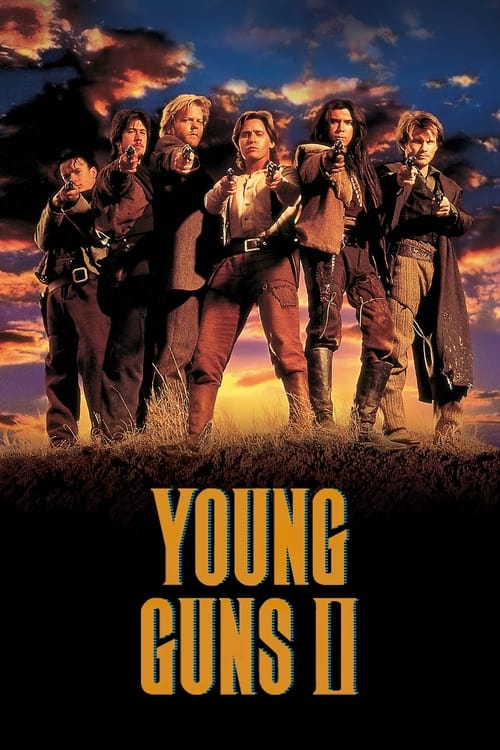
Young Guns II
Three of the original five "young guns" — Billy the Kid, Jose Chavez y Chavez, and Doc Scurlock — return in Young Guns, Part 2, which is the story of Billy the Kid and his race to safety in Old Mexico while being trailed by a group of government agents led by Pat Garrett.
Despite a moderate budget of $20.0M, Young Guns II became a box office success, earning $59.0M worldwide—a 195% return.
Nominated for 1 Oscar. 3 wins & 4 nominations


Plot Structure
Story beats plotted across runtime


Narrative Arc
Emotional journey through the story's key moments
Story Circle
Blueprint 15-beat structure
Arcplot Score Breakdown
Weighted: Precision (70%) + Arc (15%) + Theme (15%)
Young Guns II (1990) exemplifies meticulously timed narrative design, characteristic of Geoff Murphy's storytelling approach. This structural analysis examines how the film's 15-point plot structure maps to proven narrative frameworks across 1 hour and 44 minutes. With an Arcplot score of 7.1, the film balances conventional beats with creative variation.
Structural Analysis
The Status Quo at 1 minutes (1% through the runtime) establishes An elderly man named Brushy Bill Roberts approaches a lawyer in 1950, claiming to be Billy the Kid seeking a pardon. The framing device establishes a survivor telling his tale, immediately suggesting that the legendary outlaw's death may not have been what history recorded.. Significantly, this early placement immediately immerses viewers in the story world.
The inciting incident occurs at 13 minutes when Pat Garrett, Billy's former friend and fellow Regulator, arrives with news that the governor has reneged on promises of amnesty. Garrett has been hired to bring in or kill Billy and his gang, forcing them to flee or face execution. Their peaceful existence is shattered.. At 12% through the film, this Disruption aligns precisely with traditional story structure. This beat shifts the emotional landscape, launching the protagonist into the central conflict.
The First Threshold at 26 minutes marks the transition into Act II, occurring at 25% of the runtime. This illustrates the protagonist's commitment to Billy makes the irreversible choice to run for Mexico rather than surrender or stand and fight. The gang commits to the dangerous journey across hostile territory, knowing Garrett and his posse will pursue them relentlessly. There's no going back to their old lives., moving from reaction to action.
At 53 minutes, the Midpoint arrives at 51% of the runtime—precisely centered, creating perfect narrative symmetry. The analysis reveals that this crucial beat The gang is ambushed at Stinking Springs. Trapped in a small building, they suffer their first major casualties as Tom O'Folliard is killed by Garrett's men. The false security of their escape crumbles - Garrett is closer than they thought and willing to kill former friends., fundamentally raising what's at risk. The emotional intensity shifts, dividing the narrative into clear before-and-after phases.
The Collapse moment at 79 minutes (76% through) represents the emotional nadir. Here, Billy is captured and jailed in Lincoln, sentenced to hang. His gang is dead or scattered - Doc has fled, Chavez is presumed dead, Dave is killed. Billy faces the gallows alone, his legend seemingly at an end. The outlaw who thought he could never be caught awaits execution., indicates the protagonist at their lowest point. This beat's placement in the final quarter sets up the climactic reversal.
The Second Threshold at 84 minutes initiates the final act resolution at 81% of the runtime. Billy makes his daring escape from the Lincoln County courthouse, killing his two guards in a legendary shootout. He refuses to accept his fate, choosing to live or die on his own terms rather than submit to the hangman's noose. The Kid rides again., demonstrating the transformation achieved throughout the journey.
Emotional Journey
Young Guns II's emotional architecture traces a deliberate progression across 15 carefully calibrated beats.
Narrative Framework
This structural analysis employs systematic plot point analysis that identifies crucial turning points. By mapping Young Guns II against these established plot points, we can identify how Geoff Murphy utilizes or subverts traditional narrative conventions. The plot point approach reveals not only adherence to structural principles but also creative choices that distinguish Young Guns II within the western genre.
Geoff Murphy's Structural Approach
Among the 3 Geoff Murphy films analyzed on Arcplot, the average structural score is 7.1, reflecting strong command of classical structure. Young Guns II represents one of the director's most structurally precise works. For comparative analysis, explore the complete Geoff Murphy filmography.
Comparative Analysis
Additional western films include All the Pretty Horses, Shenandoah and Lone Star. For more Geoff Murphy analyses, see Freejack, Under Siege 2: Dark Territory.
Plot Points by Act
Act I
SetupStatus Quo
An elderly man named Brushy Bill Roberts approaches a lawyer in 1950, claiming to be Billy the Kid seeking a pardon. The framing device establishes a survivor telling his tale, immediately suggesting that the legendary outlaw's death may not have been what history recorded.
Theme
Brushy Bill states that legends never die, they just fade away - establishing the film's meditation on the nature of fame, mortality, and whether outlaws can ever truly escape their past or if they're doomed to be consumed by the myths built around them.
Worldbuilding
The flashback begins showing Billy and his remaining Regulators - Doc Scurlock living peacefully with his wife, Chavez working as a farmhand - in the aftermath of the Lincoln County War. The territory is supposedly at peace, but the gang members are still wanted men living under assumed identities.
Disruption
Pat Garrett, Billy's former friend and fellow Regulator, arrives with news that the governor has reneged on promises of amnesty. Garrett has been hired to bring in or kill Billy and his gang, forcing them to flee or face execution. Their peaceful existence is shattered.
Resistance
Billy reunites his gang - reluctantly pulling Doc away from his wife and gathering Chavez. They debate whether to fight, surrender, or run. Arkansas Dave Rudabaugh joins them. The group decides their only hope is to reach the Mexican border, beginning their desperate flight south.
Act II
ConfrontationFirst Threshold
Billy makes the irreversible choice to run for Mexico rather than surrender or stand and fight. The gang commits to the dangerous journey across hostile territory, knowing Garrett and his posse will pursue them relentlessly. There's no going back to their old lives.
Mirror World
The gang encounters Jane Greathouse, a strong-willed woman running a way station, who provides shelter despite the danger. Her presence introduces a potential future for Billy beyond the outlaw life - representing the possibility of settling down that Billy seems incapable of accepting.
Premise
The gang rides through spectacular desert landscapes, engaging in shootouts, narrow escapes, and displays of Billy's legendary gunfighting skills. They rob, evade posses, and build their legend even as they flee. Billy revels in his notoriety while his companions grow weary of the life.
Midpoint
The gang is ambushed at Stinking Springs. Trapped in a small building, they suffer their first major casualties as Tom O'Folliard is killed by Garrett's men. The false security of their escape crumbles - Garrett is closer than they thought and willing to kill former friends.
Opposition
Garrett intensifies his pursuit with ruthless efficiency. The gang fractures under pressure - Doc wants to quit, Chavez grows fatalistic, and Dave becomes increasingly unstable. Billy's unwillingness to give up his outlaw identity alienates his friends even as the noose tightens around them all.
Collapse
Billy is captured and jailed in Lincoln, sentenced to hang. His gang is dead or scattered - Doc has fled, Chavez is presumed dead, Dave is killed. Billy faces the gallows alone, his legend seemingly at an end. The outlaw who thought he could never be caught awaits execution.
Crisis
Billy sits in jail contemplating his fate, visited by Garrett who offers a twisted form of friendship even as he prepares to see Billy hang. Billy reflects on his choices, the friends he's lost, and the legend that has consumed his humanity. Death seems inevitable.
Act III
ResolutionSecond Threshold
Billy makes his daring escape from the Lincoln County courthouse, killing his two guards in a legendary shootout. He refuses to accept his fate, choosing to live or die on his own terms rather than submit to the hangman's noose. The Kid rides again.
Synthesis
Billy flees to Fort Sumner where he reunites with Jane. Garrett tracks him there for a final confrontation. The two former friends face each other one last time. Garrett shoots Billy in the dark - but the framing story suggests Billy may have survived, his "death" arranged to let him finally escape his legend.
Transformation
Old Brushy Bill rides off into the desert, his petition for pardon denied but his secret intact. Whether he is truly Billy or not, the legend has outlived the man. Billy the Kid died so that William Roberts could live - the outlaw finally found freedom by becoming nobody, fading away rather than dying.