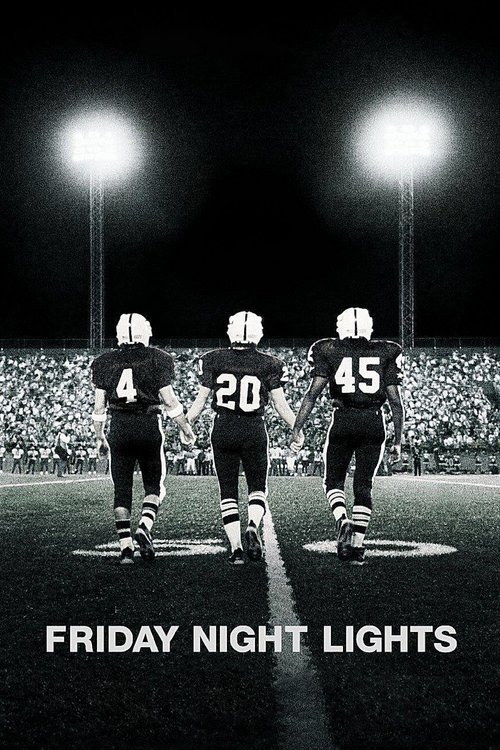
Friday Night Lights
A small, turbulent town in Texas obsesses over their high school football team to an unhealthy degree. When the star tailback, Boobie Miles, is seriously injured during the first game of the season, all hope is lost, and the town's dormant social problems begin to flare up. It is left to the inspiring abilities of new coach Gary Gaines to instill in the other team members -- and, by proxy, the town itself -- a sense of self-respect and honor.
Despite a respectable budget of $30.0M, Friday Night Lights became a solid performer, earning $61.3M worldwide—a 104% return.
2 wins & 5 nominations


Plot Structure
Story beats plotted across runtime


Narrative Arc
Emotional journey through the story's key moments
Story Circle
Blueprint 15-beat structure
Arcplot Score Breakdown
Weighted: Precision (70%) + Arc (15%) + Theme (15%)
Friday Night Lights (2004) reveals strategically placed dramatic framework, characteristic of Peter Berg's storytelling approach. This structural analysis examines how the film's 15-point plot structure maps to proven narrative frameworks across 1 hour and 58 minutes. With an Arcplot score of 7.3, the film balances conventional beats with creative variation.
Characters
Cast & narrative archetypes

Coach Gary Gaines
Mike Winchell
Boobie Miles
Don Billingsley
Brian Chavez
Ivory Christian
Uncle L.V.
Charles Billingsley
Main Cast & Characters
Coach Gary Gaines
Played by Billy Bob Thornton
Head coach of the Permian Panthers who carries the weight of a town's expectations while trying to balance winning with developing young men.
Mike Winchell
Played by Lucas Black
The quarterback struggling with pressure, self-doubt, and an alcoholic mother while trying to lead his team to state.
Boobie Miles
Played by Derek Luke
Star running back whose college dreams are shattered by a devastating knee injury, forcing him to confront his identity beyond football.
Don Billingsley
Played by Garrett Hedlund
Talented but troubled running back living under the shadow of his abusive, alcoholic father and former star player.
Brian Chavez
Played by Jay Hernandez
The team's free safety and honor student who sees beyond football, planning for his future while staying loyal to his teammates.
Ivory Christian
Played by Lee Jackson
Strong safety and devout Christian who brings spiritual leadership to the team while facing the pressures of Permian football.
Uncle L.V.
Played by Grover Coulson
Boobie's guardian and father figure who has dedicated his life to supporting Boobie's football dreams, struggling when injury threatens everything.
Charles Billingsley
Played by Tim McGraw
Don's abusive father and former Permian star who relives his glory days through his son and represents toxic football culture.
Structural Analysis
The Status Quo at 1 minutes (1% through the runtime) establishes The town of Odessa, Texas lives and breathes high school football. Archival footage and town scenes establish a community where football is everything, showing the immense pressure and expectations placed on the Permian Panthers.. Notably, this early placement immediately immerses viewers in the story world.
The inciting incident occurs at 15 minutes when In the first game of the season, star player Boobie Miles suffers a catastrophic knee injury that ends his season and his dreams of college recruitment. The team's championship hopes appear crushed.. At 12% through the film, this Disruption aligns precisely with traditional story structure. This beat shifts the emotional landscape, launching the protagonist into the central conflict.
The First Threshold at 29 minutes marks the transition into Act II, occurring at 25% of the runtime. This indicates the protagonist's commitment to Coach Gaines and the team commit to moving forward without Boobie. They choose to fight for the championship despite the odds. The players step up to fill the void, particularly Mike Winchell taking more leadership., moving from reaction to action.
At 59 minutes, the Midpoint arrives at 50% of the runtime—precisely centered, creating perfect narrative symmetry. Structural examination shows that this crucial beat The Panthers clinch a playoff berth with a crucial victory. The team celebrates - they've proven they can win without Boobie. But the pressure intensifies: now they're expected to win State, and the stakes have never been higher., fundamentally raising what's at risk. The emotional intensity shifts, dividing the narrative into clear before-and-after phases.
The Collapse moment at 88 minutes (74% through) represents the emotional nadir. Here, Before the State Championship game, the weight of expectations crushes down. Coach Gaines finds "For Sale" signs on his lawn - the town will run him out if he loses. Boobie watches from the sidelines, his dreams dead. The players are terrified of failing their town., reveals the protagonist at their lowest point. This beat's placement in the final quarter sets up the climactic reversal.
The Second Threshold at 94 minutes initiates the final act resolution at 80% of the runtime. Coach Gaines delivers his "Being perfect" speech, redefining success: "I want you to live yours. Be perfect in every aspect of your life. Your life is yours." The team realizes they're playing for themselves and each other, not the town's expectations., demonstrating the transformation achieved throughout the journey.
Emotional Journey
Friday Night Lights's emotional architecture traces a deliberate progression across 15 carefully calibrated beats.
Narrative Framework
This structural analysis employs proven narrative structure principles that track dramatic progression. By mapping Friday Night Lights against these established plot points, we can identify how Peter Berg utilizes or subverts traditional narrative conventions. The plot point approach reveals not only adherence to structural principles but also creative choices that distinguish Friday Night Lights within the drama genre.
Peter Berg's Structural Approach
Among the 10 Peter Berg films analyzed on Arcplot, the average structural score is 7.1, reflecting strong command of classical structure. Friday Night Lights represents one of the director's most structurally precise works. For comparative analysis, explore the complete Peter Berg filmography.
Comparative Analysis
Additional drama films include After Thomas, South Pacific and Dirty Dancing: Havana Nights. For more Peter Berg analyses, see The Rundown, Hancock and Battleship.
Plot Points by Act
Act I
SetupStatus Quo
The town of Odessa, Texas lives and breathes high school football. Archival footage and town scenes establish a community where football is everything, showing the immense pressure and expectations placed on the Permian Panthers.
Theme
A community member states that football is what holds this town together, foreshadowing the film's exploration of identity, pressure, and what happens when a town's dreams rest on teenagers' shoulders.
Worldbuilding
Introduction to the key players: Coach Gary Gaines dealing with town pressure, star running back Boobie Miles and his uncle, quarterback Mike Winchell, fullback Don Billingsley and his abusive father, and safety Brian Chavez. The town's obsession with winning State is established.
Disruption
In the first game of the season, star player Boobie Miles suffers a catastrophic knee injury that ends his season and his dreams of college recruitment. The team's championship hopes appear crushed.
Resistance
The team and town struggle with Boobie's loss. Coach Gaines must rebuild the team's confidence and strategy. Players debate whether they can win without their star. Boobie desperately tries to return but faces the reality of his injury. The community's support wavers.
Act II
ConfrontationFirst Threshold
Coach Gaines and the team commit to moving forward without Boobie. They choose to fight for the championship despite the odds. The players step up to fill the void, particularly Mike Winchell taking more leadership.
Mirror World
Coach Gaines shares vulnerable moments with his wife and daughter, revealing the human cost of the job. This relationship grounds the theme: finding identity and worth beyond wins and losses.
Premise
The team fights through the regular season, winning games and building chemistry. Game sequences deliver on the promise of intense high school football. Players grow into their roles. Don confronts his father, Brian pursues academics, Mike carries the weight of leadership.
Midpoint
The Panthers clinch a playoff berth with a crucial victory. The team celebrates - they've proven they can win without Boobie. But the pressure intensifies: now they're expected to win State, and the stakes have never been higher.
Opposition
The playoff games become increasingly brutal and close. The pressure from the town mounts. Coach Gaines faces calls for his job. Players deal with injuries, fear, and self-doubt. Each game could be their last. The opposition gets stronger, and the Panthers' flaws are exposed.
Collapse
Before the State Championship game, the weight of expectations crushes down. Coach Gaines finds "For Sale" signs on his lawn - the town will run him out if he loses. Boobie watches from the sidelines, his dreams dead. The players are terrified of failing their town.
Crisis
In the locker room before the championship, the team sits in heavy silence, burdened by fear and pressure. This is their dark night - they must confront what football really means to them beyond the town's demands.
Act III
ResolutionSecond Threshold
Coach Gaines delivers his "Being perfect" speech, redefining success: "I want you to live yours. Be perfect in every aspect of your life. Your life is yours." The team realizes they're playing for themselves and each other, not the town's expectations.
Synthesis
The State Championship game is a brutal, back-and-forth battle. The Panthers play with heart and unity, leaving everything on the field. Despite their best effort, they lose by a single point. But in the loss, they find something more valuable than a trophy.
Transformation
Coach Gaines and the players walk off the field with dignity. They lost the game but found themselves. Mike Winchell, who carried so much fear, smiles with peace. They gave their best and that was perfect. The scoreboard doesn't define them.