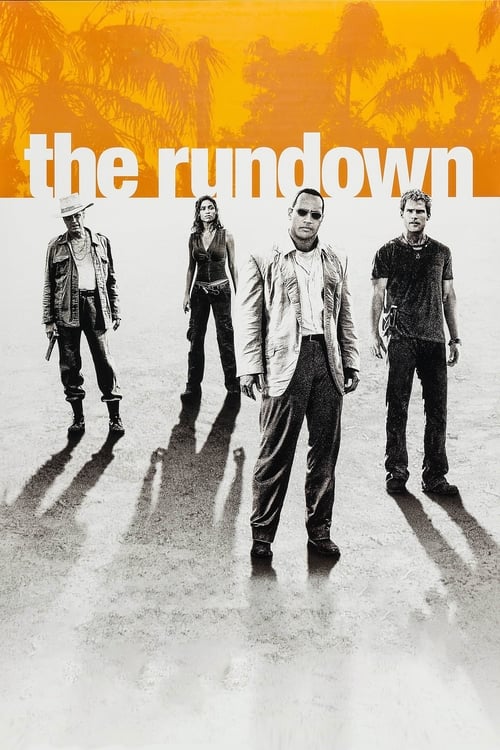
The Rundown
When Travis, the mouthy son of a criminal, disappears in the Amazon in search of a treasured artifact, his father sends in Beck, who becomes Travis's rival for the affections of Mariana, a mysterious Brazilian woman. With his steely disposition, Beck is a man of few words -- but it takes him all the discipline he can muster to work with Travis to nab a tyrant who's after the same treasure.
The film struggled financially against its considerable budget of $85.0M, earning $80.9M globally (-5% loss).
2 wins & 3 nominations


Plot Structure
Story beats plotted across runtime


Narrative Arc
Emotional journey through the story's key moments
Story Circle
Blueprint 15-beat structure
Arcplot Score Breakdown
Weighted: Precision (70%) + Arc (15%) + Theme (15%)
The Rundown (2003) showcases deliberately positioned narrative architecture, characteristic of Peter Berg's storytelling approach. This structural analysis examines how the film's 15-point plot structure maps to proven narrative frameworks across 1 hour and 44 minutes. With an Arcplot score of 7.9, the film showcases strong structural fundamentals.
Structural Analysis
The Status Quo at 2 minutes (2% through the runtime) establishes Beck works as a "retrieval expert" for a loan shark, efficiently collecting debts and people. He dreams of opening his own restaurant but is trapped in this violent world. The opening nightclub sequence establishes his competence, non-lethal approach (refuses to use guns), and desire to get out.. Significantly, this early placement immediately immerses viewers in the story world.
The inciting incident occurs at 12 minutes when Beck arrives in El Dorado and immediately encounters the oppressive presence of Hatcher, a tyrant who controls the mining town through violence and fear. Beck realizes this "simple retrieval" is far more dangerous than expected when Hatcher's men surround him.. At 12% through the film, this Disruption aligns precisely with traditional story structure. This beat shifts the emotional landscape, launching the protagonist into the central conflict.
The First Threshold at 26 minutes marks the transition into Act II, occurring at 25% of the runtime. This indicates the protagonist's commitment to Beck makes a deal with Hatcher: if Beck retrieves El Gato for Hatcher, he can take Travis home. Beck actively chooses to enter Hatcher's world and collaborate with the tyrant, despite seeing the suffering he causes. This compromises Beck's principles., moving from reaction to action.
At 51 minutes, the Midpoint arrives at 50% of the runtime—precisely centered, creating perfect narrative symmetry. Significantly, this crucial beat Beck and Travis find El Gato (false victory). For a moment, it seems Beck can complete the deal with Hatcher and go home. However, this victory raises the stakes as Hatcher reveals his true brutality and Beck sees the artifact means freedom for the enslaved townspeople., fundamentally raising what's at risk. The emotional intensity shifts, dividing the narrative into clear before-and-after phases.
The Collapse moment at 77 minutes (74% through) represents the emotional nadir. Here, Beck hands over El Gato to Hatcher and prepares to leave with Travis. He has failed morally—choosing his personal freedom over doing what's right. The townspeople face continued slavery, and Beck must confront that he's become complicit in their oppression. His dream feels hollow., illustrates the protagonist at their lowest point. This beat's placement in the final quarter sets up the climactic reversal.
The Second Threshold at 82 minutes initiates the final act resolution at 79% of the runtime. Beck makes his choice: he picks up guns (breaking his signature rule) and decides to fight Hatcher, sacrificing his deal and his dream of freedom. He accepts Travis as a partner and commits to the rebels' cause. The synthesis of his strength with Travis' idealism and the rebels' cause., demonstrating the transformation achieved throughout the journey.
Emotional Journey
The Rundown's emotional architecture traces a deliberate progression across 15 carefully calibrated beats.
Narrative Framework
This structural analysis employs structural analysis methodology used to understand storytelling architecture. By mapping The Rundown against these established plot points, we can identify how Peter Berg utilizes or subverts traditional narrative conventions. The plot point approach reveals not only adherence to structural principles but also creative choices that distinguish The Rundown within the adventure genre.
Peter Berg's Structural Approach
Among the 10 Peter Berg films analyzed on Arcplot, the average structural score is 7.1, reflecting strong command of classical structure. The Rundown represents one of the director's most structurally precise works. For comparative analysis, explore the complete Peter Berg filmography.
Comparative Analysis
Additional adventure films include The Black Stallion, The Bad Guys and Puss in Boots. For more Peter Berg analyses, see Friday Night Lights, Hancock and Battleship.
Plot Points by Act
Act I
SetupStatus Quo
Beck works as a "retrieval expert" for a loan shark, efficiently collecting debts and people. He dreams of opening his own restaurant but is trapped in this violent world. The opening nightclub sequence establishes his competence, non-lethal approach (refuses to use guns), and desire to get out.
Theme
Beck's boss Billy Walker tells him: "You want your dream? Go to Brazil, bring back my son, and you're done. Free and clear." The theme emerges: to achieve freedom, Beck must complete one last job, but he'll learn he can't do it alone and must choose what he stands for.
Worldbuilding
Setup of Beck's world: his skills as a retrieval expert, his strict no-guns policy, his relationship with his controlling boss Billy, and his dream of freedom. We learn Travis (Billy's son) is in the Amazon town of El Dorado searching for a valuable artifact called "El Gato."
Disruption
Beck arrives in El Dorado and immediately encounters the oppressive presence of Hatcher, a tyrant who controls the mining town through violence and fear. Beck realizes this "simple retrieval" is far more dangerous than expected when Hatcher's men surround him.
Resistance
Beck navigates the dangerous town, meets Mariana (the rebel leader) and her cause, finds Travis in the jungle, and faces resistance from both Travis and Hatcher's forces. Beck debates whether to get involved in the town's conflicts or just complete his job and leave.
Act II
ConfrontationFirst Threshold
Beck makes a deal with Hatcher: if Beck retrieves El Gato for Hatcher, he can take Travis home. Beck actively chooses to enter Hatcher's world and collaborate with the tyrant, despite seeing the suffering he causes. This compromises Beck's principles.
Mirror World
Beck is forced to team up with Travis despite their mutual antagonism. Travis represents everything Beck isn't: reckless, talkative, idealistic. Their partnership becomes the vehicle for exploring the theme of trust and choosing sides. Travis challenges Beck's neutrality.
Premise
The fun and games: Beck and Travis' mismatched partnership as they search for El Gato. Jungle action sequences, the hallucinogenic fruit scene, conflict with rebels, narrow escapes. Beck tries to maintain his "just doing my job" stance while Travis keeps pulling him into the larger conflict.
Midpoint
Beck and Travis find El Gato (false victory). For a moment, it seems Beck can complete the deal with Hatcher and go home. However, this victory raises the stakes as Hatcher reveals his true brutality and Beck sees the artifact means freedom for the enslaved townspeople.
Opposition
Hatcher intensifies his oppression and pursuit. Beck struggles with his conscience as he sees the consequences of giving Hatcher the artifact. The rebels are captured. Travis escapes and challenges Beck to take a stand. Beck's attempt to stay neutral becomes impossible.
Collapse
Beck hands over El Gato to Hatcher and prepares to leave with Travis. He has failed morally—choosing his personal freedom over doing what's right. The townspeople face continued slavery, and Beck must confront that he's become complicit in their oppression. His dream feels hollow.
Crisis
Beck wrestles with his choice as Travis confronts him about abandoning the rebels. Beck faces his dark night realizing his neutrality is cowardice. He must decide who he wants to be: someone who serves tyrants for personal gain, or someone who stands for something.
Act III
ResolutionSecond Threshold
Beck makes his choice: he picks up guns (breaking his signature rule) and decides to fight Hatcher, sacrificing his deal and his dream of freedom. He accepts Travis as a partner and commits to the rebels' cause. The synthesis of his strength with Travis' idealism and the rebels' cause.
Synthesis
The finale battle in El Dorado. Beck and Travis lead the rebels against Hatcher's forces. Beck embraces teamwork, uses guns for the first time to protect others, and confronts Hatcher directly. The town is liberated. Beck proves he's become someone who fights for others, not just himself.
Transformation
Beck returns to his boss Billy, having lost his "payment" (the deal is void since he didn't deliver for Hatcher). But he's transformed: he's freed Travis and an entire town, found friendship, and discovered his principles matter more than his personal dream. The closing image shows Beck at peace, no longer trapped.