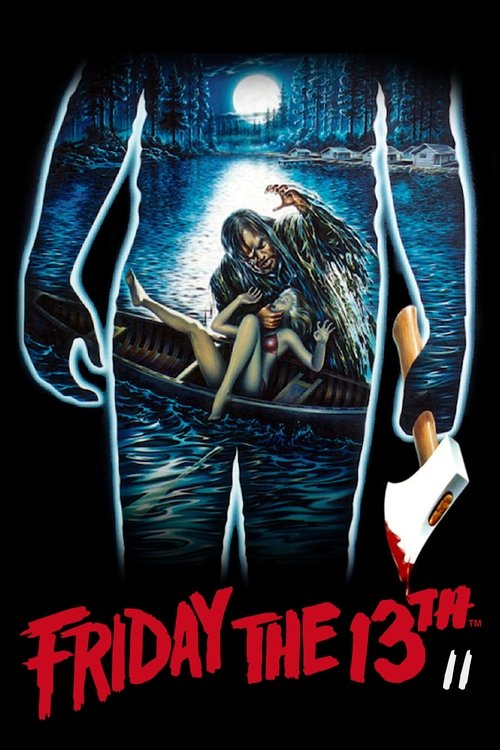
Friday the 13th Part 2
Five years after the horrible bloodbath at Camp Crystal Lake, new counselors roam the area, not sensing the ominous lurking presence that proves that the grisly legend is real.
Despite its small-scale budget of $1.3M, Friday the 13th Part 2 became a commercial juggernaut, earning $21.7M worldwide—a remarkable 1638% return. The film's unique voice attracted moviegoers, showing that strong storytelling can transcend budget limitations.


Plot Structure
Story beats plotted across runtime


Narrative Arc
Emotional journey through the story's key moments
Story Circle
Blueprint 15-beat structure
Arcplot Score Breakdown
Weighted: Precision (70%) + Arc (15%) + Theme (15%)
Friday the 13th Part 2 (1981) reveals strategically placed dramatic framework, characteristic of Steve Miner's storytelling approach. This structural analysis examines how the film's 15-point plot structure maps to proven narrative frameworks across 1 hour and 26 minutes. With an Arcplot score of 7.1, the film balances conventional beats with creative variation.
Characters
Cast & narrative archetypes

Ginny Field
Paul Holt
Jason Voorhees
Terri
Scott
Jeff
Sandra
Ted
Vickie
Mark
Main Cast & Characters
Ginny Field
Played by Amy Steel
A child psychology student and counselor trainee who becomes the final girl, using her understanding of psychology to survive Jason's attacks.
Paul Holt
Played by John Furey
The head counselor at the training camp near Crystal Lake who dismisses the Jason legend as campfire folklore.
Jason Voorhees
Played by Warrington Gillette
The deformed son of Pamela Voorhees who survived drowning and now stalks Crystal Lake wearing a burlap sack over his head.
Terri
Played by Kirsten Baker
A flirtatious and fun-loving counselor trainee who enjoys teasing and swimming.
Scott
Played by Russell Todd
A prankster counselor trainee known for jokes and attempting to scare others, romantically interested in Terri.
Jeff
Played by Bill Randolph
A counselor trainee in a relationship with Sandra, more reserved and responsible than some others.
Sandra
Played by Marta Kober
A counselor trainee in a relationship with Jeff, athletic and friendly.
Ted
Played by Stu Charno
A joker and comic relief among the counselors who stays behind at the bar during the final attacks.
Vickie
Played by Lauren-Marie Taylor
A counselor trainee interested in Mark, compassionate and caring toward others.
Mark
Played by Tom McBride
A counselor trainee who uses a wheelchair, determined not to let his disability define him.
Structural Analysis
The Status Quo at 1 minutes (1% through the runtime) establishes Alice, sole survivor of the first massacre, relives her trauma in a nightmare, establishing her shattered world before the new nightmare begins.. The analysis reveals that this early placement immediately immerses viewers in the story world.
The inciting incident occurs at 10 minutes when The counselors arrive at Packanack Lodge despite warnings from Crazy Ralph and a hostile local about Camp Crystal Lake's deadly history, choosing to ignore the danger.. At 12% through the film, this Disruption aligns precisely with traditional story structure. This beat shifts the emotional landscape, launching the protagonist into the central conflict.
The First Threshold at 21 minutes marks the transition into Act II, occurring at 24% of the runtime. This indicates the protagonist's commitment to The counselors complete their training and Paul leaves most of them alone for the night to go into town, marking their choice to stay despite the warnings and entering the night when Jason will hunt., moving from reaction to action.
At 43 minutes, the Midpoint arrives at 50% of the runtime—precisely centered, creating perfect narrative symmetry. The analysis reveals that this crucial beat Ginny and Paul return from town to discover the phone lines are dead and counselors are missing. The false safety of "just a legend" collapses - Jason is real and actively hunting them., fundamentally raising what's at risk. The emotional intensity shifts, dividing the narrative into clear before-and-after phases.
The Collapse moment at 65 minutes (76% through) represents the emotional nadir. Here, Jason drags the wounded Paul away, seemingly killing him. Ginny is now completely alone, separated from her protector, facing the unstoppable killer by herself - the ultimate low point., reveals the protagonist at their lowest point. This beat's placement in the final quarter sets up the climactic reversal.
The Second Threshold at 69 minutes initiates the final act resolution at 80% of the runtime. Ginny uses her psychology knowledge to understand Jason's trauma and puts on Mrs. Voorhees' sweater, weaponizing maternal manipulation to confuse and control him - synthesizing intellect with survival instinct., demonstrating the transformation achieved throughout the journey.
Emotional Journey
Friday the 13th Part 2's emotional architecture traces a deliberate progression across 15 carefully calibrated beats.
Narrative Framework
This structural analysis employs systematic plot point analysis that identifies crucial turning points. By mapping Friday the 13th Part 2 against these established plot points, we can identify how Steve Miner utilizes or subverts traditional narrative conventions. The plot point approach reveals not only adherence to structural principles but also creative choices that distinguish Friday the 13th Part 2 within the horror genre.
Steve Miner's Structural Approach
Among the 7 Steve Miner films analyzed on Arcplot, the average structural score is 7.1, reflecting strong command of classical structure. Friday the 13th Part 2 takes a more unconventional approach compared to the director's typical style. For comparative analysis, explore the complete Steve Miner filmography.
Comparative Analysis
Additional horror films include Thinner, A Nightmare on Elm Street and Mary Reilly. For more Steve Miner analyses, see House, Forever Young and Friday the 13th Part III.
Plot Points by Act
Act I
SetupStatus Quo
Alice, sole survivor of the first massacre, relives her trauma in a nightmare, establishing her shattered world before the new nightmare begins.
Theme
Alice's friend warns "You can't run from your past" when discussing her reluctance to seek help - the film's theme about confronting trauma versus fleeing it.
Worldbuilding
Alice tries to rebuild her life post-trauma but remains haunted. Jason emerges as the new threat, killing Alice and establishing that Camp Crystal Lake's curse continues. We meet the new counselors heading to a training center near the lake.
Disruption
The counselors arrive at Packanack Lodge despite warnings from Crazy Ralph and a hostile local about Camp Crystal Lake's deadly history, choosing to ignore the danger.
Resistance
Paul, the head counselor, debriefs the group about camp rules and tells the legend of Jason Voorhees around the campfire, simultaneously dismissing and reinforcing the threat. The counselors settle in, debating whether to believe the warnings.
Act II
ConfrontationFirst Threshold
The counselors complete their training and Paul leaves most of them alone for the night to go into town, marking their choice to stay despite the warnings and entering the night when Jason will hunt.
Mirror World
Ginny, the resourceful psychology major, and Paul develop their romantic connection, with Ginny showing insight into trauma and survival instincts that will prove crucial - she represents the thematic counter to running from fear.
Premise
The promise of a slasher film delivers: counselors engage in typical young adult behavior while Jason stalks and kills them one by one in creative ways. Teens drink, romance each other, and wander into danger.
Midpoint
Ginny and Paul return from town to discover the phone lines are dead and counselors are missing. The false safety of "just a legend" collapses - Jason is real and actively hunting them.
Opposition
Jason's attacks intensify as Ginny and Paul search for survivors. They discover bodies and realize they're alone against the killer. Jason closes in, attacking them directly and wounding Paul severely.
Collapse
Jason drags the wounded Paul away, seemingly killing him. Ginny is now completely alone, separated from her protector, facing the unstoppable killer by herself - the ultimate low point.
Crisis
Ginny flees to Jason's shrine to his mother in the woods, discovering his twisted psychological reality. Alone and terrified, she must process that she faces a traumatized child in a monster's body.
Act III
ResolutionSecond Threshold
Ginny uses her psychology knowledge to understand Jason's trauma and puts on Mrs. Voorhees' sweater, weaponizing maternal manipulation to confuse and control him - synthesizing intellect with survival instinct.
Synthesis
Ginny battles Jason using psychological warfare and physical resourcefulness, ultimately striking him down with a machete. She reunites with the wounded but alive Paul, and they wait for rescue as dawn breaks.
Transformation
In a final shock, Jason crashes through the window to attack Ginny one last time. Ginny is loaded into an ambulance, transformed from carefree counselor to traumatized survivor - the cycle continues.