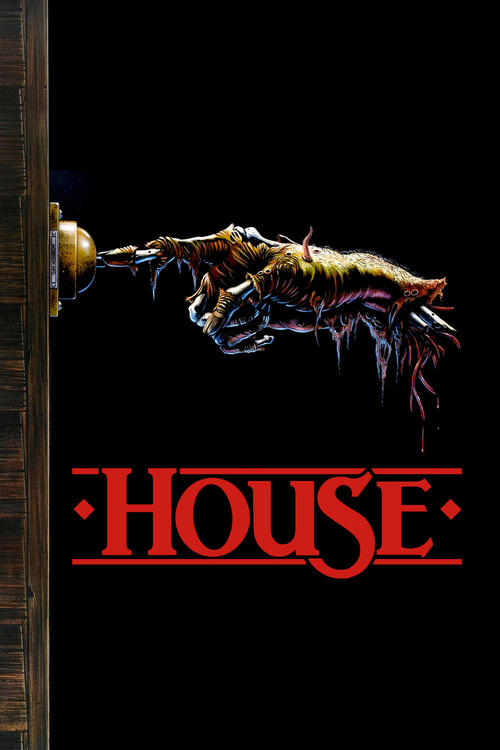
House
Roger Cobb, a divorced horror novelist coming to terms with the disappearance of his young son, inherits an old mansion home to malevolent supernatural residents.
Despite its small-scale budget of $3.0M, House became a box office phenomenon, earning $19.4M worldwide—a remarkable 548% return. The film's unconventional structure attracted moviegoers, confirming that strong storytelling can transcend budget limitations.
1 win & 4 nominations


Plot Structure
Story beats plotted across runtime


Narrative Arc
Emotional journey through the story's key moments
Story Circle
Blueprint 15-beat structure
Arcplot Score Breakdown
Weighted: Precision (70%) + Arc (15%) + Theme (15%)
House (1985) reveals carefully calibrated plot construction, characteristic of Steve Miner's storytelling approach. This structural analysis examines how the film's 15-point plot structure maps to proven narrative frameworks across 1 hour and 32 minutes. With an Arcplot score of 6.8, the film balances conventional beats with creative variation.
Characters
Cast & narrative archetypes

Roger Cobb
Harold Gorton
Big Ben
Sandy Sinclair
Main Cast & Characters
Roger Cobb
Played by William Katt
A troubled horror novelist and Vietnam veteran confronting supernatural forces in his late aunt's house while processing trauma and loss.
Harold Gorton
Played by George Wendt
Roger's nosy, overly friendly neighbor who provides comic relief while inadvertently helping Roger confront the house's mysteries.
Big Ben
Played by Richard Moll
Roger's former Vietnam War platoon mate whose ghost haunts the house, representing Roger's unresolved guilt and trauma from the war.
Sandy Sinclair
Played by Kay Lenz
Roger's estranged ex-wife, a successful actress whose departure adds to Roger's emotional burden and isolation.
Structural Analysis
The Status Quo at 1 minutes (1% through the runtime) establishes Roger Cobb signs books at a bookstore, appearing distracted and haunted. His life is falling apart: separated from his wife, unable to write, still traumatized by his son's disappearance and Vietnam experiences.. Notably, this early placement immediately immerses viewers in the story world.
The inciting incident occurs at 11 minutes when Roger inherits his aunt's house and decides to move in, despite its ominous reputation. His aunt's suicide and the house's connection to his son's disappearance pull him back to confront his past.. At 12% through the film, this Disruption aligns precisely with traditional story structure. This beat shifts the emotional landscape, launching the protagonist into the central conflict.
The First Threshold at 24 minutes marks the transition into Act II, occurring at 26% of the runtime. This indicates the protagonist's commitment to Roger encounters his first full-blown monster attack in the bathroom. He actively chooses to fight back and investigate rather than flee, committing himself to uncovering the house's secrets and finding his son., moving from reaction to action.
At 46 minutes, the Midpoint arrives at 50% of the runtime—precisely centered, creating perfect narrative symmetry. Structural examination shows that this crucial beat Roger discovers the house is a portal to another dimension connected to Vietnam. His dead Vietnam buddy Big Ben appears as a zombie, revealing the house is manifesting Roger's guilt and trauma. The stakes shift from survival to psychological confrontation., fundamentally raising what's at risk. The emotional intensity shifts, dividing the narrative into clear before-and-after phases.
The Collapse moment at 69 minutes (75% through) represents the emotional nadir. Here, Roger is pulled through the dimensional portal into the hellish Vietnam-like otherworld. He loses his grip on the normal world entirely. His son Jimmy is revealed to be trapped in this nightmare dimension—a "death" of hope., shows the protagonist at their lowest point. This beat's placement in the final quarter sets up the climactic reversal.
The Second Threshold at 74 minutes initiates the final act resolution at 80% of the runtime. Roger accepts responsibility for his past and chooses to fight for his son rather than succumb to guilt. He realizes he must defeat Big Ben—symbolic of his trauma—to save Jimmy and himself. He synthesizes soldier and father identities., demonstrating the transformation achieved throughout the journey.
Emotional Journey
House's emotional architecture traces a deliberate progression across 15 carefully calibrated beats.
Narrative Framework
This structural analysis employs a 15-point narrative structure framework that maps key story moments. By mapping House against these established plot points, we can identify how Steve Miner utilizes or subverts traditional narrative conventions. The plot point approach reveals not only adherence to structural principles but also creative choices that distinguish House within the comedy genre.
Steve Miner's Structural Approach
Among the 7 Steve Miner films analyzed on Arcplot, the average structural score is 7.1, reflecting strong command of classical structure. House takes a more unconventional approach compared to the director's typical style. For comparative analysis, explore the complete Steve Miner filmography.
Comparative Analysis
Additional comedy films include The Bad Guys, Ella Enchanted and The Evening Star. For more Steve Miner analyses, see Friday the 13th Part 2, Forever Young and Friday the 13th Part III.
Plot Points by Act
Act I
SetupStatus Quo
Roger Cobb signs books at a bookstore, appearing distracted and haunted. His life is falling apart: separated from his wife, unable to write, still traumatized by his son's disappearance and Vietnam experiences.
Theme
Roger's agent mentions he needs to "deal with the past" to move forward with his Vietnam memoir. This establishes the central theme: confronting trauma is necessary for healing.
Worldbuilding
Exposition establishes Roger's world: his career as a horror novelist, his broken marriage, his missing son Jimmy, his Vietnam trauma, and his Aunt Elizabeth's recent suicide. The house itself is introduced as a Gothic presence with a dark history.
Disruption
Roger inherits his aunt's house and decides to move in, despite its ominous reputation. His aunt's suicide and the house's connection to his son's disappearance pull him back to confront his past.
Resistance
Roger moves into the house and debates staying. He experiences initial supernatural occurrences, meets his nosy neighbor Harold, and begins exploring the house. He resists accepting the supernatural nature of what's happening.
Act II
ConfrontationFirst Threshold
Roger encounters his first full-blown monster attack in the bathroom. He actively chooses to fight back and investigate rather than flee, committing himself to uncovering the house's secrets and finding his son.
Mirror World
Harold, the cheerful neighbor, represents the "normal" life Roger has lost. Their relationship develops as a comic counterpoint to Roger's dark journey, showing what Roger could have if he dealt with his demons.
Premise
The "fun and games" of a horror-comedy: Roger battles increasingly bizarre monsters, tries to maintain normalcy, investigates the house's supernatural nature, and attempts to write while managing creature attacks. The premise delivers on monster-fighting absurdity.
Midpoint
Roger discovers the house is a portal to another dimension connected to Vietnam. His dead Vietnam buddy Big Ben appears as a zombie, revealing the house is manifesting Roger's guilt and trauma. The stakes shift from survival to psychological confrontation.
Opposition
The supernatural forces intensify. Big Ben's zombie relentlessly pursues Roger, the house's attacks become more personal and traumatic, Roger's grip on reality weakens, and his relationships with Harold and his wife deteriorate further.
Collapse
Roger is pulled through the dimensional portal into the hellish Vietnam-like otherworld. He loses his grip on the normal world entirely. His son Jimmy is revealed to be trapped in this nightmare dimension—a "death" of hope.
Crisis
Roger wanders the nightmare dimension, confronting the darkest manifestations of his guilt. He faces the moral weight of Big Ben's death in Vietnam and his failure to protect his son. This is his dark night of the soul.
Act III
ResolutionSecond Threshold
Roger accepts responsibility for his past and chooses to fight for his son rather than succumb to guilt. He realizes he must defeat Big Ben—symbolic of his trauma—to save Jimmy and himself. He synthesizes soldier and father identities.
Synthesis
Roger battles through the dimension using both his combat skills and his love for his son. He confronts Big Ben in a final showdown, destroys him, rescues Jimmy from the otherworld, and escapes back through the portal as the house purges its evil.
Transformation
Roger emerges from the house with Jimmy in his arms, reuniting with his wife. The house stands quiet behind them. Roger has confronted his demons and reclaimed his family—transformed from a haunted, broken man into a healed father.