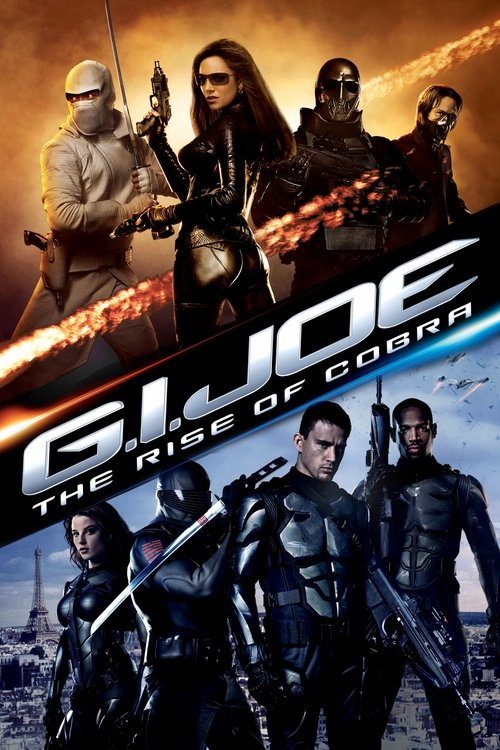
G.I. Joe: The Rise of Cobra
From the Egyptian desert to deep below the polar ice caps, the elite G.I. JOE team uses the latest in next-generation spy and military equipment to fight the corrupt arms dealer Destro and the growing threat of the mysterious Cobra organization to prevent them from plunging the world into chaos.
Working with a major studio investment of $175.0M, the film achieved a respectable showing with $302.5M in global revenue (+73% profit margin).
4 wins & 16 nominations


Plot Structure
Story beats plotted across runtime


Narrative Arc
Emotional journey through the story's key moments
Story Circle
Blueprint 15-beat structure
Arcplot Score Breakdown
Weighted: Precision (70%) + Arc (15%) + Theme (15%)
G.I. Joe: The Rise of Cobra (2009) exhibits precise story structure, characteristic of Stephen Sommers's storytelling approach. This structural analysis examines how the film's 15-point plot structure maps to proven narrative frameworks across 1 hour and 58 minutes. With an Arcplot score of 7.2, the film balances conventional beats with creative variation.
Characters
Cast & narrative archetypes

Duke
The Baroness
Destro
Snake Eyes
Storm Shadow
Ripcord
Scarlett
General Hawk
The Doctor / Rex Lewis
Main Cast & Characters
Duke
Played by Channing Tatum
A U.S. Army captain who becomes a key member of the elite G.I. Joe team after a mission goes wrong.
The Baroness
Played by Sienna Miller
A mysterious and deadly operative for Cobra who shares a complicated past with Duke.
Destro
Played by Christopher Eccleston
An arms dealer and weapons manufacturer who leads Cobra's military operations.
Snake Eyes
Played by Ray Park
A silent ninja commando and master swordsman serving with the G.I. Joe team.
Storm Shadow
Played by Byung-hun Lee
A deadly ninja assassin working for Cobra with a personal vendetta against Snake Eyes.
Ripcord
Played by Marlon Wayans
Duke's best friend and fellow soldier who joins the G.I. Joe team as a pilot.
Scarlett
Played by Rachel Nichols
A red-haired intelligence expert and skilled fighter who becomes Ripcord's romantic interest.
General Hawk
Played by Dennis Quaid
The commanding officer and founder of the G.I. Joe team who recruits Duke and Ripcord.
The Doctor / Rex Lewis
Played by Joseph Gordon-Levitt
A brilliant but twisted scientist who becomes Cobra Commander and orchestrates the terrorist plot.
Structural Analysis
The Status Quo at 1 minutes (1% through the runtime) establishes Paris, 1641: James McCullen is punished for selling weapons to both sides, his iron mask symbolizing eternal shame for his descendants. Establishes the legacy of weaponry and betrayal that haunts the present.. Notably, this early placement immediately immerses viewers in the story world.
The inciting incident occurs at 14 minutes when The Baroness leads an attack on Duke's convoy to steal the nanomite warheads. Duke recognizes her as his former fiancée Ana, throwing his world into chaos as the mission fails catastrophically.. At 12% through the film, this Disruption aligns precisely with traditional story structure. This beat shifts the emotional landscape, launching the protagonist into the central conflict.
The First Threshold at 29 minutes marks the transition into Act II, occurring at 25% of the runtime. This demonstrates the protagonist's commitment to Duke and Ripcord officially join the G.I. Joe team and begin training. They actively choose to enter this elite world of international special operations, leaving their Army lives behind., moving from reaction to action.
At 60 minutes, the Midpoint arrives at 50% of the runtime—precisely centered, creating perfect narrative symmetry. Of particular interest, this crucial beat Despite their efforts in Paris, the nanomite warhead destroys the Eiffel Tower. The Joes fail to stop McCullen, and Duke learns Ana is still under someone else's control. Stakes escalate as Cobra's plan advances., fundamentally raising what's at risk. The emotional intensity shifts, dividing the narrative into clear before-and-after phases.
The Collapse moment at 87 minutes (73% through) represents the emotional nadir. Here, The G.I. Joe Pit is attacked and destroyed by Cobra forces. General Hawk is captured, the team is scattered, and their headquarters lies in ruins. The Joes appear defeated with no base and dwindling resources., demonstrates the protagonist at their lowest point. This beat's placement in the final quarter sets up the climactic reversal.
The Second Threshold at 94 minutes initiates the final act resolution at 80% of the runtime. The Joes pinpoint Cobra's arctic base location through intelligence work. Duke realizes he must save Ana by confronting Rex. The team synthesizes their skills and technology for a final coordinated assault., demonstrating the transformation achieved throughout the journey.
Emotional Journey
G.I. Joe: The Rise of Cobra's emotional architecture traces a deliberate progression across 15 carefully calibrated beats.
Narrative Framework
This structural analysis employs structural analysis methodology used to understand storytelling architecture. By mapping G.I. Joe: The Rise of Cobra against these established plot points, we can identify how Stephen Sommers utilizes or subverts traditional narrative conventions. The plot point approach reveals not only adherence to structural principles but also creative choices that distinguish G.I. Joe: The Rise of Cobra within the adventure genre.
Stephen Sommers's Structural Approach
Among the 7 Stephen Sommers films analyzed on Arcplot, the average structural score is 7.0, demonstrating varied approaches to story architecture. G.I. Joe: The Rise of Cobra represents one of the director's most structurally precise works. For comparative analysis, explore the complete Stephen Sommers filmography.
Comparative Analysis
Additional adventure films include The Black Stallion, The Bad Guys and Puss in Boots. For more Stephen Sommers analyses, see The Mummy, Van Helsing and The Jungle Book.
Plot Points by Act
Act I
SetupStatus Quo
Paris, 1641: James McCullen is punished for selling weapons to both sides, his iron mask symbolizing eternal shame for his descendants. Establishes the legacy of weaponry and betrayal that haunts the present.
Theme
General Hawk: "Knowing is half the battle." The film's theme of understanding one's true enemy and the importance of information warfare is stated early.
Worldbuilding
Introduction to Duke and Ripcord as Army soldiers transporting nanomite warheads. Establishes their friendship, Duke's haunted past, and the deadly power of McCullen Industries' new weapon technology.
Disruption
The Baroness leads an attack on Duke's convoy to steal the nanomite warheads. Duke recognizes her as his former fiancée Ana, throwing his world into chaos as the mission fails catastrophically.
Resistance
Scarlett and the G.I. Joe team rescue Duke and Ripcord. At the Pit headquarters, General Hawk debates whether to accept the soldiers. Duke and Ripcord push to join to recover the warheads and face their failure.
Act II
ConfrontationFirst Threshold
Duke and Ripcord officially join the G.I. Joe team and begin training. They actively choose to enter this elite world of international special operations, leaving their Army lives behind.
Mirror World
Duke confides in Ripcord about his past with Ana/Baroness, revealing he left her brother Rex to die on a mission. This relationship represents Duke's guilt and need for redemption, carrying the thematic weight.
Premise
G.I. Joe tracks McCullen to Paris. High-tech action including accelerator suits, Snake Eyes vs. Storm Shadow showdowns, and the Eiffel Tower attack. The team explores their capabilities while pursuing the enemy.
Midpoint
Despite their efforts in Paris, the nanomite warhead destroys the Eiffel Tower. The Joes fail to stop McCullen, and Duke learns Ana is still under someone else's control. Stakes escalate as Cobra's plan advances.
Opposition
McCullen reveals his underwater arctic base and plan to hold world powers hostage. The President is captured and replaced. Cobra Commander is revealed as Rex, Ana's brother, who faked his death and now controls her.
Collapse
The G.I. Joe Pit is attacked and destroyed by Cobra forces. General Hawk is captured, the team is scattered, and their headquarters lies in ruins. The Joes appear defeated with no base and dwindling resources.
Crisis
The surviving Joes regroup and process their losses. Duke wrestles with his guilt over Rex and Ana. The team must find resolve despite losing their leader, base, and seeming outmatched by Cobra's global reach.
Act III
ResolutionSecond Threshold
The Joes pinpoint Cobra's arctic base location through intelligence work. Duke realizes he must save Ana by confronting Rex. The team synthesizes their skills and technology for a final coordinated assault.
Synthesis
Underwater assault on Cobra's polar base. Snake Eyes defeats Storm Shadow. Duke destroys the nanomite threat and saves Ana by breaking Rex's control over her. McCullen is captured and transformed into Destro. Cobra Commander escapes to fight another day.
Transformation
The Joes stand victorious at their rebuilt headquarters. Duke has found redemption and saved Ana. The team is stronger, prepared for future threats. From scattered soldiers to unified elite force - "Now we know, and knowing is half the battle."