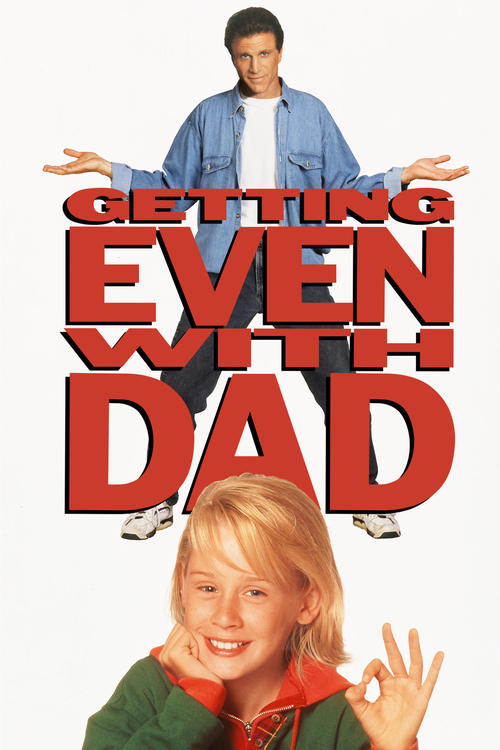
Getting Even with Dad
Con man Ray is going after one last heist – a stash of rare coins – when his estranged son Timmy unexpectedly shows up. Ray is too preoccupied with his robbery to spend time with his son, so Timmy blackmails him into acting like a father, hiding the coins and promises to return them only after Ray takes him to amusement parks and baseball games.
Working with a respectable budget of $30.0M, the film achieved a modest success with $53.8M in global revenue (+79% profit margin).

Plot Structure
Story beats plotted across runtime


Narrative Arc
Emotional journey through the story's key moments
Story Circle
Blueprint 15-beat structure
Arcplot Score Breakdown
Weighted: Precision (70%) + Arc (15%) + Theme (15%)
Getting Even with Dad (1994) demonstrates strategically placed dramatic framework, characteristic of Howard Deutch's storytelling approach. This structural analysis examines how the film's 15-point plot structure maps to proven narrative frameworks across 1 hour and 49 minutes. With an Arcplot score of 7.6, the film showcases strong structural fundamentals.
Characters
Cast & narrative archetypes

Timmy Gleason
Ray Gleason
Theresa Walsh
Bobby
Carl
Main Cast & Characters
Timmy Gleason
Played by Macaulay Culkin
An 11-year-old boy who blackmails his ex-con father into spending quality time with him before revealing a coin heist.
Ray Gleason
Played by Ted Danson
A recently paroled petty thief trying to go straight but pulled back into crime by his old partners.
Theresa Walsh
Played by Glenne Headly
A bakery owner and single mother who becomes romantically interested in Ray.
Bobby
Played by Saul Rubinek
One of Ray's criminal partners in the coin heist, more volatile and aggressive.
Carl
Played by Gailard Sartain
Ray's other criminal partner, more nervous and easily rattled than Bobby.
Structural Analysis
The Status Quo at 2 minutes (2% through the runtime) establishes Timmy lives with his aunt, clearly longing for his absent father Ray, an ex-con trying to go straight as a baker but struggling to connect with his son.. Of particular interest, this early placement immediately immerses viewers in the story world.
The inciting incident occurs at 12 minutes when Timmy arrives at Ray's apartment for an unplanned summer visit, disrupting both Ray's life and his planned coin heist with his criminal partners.. At 11% through the film, this Disruption aligns precisely with traditional story structure. This beat shifts the emotional landscape, launching the protagonist into the central conflict.
The First Threshold at 28 minutes marks the transition into Act II, occurring at 26% of the runtime. This demonstrates the protagonist's commitment to Timmy discovers the stolen coins and makes his move: he hides them and tells Ray he'll return them only if Ray spends real quality time with him for a week. Ray reluctantly agrees., moving from reaction to action.
At 55 minutes, the Midpoint arrives at 50% of the runtime—precisely centered, creating perfect narrative symmetry. Significantly, this crucial beat Ray and Timmy have a genuine moment of connection; Ray begins to actually enjoy spending time with his son. False victory: it seems the plan is working for both of them., fundamentally raising what's at risk. The emotional intensity shifts, dividing the narrative into clear before-and-after phases.
The Collapse moment at 81 minutes (74% through) represents the emotional nadir. Here, Timmy discovers Ray was only pretending to care about him to get the coins back. Heartbroken and betrayed, Timmy realizes his father hasn't changed. The relationship "dies."., demonstrates the protagonist at their lowest point. This beat's placement in the final quarter sets up the climactic reversal.
The Second Threshold at 87 minutes initiates the final act resolution at 80% of the runtime. Ray makes his choice: he decides to turn himself in and do right by Timmy, even if it means going back to prison. He finally puts his son first., demonstrating the transformation achieved throughout the journey.
Emotional Journey
Getting Even with Dad's emotional architecture traces a deliberate progression across 15 carefully calibrated beats.
Narrative Framework
This structural analysis employs structural analysis methodology used to understand storytelling architecture. By mapping Getting Even with Dad against these established plot points, we can identify how Howard Deutch utilizes or subverts traditional narrative conventions. The plot point approach reveals not only adherence to structural principles but also creative choices that distinguish Getting Even with Dad within the comedy genre.
Howard Deutch's Structural Approach
Among the 9 Howard Deutch films analyzed on Arcplot, the average structural score is 7.5, reflecting strong command of classical structure. Getting Even with Dad represents one of the director's most structurally precise works. For comparative analysis, explore the complete Howard Deutch filmography.
Comparative Analysis
Additional comedy films include The Bad Guys, Ella Enchanted and The Evening Star. For more Howard Deutch analyses, see The Whole Ten Yards, Grumpier Old Men and Pretty in Pink.
Plot Points by Act
Act I
SetupStatus Quo
Timmy lives with his aunt, clearly longing for his absent father Ray, an ex-con trying to go straight as a baker but struggling to connect with his son.
Theme
Timmy's aunt tells him that "being a parent means being there" - establishing the central theme about what it truly means to be a father.
Worldbuilding
We see Ray's world as an ex-con struggling with legitimate work, his criminal buddies planning a heist, and his awkward relationship with Timmy who arrives unexpectedly for the summer.
Disruption
Timmy arrives at Ray's apartment for an unplanned summer visit, disrupting both Ray's life and his planned coin heist with his criminal partners.
Resistance
Ray debates what to do with Timmy, tries to send him back, but keeps him around. Meanwhile, Ray and his partners execute the rare coin heist, unaware that Timmy is watching.
Act II
ConfrontationFirst Threshold
Timmy discovers the stolen coins and makes his move: he hides them and tells Ray he'll return them only if Ray spends real quality time with him for a week. Ray reluctantly agrees.
Mirror World
Detective Theresa Walsh enters the story, investigating the heist. She represents the moral authority and later becomes a romantic interest who mirrors the film's theme about honesty and family.
Premise
The "fun and games" of Ray and Timmy's forced bonding - going to ball games, museums, and tourist attractions. Ray pretends to enjoy it while secretly searching for the coins. Timmy tests whether his dad truly cares.
Midpoint
Ray and Timmy have a genuine moment of connection; Ray begins to actually enjoy spending time with his son. False victory: it seems the plan is working for both of them.
Opposition
Ray's criminal partners pressure him to get the coins back. Detective Walsh closes in on the investigation. Timmy realizes his dad might still be more interested in the coins than in him. Trust begins to fracture.
Collapse
Timmy discovers Ray was only pretending to care about him to get the coins back. Heartbroken and betrayed, Timmy realizes his father hasn't changed. The relationship "dies."
Crisis
Ray faces his dark night of the soul, realizing he's failed his son again. Timmy prepares to leave. Ray must choose between the coins (his old life) and his son (redemption).
Act III
ResolutionSecond Threshold
Ray makes his choice: he decides to turn himself in and do right by Timmy, even if it means going back to prison. He finally puts his son first.
Synthesis
Ray confronts his criminal partners, protects Timmy, works with Detective Walsh to make things right, and proves through his actions that he's finally become the father Timmy needed.
Transformation
Ray and Timmy together, their relationship genuine and healed. Ray has transformed from a selfish ex-con into a real father who puts his son first, mirroring the opening but now with true connection.