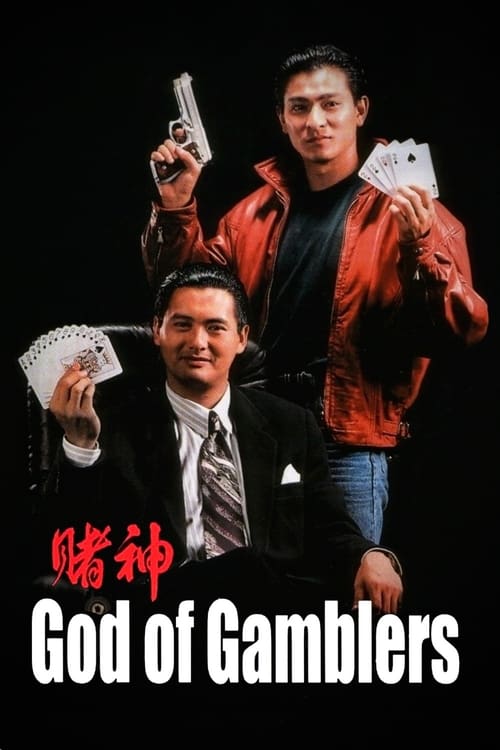
God of Gamblers
Ko Chun, a renowned gambler, loses his memory in an accident and starts behaving like a child. Little Knife, an amateur gambler, offers him shelter and realizes that he has a penchant for gambling.
The film earned $4.8M at the global box office.

Plot Structure
Story beats plotted across runtime


Narrative Arc
Emotional journey through the story's key moments
Story Circle
Blueprint 15-beat structure
Arcplot Score Breakdown
Weighted: Precision (70%) + Arc (15%) + Theme (15%)
God of Gamblers (1989) demonstrates deliberately positioned plot construction, characteristic of Wong Jing's storytelling approach. This structural analysis examines how the film's 15-point plot structure maps to proven narrative frameworks across 2 hours and 6 minutes. With an Arcplot score of 7.0, the film balances conventional beats with creative variation.
Characters
Cast & narrative archetypes

Ko Chun
Knife
Janet
Chan Kam-Sing
Yee-Jai
Dragon
Jane
Main Cast & Characters
Ko Chun
Played by Chow Yun-fat
The legendary "God of Gamblers" with supernatural gambling abilities who loses his memory after an accident and regresses to a childlike state.
Knife
Played by Andy Lau
A small-time gambler and con artist who takes in the amnesiac Ko Chun and initially exploits him before becoming his protector and friend.
Janet
Played by Joey Wong
Knife's girlfriend, a kind-hearted woman who cares for Ko Chun during his amnesia and helps ground the group emotionally.
Chan Kam-Sing
Played by Lung Fong
A ruthless Taiwanese gangster and skilled gambler who orchestrates Ko Chun's downfall and serves as the primary antagonist.
Yee-Jai
Played by Charles Heung
Knife's loyal friend and sidekick who assists in gambling schemes and provides comic relief throughout the film.
Dragon
Played by Ng Man-tat
Ko Chun's trusted bodyguard and assistant who desperately searches for his master after the accident.
Jane
Played by Sharla Cheung
Ko Chun's sophisticated girlfriend who waits for him and represents his pre-amnesia life and identity.
Structural Analysis
The Status Quo at 1 minutes (1% through the runtime) establishes Ko Chun, the legendary "God of Gamblers," is introduced at the peak of his powers, winning high-stakes games with supernatural skill and commanding absolute respect in the gambling world.. Of particular interest, this early placement immediately immerses viewers in the story world.
The inciting incident occurs at 15 minutes when Chan Kam-sing's assassins attempt to kill Ko Chun. During his escape, Ko Chun falls and hits his head, suffering severe amnesia and regressing to a childlike mental state, losing all memory of his identity and skills.. At 12% through the film, this Disruption aligns precisely with traditional story structure. This beat shifts the emotional landscape, launching the protagonist into the central conflict.
The First Threshold at 31 minutes marks the transition into Act II, occurring at 24% of the runtime. This illustrates the protagonist's commitment to Knife makes the active choice to train and care for the amnesiac Ko Chun (whom he calls "Chocolate" due to his childish candy obsession), deciding to enter the high-stakes gambling world using Ko Chun's retained instinctive abilities., moving from reaction to action.
At 64 minutes, the Midpoint arrives at 50% of the runtime—precisely centered, creating perfect narrative symmetry. Notably, this crucial beat False victory: Ko Chun wins a major tournament, and his reputation spreads. Janet finally discovers Ko Chun's location. The stakes raise dramatically as both allies and enemies now know where he is, and Chan Kam-sing learns his target is still alive., fundamentally raising what's at risk. The emotional intensity shifts, dividing the narrative into clear before-and-after phases.
The Collapse moment at 92 minutes (73% through) represents the emotional nadir. Here, Chan Kam-sing kidnaps Yee-mung and threatens to kill her. Ko Chun, still in his childlike state, is helpless. Knife is captured and beaten. The whiff of death: Yee-mung (representing Ko Chun's newfound humanity and love) faces execution, and Ko Chun may lose everything he has gained., reveals the protagonist at their lowest point. This beat's placement in the final quarter sets up the climactic reversal.
The Second Threshold at 99 minutes initiates the final act resolution at 79% of the runtime. Ko Chun's memory fully returns, but he retains the emotional growth from his amnesiac period. He synthesizes his legendary skills with his newfound capacity for love and friendship. Armed with both power and humanity, he prepares for the final confrontation with Chan Kam-sing., demonstrating the transformation achieved throughout the journey.
Emotional Journey
God of Gamblers's emotional architecture traces a deliberate progression across 15 carefully calibrated beats.
Narrative Framework
This structural analysis employs structural analysis methodology used to understand storytelling architecture. By mapping God of Gamblers against these established plot points, we can identify how Wong Jing utilizes or subverts traditional narrative conventions. The plot point approach reveals not only adherence to structural principles but also creative choices that distinguish God of Gamblers within the action genre.
Wong Jing's Structural Approach
Among the 3 Wong Jing films analyzed on Arcplot, the average structural score is 7.2, reflecting strong command of classical structure. God of Gamblers takes a more unconventional approach compared to the director's typical style. For comparative analysis, explore the complete Wong Jing filmography.
Comparative Analysis
Additional action films include The Bad Guys, Puss in Boots and Venom: The Last Dance. For more Wong Jing analyses, see Chasing the Dragon II: Wild Wild Bunch, Chasing the Dragon.
Plot Points by Act
Act I
SetupStatus Quo
Ko Chun, the legendary "God of Gamblers," is introduced at the peak of his powers, winning high-stakes games with supernatural skill and commanding absolute respect in the gambling world.
Theme
Ko Chun's rival Chan Kam-sing discusses how gambling is not just about skill but about understanding human nature and what truly matters in life, foreshadowing Ko Chun's journey from detached master to vulnerable human.
Worldbuilding
Establishes Ko Chun's world: his incredible gambling abilities, his loyal assistant Janet, his cold perfectionism, and the dangerous underworld of international high-stakes gambling. Chan Kam-sing is revealed as the vengeful antagonist seeking to destroy Ko Chun.
Disruption
Chan Kam-sing's assassins attempt to kill Ko Chun. During his escape, Ko Chun falls and hits his head, suffering severe amnesia and regressing to a childlike mental state, losing all memory of his identity and skills.
Resistance
Knife, a small-time gambler and con artist, discovers the amnesiac Ko Chun wandering helplessly. Initially exploiting him, Knife gradually realizes this childlike man possesses extraordinary gambling instincts and begins protecting him while searching for his identity.
Act II
ConfrontationFirst Threshold
Knife makes the active choice to train and care for the amnesiac Ko Chun (whom he calls "Chocolate" due to his childish candy obsession), deciding to enter the high-stakes gambling world using Ko Chun's retained instinctive abilities.
Mirror World
Ko Chun (as "Chocolate") bonds deeply with Knife's girlfriend Yee-mung, who treats him with genuine kindness and humanity. This relationship represents the authentic human connection Ko Chun never experienced in his former cold, professional life.
Premise
The "fun and games" of a master gambler with a child's mind: Ko Chun uses his retained supernatural gambling instincts while behaving innocently and playfully. Knife enters him in increasingly high-stakes games, winning fortunes while Ko Chun remains oblivious to the danger, creating comic and tense situations.
Midpoint
False victory: Ko Chun wins a major tournament, and his reputation spreads. Janet finally discovers Ko Chun's location. The stakes raise dramatically as both allies and enemies now know where he is, and Chan Kam-sing learns his target is still alive.
Opposition
Chan Kam-sing intensifies his efforts to eliminate Ko Chun. Janet attempts to restore Ko Chun's memory but struggles with his childlike state. The warm family dynamic with Knife and Yee-mung is threatened. Tension builds as enemies close in and the final confrontation with Chan becomes inevitable.
Collapse
Chan Kam-sing kidnaps Yee-mung and threatens to kill her. Ko Chun, still in his childlike state, is helpless. Knife is captured and beaten. The whiff of death: Yee-mung (representing Ko Chun's newfound humanity and love) faces execution, and Ko Chun may lose everything he has gained.
Crisis
Ko Chun experiences profound fear and emotional anguish over losing Yee-mung. In his darkest moment, the combination of trauma and desperate love triggers the return of his memories. He processes the integration of both identities: the cold master and the loving innocent.
Act III
ResolutionSecond Threshold
Ko Chun's memory fully returns, but he retains the emotional growth from his amnesiac period. He synthesizes his legendary skills with his newfound capacity for love and friendship. Armed with both power and humanity, he prepares for the final confrontation with Chan Kam-sing.
Synthesis
The finale: Ko Chun rescues Yee-mung and Knife, confronts Chan Kam-sing in a climactic high-stakes card game where both gambling skill and psychological warfare determine the outcome. Ko Chun defeats Chan using not just technique but the human understanding he learned during his amnesia.
Transformation
Final image: Ko Chun, still the God of Gamblers but now capable of genuine emotion and connection, celebrates with Knife and Yee-mung as equals and friends rather than subordinates. The cold, untouchable master has become a complete human being who can both excel and love.