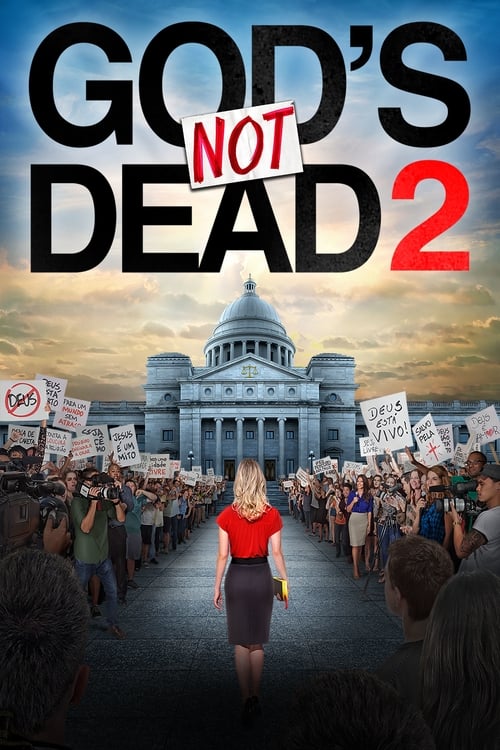
God's Not Dead 2
When a high school teacher is asked a question in class about Jesus, her reasoned response lands her in deep trouble and could expel God from the public square once and for all.
Despite its tight budget of $5.0M, God's Not Dead 2 became a box office success, earning $24.5M worldwide—a 390% return. The film's fresh perspective attracted moviegoers, illustrating how strong storytelling can transcend budget limitations.
3 wins & 3 nominations


Plot Structure
Story beats plotted across runtime


Narrative Arc
Emotional journey through the story's key moments
Story Circle
Blueprint 15-beat structure
Arcplot Score Breakdown
Weighted: Precision (70%) + Arc (15%) + Theme (15%)
God's Not Dead 2 (2016) showcases strategically placed dramatic framework, characteristic of Harold Cronk's storytelling approach. This structural analysis examines how the film's 15-point plot structure maps to proven narrative frameworks across 2 hours and 1 minutes. With an Arcplot score of 6.3, the film takes an unconventional approach to traditional narrative frameworks.
Characters
Cast & narrative archetypes

Grace Wesley
Tom Endler
Brooke Thawley
Peter Kane
Principal Kinney
Pastor Dave
Main Cast & Characters
Grace Wesley
Played by Melissa Joan Hart
A high school history teacher who faces legal persecution for answering a student's question about Jesus.
Tom Endler
Played by Jesse Metcalfe
A defense attorney who takes on Grace's case despite his personal crisis of faith.
Brooke Thawley
Played by Hayley Orrantia
A student whose question about Jesus triggers the legal battle against her teacher.
Peter Kane
Played by Ray Wise
The aggressive ACLU attorney prosecuting Grace Wesley for violating separation of church and state.
Principal Kinney
Played by Ernie Hudson
The school principal who becomes caught between supporting Grace and institutional pressure.
Pastor Dave
Played by David A.R. White
A local pastor who supports Grace and deals with his own legal challenges regarding sermons.
Structural Analysis
The Status Quo at 2 minutes (1% through the runtime) establishes Grace Wesley teaches history at Martin Luther King Jr. High School, living a quiet life of faith and dedication to her students in her comfortable, ordinary world.. Significantly, this early placement immediately immerses viewers in the story world.
The inciting incident occurs at 15 minutes when Student Brooke asks Grace a question about Jesus in class, comparing his teachings to Gandhi and MLK. Grace answers honestly, quoting scripture, unknowingly violating the separation of church and state.. At 12% through the film, this Disruption aligns precisely with traditional story structure. This beat shifts the emotional landscape, launching the protagonist into the central conflict.
The First Threshold at 30 minutes marks the transition into Act II, occurring at 25% of the runtime. This indicates the protagonist's commitment to Grace refuses to apologize for mentioning Jesus, making the conscious choice to stand firm in her faith despite knowing it will lead to legal consequences. The ACLU files suit against her., moving from reaction to action.
At 61 minutes, the Midpoint arrives at 50% of the runtime—precisely centered, creating perfect narrative symmetry. Structural examination shows that this crucial beat The prosecution delivers devastating testimony that makes Grace look like a proselytizer who violated her students' rights. The jury appears swayed against her, and Grace realizes she might lose everything., fundamentally raising what's at risk. The emotional intensity shifts, dividing the narrative into clear before-and-after phases.
The Collapse moment at 91 minutes (75% through) represents the emotional nadir. Here, The judge appears ready to rule against Grace, and her career, reputation, and financial stability face destruction. Grace confronts the possibility that standing for her faith means losing everything she's built., reveals the protagonist at their lowest point. This beat's placement in the final quarter sets up the climactic reversal.
The Second Threshold at 97 minutes initiates the final act resolution at 80% of the runtime. Grace takes the stand herself, choosing to testify boldly about her faith rather than hide behind legal technicalities. She accepts that winning isn't about the verdict but about standing for truth., demonstrating the transformation achieved throughout the journey.
Emotional Journey
God's Not Dead 2's emotional architecture traces a deliberate progression across 15 carefully calibrated beats.
Narrative Framework
This structural analysis employs structural analysis methodology used to understand storytelling architecture. By mapping God's Not Dead 2 against these established plot points, we can identify how Harold Cronk utilizes or subverts traditional narrative conventions. The plot point approach reveals not only adherence to structural principles but also creative choices that distinguish God's Not Dead 2 within the drama genre.
Harold Cronk's Structural Approach
Among the 4 Harold Cronk films analyzed on Arcplot, the average structural score is 6.7, demonstrating varied approaches to story architecture. God's Not Dead 2 takes a more unconventional approach compared to the director's typical style. For comparative analysis, explore the complete Harold Cronk filmography.
Comparative Analysis
Additional drama films include After Thomas, South Pacific and Dirty Dancing: Havana Nights. For more Harold Cronk analyses, see God's Not Dead, Unbroken: Path to Redemption and Average Joe.
Plot Points by Act
Act I
SetupStatus Quo
Grace Wesley teaches history at Martin Luther King Jr. High School, living a quiet life of faith and dedication to her students in her comfortable, ordinary world.
Theme
A fellow teacher or student mentions that "standing up for what you believe comes with a cost" - foreshadowing the trial Grace will face for her faith.
Worldbuilding
Establishment of Grace's classroom environment, her relationships with students including Brooke Thawley (whose brother died), the school administration, and the cultural tension around faith in public schools.
Disruption
Student Brooke asks Grace a question about Jesus in class, comparing his teachings to Gandhi and MLK. Grace answers honestly, quoting scripture, unknowingly violating the separation of church and state.
Resistance
Grace faces reprimand from Principal Kinney, is questioned by the school board, and contacted by the ACLU. Her lawyer Tom Endler advises her to apologize, but Grace wrestles with whether to compromise her faith or face a lawsuit.
Act II
ConfrontationFirst Threshold
Grace refuses to apologize for mentioning Jesus, making the conscious choice to stand firm in her faith despite knowing it will lead to legal consequences. The ACLU files suit against her.
Mirror World
Grace meets with her defense team and builds a deeper connection with Tom Endler, who will help her navigate the trial. Their relationship represents the support system of faith community.
Premise
The trial begins. Grace and her lawyers prepare their case, calling expert witnesses to testify about the historical validity of Jesus. The courtroom becomes the arena where faith confronts secular hostility.
Midpoint
The prosecution delivers devastating testimony that makes Grace look like a proselytizer who violated her students' rights. The jury appears swayed against her, and Grace realizes she might lose everything.
Opposition
ACLU lawyer Peter Kane intensifies his attack, the school board pressures Grace to resign, her grandfather's health declines, and media scrutiny increases. Grace faces mounting isolation and the cost of her stand becomes painfully real.
Collapse
The judge appears ready to rule against Grace, and her career, reputation, and financial stability face destruction. Grace confronts the possibility that standing for her faith means losing everything she's built.
Crisis
In her darkest moment, Grace prays and wrestles with doubt. She must decide if her faith is worth the ultimate sacrifice, finding strength in her conviction that truth matters more than comfort.
Act III
ResolutionSecond Threshold
Grace takes the stand herself, choosing to testify boldly about her faith rather than hide behind legal technicalities. She accepts that winning isn't about the verdict but about standing for truth.
Synthesis
Grace delivers powerful testimony about her faith. The jury deliberates. Supporting characters' subplots resolve. The verdict is read: the jury finds Grace not guilty, vindicating her stand for religious freedom.
Transformation
Grace stands victorious but transformed - no longer the quiet teacher who avoided conflict, but a woman of courage who stood for her convictions. Her faith has been tested and proven resilient.