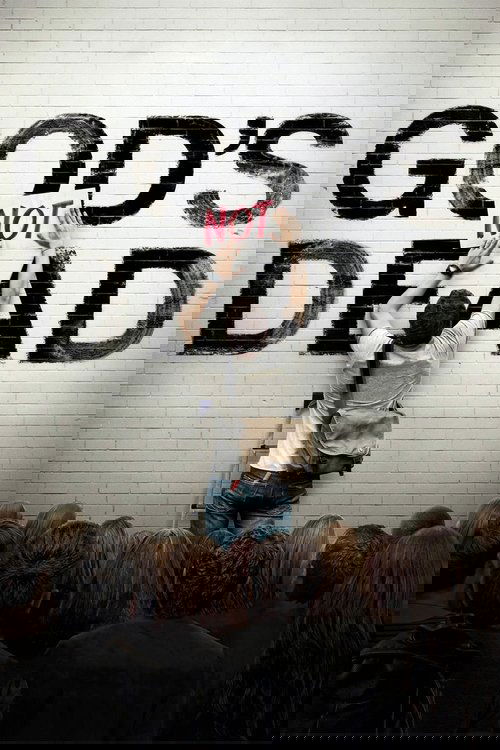
God's Not Dead
After he refuses to disavow his faith, a devout Christian student must prove the existence of God or else his college philosophy professor will fail him.
Working with a mid-range budget of $17.0M, the film achieved a modest success with $29.8M in global revenue (+75% profit margin).


Plot Structure
Story beats plotted across runtime


Narrative Arc
Emotional journey through the story's key moments
Story Circle
Blueprint 15-beat structure
Arcplot Score Breakdown
Weighted: Precision (70%) + Arc (15%) + Theme (15%)
God's Not Dead (2014) showcases meticulously timed narrative design, characteristic of Harold Cronk's storytelling approach. This structural analysis examines how the film's 15-point plot structure maps to proven narrative frameworks across 1 hour and 53 minutes. With an Arcplot score of 7.1, the film balances conventional beats with creative variation.
Characters
Cast & narrative archetypes

Josh Wheaton
Professor Jeffrey Radisson
Amy Ryan
Reverend Dave
Mark Shelley
Ayisha
Martin Yip
Mina Radisson
Main Cast & Characters
Josh Wheaton
Played by Shane Harper
A Christian college freshman who refuses to deny his faith when challenged by his atheist philosophy professor.
Professor Jeffrey Radisson
Played by Kevin Sorbo
An aggressive atheist philosophy professor who demands his students declare "God is dead" and challenges Josh to prove God's existence.
Amy Ryan
Played by Trisha LaFache
A liberal journalist and blogger diagnosed with cancer who confronts various Christian figures including the Newsboys.
Reverend Dave
Played by David A.R. White
A supportive pastor who encourages Josh in his stand for faith and ministers to others throughout the film.
Mark Shelley
Played by Dean Cain
Amy's wealthy, self-centered businessman boyfriend who abandons her when she is diagnosed with cancer.
Ayisha
Played by Hadeel Sittu
A young Muslim woman who secretly converts to Christianity and faces severe consequences from her traditional father.
Martin Yip
Played by Paul Kwo
A Chinese exchange student in Radisson's class whose atheist father forbids religious belief, but who is moved by Josh's arguments.
Mina Radisson
Played by Cory Oliver
Professor Radisson's Christian girlfriend who suffers in silence as he mocks her faith and emotionally abuses her.
Structural Analysis
The Status Quo at 1 minutes (1% through the runtime) establishes Josh Wheaton arrives at college, greeting his girlfriend Kara. He's an idealistic Christian freshman ready to pursue pre-law studies in a secular university environment.. Of particular interest, this early placement immediately immerses viewers in the story world.
The inciting incident occurs at 13 minutes when Josh refuses to sign the atheist declaration, standing alone before Professor Radisson. Radisson challenges him to defend God's existence in front of the class or fail the course.. At 11% through the film, this Disruption aligns precisely with traditional story structure. This beat shifts the emotional landscape, launching the protagonist into the central conflict.
The First Threshold at 26 minutes marks the transition into Act II, occurring at 23% of the runtime. This indicates the protagonist's commitment to Josh makes the active choice to accept Radisson's challenge. He commits to presenting three 20-minute arguments proving God's existence, knowing this will consume his semester and strain his relationship., moving from reaction to action.
At 55 minutes, the Midpoint arrives at 49% of the runtime—precisely centered, creating perfect narrative symmetry. Significantly, this crucial beat Josh's second presentation resonates with students. False victory: the class seems swayed, and Josh gains confidence. But Radisson intensifies his opposition, and Kara issues an ultimatum—choose her or this crusade., fundamentally raising what's at risk. The emotional intensity shifts, dividing the narrative into clear before-and-after phases.
The Collapse moment at 82 minutes (72% through) represents the emotional nadir. Here, Josh faces his darkest moment before the final presentation. Radisson viciously attacks him, threatening his academic future. Josh questions whether his sacrifice—losing his girlfriend, jeopardizing his career—is worth it. Whiff of death: his dreams are dying., indicates the protagonist at their lowest point. This beat's placement in the final quarter sets up the climactic reversal.
The Second Threshold at 89 minutes initiates the final act resolution at 79% of the runtime. Josh synthesizes his preparation with newfound courage. Armed with evidence and conviction, he enters the final presentation ready to confront not just the arguments but Radisson's personal hatred of God. He sees the real battle is spiritual, not intellectual., demonstrating the transformation achieved throughout the journey.
Emotional Journey
God's Not Dead's emotional architecture traces a deliberate progression across 15 carefully calibrated beats.
Narrative Framework
This structural analysis employs structural analysis methodology used to understand storytelling architecture. By mapping God's Not Dead against these established plot points, we can identify how Harold Cronk utilizes or subverts traditional narrative conventions. The plot point approach reveals not only adherence to structural principles but also creative choices that distinguish God's Not Dead within the drama genre.
Harold Cronk's Structural Approach
Among the 4 Harold Cronk films analyzed on Arcplot, the average structural score is 6.7, demonstrating varied approaches to story architecture. God's Not Dead represents one of the director's most structurally precise works. For comparative analysis, explore the complete Harold Cronk filmography.
Comparative Analysis
Additional drama films include After Thomas, South Pacific and Dirty Dancing: Havana Nights. For more Harold Cronk analyses, see God's Not Dead 2, Unbroken: Path to Redemption and Average Joe.
Plot Points by Act
Act I
SetupStatus Quo
Josh Wheaton arrives at college, greeting his girlfriend Kara. He's an idealistic Christian freshman ready to pursue pre-law studies in a secular university environment.
Theme
Professor Radisson declares "God is dead" and demands students sign statements denying God's existence. The central question: Is faith defensible in the face of intellectual opposition?
Worldbuilding
Establishment of parallel storylines: Josh in philosophy class, Pastor Dave with car troubles, missionary Amy interviewing the Newsboys, Muslim student Ayisha hiding her faith, and Martin (Chinese student) observing Western Christianity.
Disruption
Josh refuses to sign the atheist declaration, standing alone before Professor Radisson. Radisson challenges him to defend God's existence in front of the class or fail the course.
Resistance
Josh debates whether to accept the challenge, consulting with Pastor Dave who encourages him. His girlfriend Kara pressures him to drop the class. Josh struggles with the weight of defending faith publicly.
Act II
ConfrontationFirst Threshold
Josh makes the active choice to accept Radisson's challenge. He commits to presenting three 20-minute arguments proving God's existence, knowing this will consume his semester and strain his relationship.
Mirror World
Introduction of Mark (the callous businessman) and his girlfriend, juxtaposed with other characters facing faith crises. These subplots mirror Josh's central struggle: choosing faith over worldly success and comfort.
Premise
Josh delivers his first two presentations (Big Bang cosmology, origin of life), systematically arguing for God. Intercut with Amy's cancer diagnosis, Ayisha's secret faith, and various characters wrestling with belief. The intellectual battle unfolds.
Midpoint
Josh's second presentation resonates with students. False victory: the class seems swayed, and Josh gains confidence. But Radisson intensifies his opposition, and Kara issues an ultimatum—choose her or this crusade.
Opposition
Pressure mounts on all fronts: Kara breaks up with Josh, Radisson becomes more aggressive, Amy confronts her mortality, Ayisha's father discovers her secret Christianity. The antagonists (doubt, persecution, suffering) close in.
Collapse
Josh faces his darkest moment before the final presentation. Radisson viciously attacks him, threatening his academic future. Josh questions whether his sacrifice—losing his girlfriend, jeopardizing his career—is worth it. Whiff of death: his dreams are dying.
Crisis
Josh processes the cost of standing firm. Other characters reach their own dark nights: Amy wrestles with God over cancer, Mark's mother faces dementia alone, Ayisha endures abuse. The question lingers: Is God worth the suffering?
Act III
ResolutionSecond Threshold
Josh synthesizes his preparation with newfound courage. Armed with evidence and conviction, he enters the final presentation ready to confront not just the arguments but Radisson's personal hatred of God. He sees the real battle is spiritual, not intellectual.
Synthesis
Josh's final presentation exposes Radisson's true motive: he doesn't disbelieve in God, he hates God for his mother's death. The class stands with Josh, declaring "God's not dead." Radisson is defeated. Parallel resolutions: Amy finds peace, Ayisha chooses faith over family, characters converge at Newsboys concert.
Transformation
The closing image shows the Newsboys concert with thousands texting "God's not dead" while Radisson, struck by a car, accepts Christ before dying. Josh is transformed from tentative believer to bold defender. Faith has been publicly vindicated.