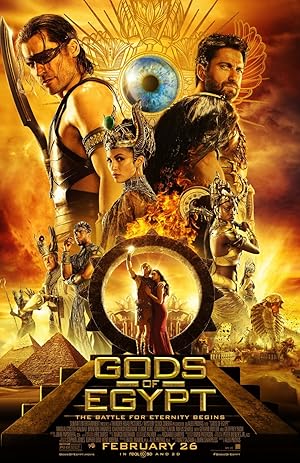
Gods of Egypt
Set, the merciless god of darkness, has taken over the throne of Egypt and plunged the once peaceful and prosperous empire into chaos and conflict. Few dare to rebel against him. A young thief, whose love was taken captive by the god, seeks to dethrone and defeat Set with the aid of the powerful god Horus.
Working with a substantial budget of $140.0M, the film achieved a modest success with $150.7M in global revenue (+8% profit margin).
2 wins & 14 nominations


Plot Structure
Story beats plotted across runtime


Narrative Arc
Emotional journey through the story's key moments
Story Circle
Blueprint 15-beat structure
Arcplot Score Breakdown
Weighted: Precision (70%) + Arc (15%) + Theme (15%)
Gods of Egypt (2016) showcases precise story structure, characteristic of Alex Proyas's storytelling approach. This structural analysis examines how the film's 15-point plot structure maps to proven narrative frameworks across 2 hours and 7 minutes. With an Arcplot score of 7.7, the film showcases strong structural fundamentals.
Characters
Cast & narrative archetypes

Bek
Horus
Set
Hathor
Zaya
Ra
Thoth
Urshu
Main Cast & Characters
Bek
Played by Brenton Thwaites
A mortal thief who teams with Horus to save Egypt and rescue his love from the afterlife.
Horus
Played by Nikolaj Coster-Waldau
The god of the sky, dethroned and blinded by Set, seeking vengeance and redemption.
Set
Played by Gerard Butler
The god of the desert and chaos who murders his brother Osiris to seize the throne of Egypt.
Hathor
Played by Elodie Yung
The goddess of love and Horus's former lover, enslaved by Set but secretly aiding the rebellion.
Zaya
Played by Courtney Eaton
Bek's brave love who inspires his quest and believes gods and mortals can work together.
Ra
Played by Geoffrey Rush
The sun god and grandfather of Horus, who battles Apophis daily to protect creation.
Thoth
Played by Chadwick Boseman
The god of wisdom who solves riddles and provides crucial knowledge to aid the heroes.
Urshu
Played by Rufus Sewell
The architect enslaved by Set who becomes Bek's reluctant ally and mentor figure.
Structural Analysis
The Status Quo at 2 minutes (2% through the runtime) establishes Ancient Egypt where mortals and gods coexist. Bek, a skilled thief, lives with his lover Zaya in a world where gods tower over humans. The coronation of Horus as king approaches, promising a new era of prosperity.. Structural examination shows that this early placement immediately immerses viewers in the story world.
The inciting incident occurs at 16 minutes when Set arrives at the coronation and brutally murders Osiris, stealing the throne. He defeats Horus in combat, tears out Horus's eyes, and plunges Egypt into tyranny. Zaya is mortally wounded trying to help Bek steal Horus's eye from Set's treasure vault.. At 12% through the film, this Disruption aligns precisely with traditional story structure. This beat shifts the emotional landscape, launching the protagonist into the central conflict.
The First Threshold at 31 minutes marks the transition into Act II, occurring at 25% of the runtime. This indicates the protagonist's commitment to Bek returns Horus's eye, partially restoring his power. Horus and Bek set out together on their quest - Horus to reclaim his throne and Bek to save Zaya. They leave for the divine realm, crossing from the mortal world into the adventure., moving from reaction to action.
At 64 minutes, the Midpoint arrives at 50% of the runtime—precisely centered, creating perfect narrative symmetry. Notably, this crucial beat Horus and Bek reach Ra, but discover Set is draining Ra's power to become unstoppable. Set captures Horus and reveals his plan to control all creation. The stakes escalate from reclaiming a throne to saving all existence. What seemed like progress becomes a false victory., fundamentally raising what's at risk. The emotional intensity shifts, dividing the narrative into clear before-and-after phases.
The Collapse moment at 94 minutes (74% through) represents the emotional nadir. Here, Bek falls from Set's tower during the rescue attempt and dies, taking the mortal fall that a god would survive. Horus, now caring deeply for the mortal, is devastated. The literal death of Bek represents the loss of hope and the failure of their quest., shows the protagonist at their lowest point. This beat's placement in the final quarter sets up the climactic reversal.
The Second Threshold at 100 minutes initiates the final act resolution at 79% of the runtime. Horus realizes the truth: gods derive their power from the love and belief of mortals. He understands that Bek's sacrifice and faith have given him the strength to defeat Set. Armed with this knowledge and transformed perspective, Horus prepares for the final confrontation., demonstrating the transformation achieved throughout the journey.
Emotional Journey
Gods of Egypt's emotional architecture traces a deliberate progression across 15 carefully calibrated beats.
Narrative Framework
This structural analysis employs structural analysis methodology used to understand storytelling architecture. By mapping Gods of Egypt against these established plot points, we can identify how Alex Proyas utilizes or subverts traditional narrative conventions. The plot point approach reveals not only adherence to structural principles but also creative choices that distinguish Gods of Egypt within the action genre.
Alex Proyas's Structural Approach
Among the 5 Alex Proyas films analyzed on Arcplot, the average structural score is 7.0, reflecting strong command of classical structure. Gods of Egypt represents one of the director's most structurally precise works. For comparative analysis, explore the complete Alex Proyas filmography.
Comparative Analysis
Additional action films include The Bad Guys, Puss in Boots and Venom: The Last Dance. For more Alex Proyas analyses, see I, Robot, The Crow and Knowing.
Plot Points by Act
Act I
SetupStatus Quo
Ancient Egypt where mortals and gods coexist. Bek, a skilled thief, lives with his lover Zaya in a world where gods tower over humans. The coronation of Horus as king approaches, promising a new era of prosperity.
Theme
Zaya tells Bek that "the gods need us as much as we need them" - establishing the central theme of interdependence between mortals and gods, and the power of belief and faith.
Worldbuilding
Introduction to the world of gods and mortals. Horus prepares for coronation as the new king. Bek and Zaya attend the ceremony. The hierarchy and rules of this mythological Egypt are established, including the gods' physical superiority and divine powers.
Disruption
Set arrives at the coronation and brutally murders Osiris, stealing the throne. He defeats Horus in combat, tears out Horus's eyes, and plunges Egypt into tyranny. Zaya is mortally wounded trying to help Bek steal Horus's eye from Set's treasure vault.
Resistance
Bek successfully steals one of Horus's eyes. Zaya dies from her wounds, and Bek seeks out the fallen god Horus in exile. Bek negotiates with the blind, powerless Horus - he'll help Horus reclaim his throne if Horus brings Zaya back from the dead. Horus reluctantly agrees.
Act II
ConfrontationFirst Threshold
Bek returns Horus's eye, partially restoring his power. Horus and Bek set out together on their quest - Horus to reclaim his throne and Bek to save Zaya. They leave for the divine realm, crossing from the mortal world into the adventure.
Mirror World
Bek and Horus's relationship begins to develop. The mortal and god form an unlikely partnership. Hathor, goddess of love and Horus's former lover, is introduced - she embodies the theme of love and sacrifice, serving Set but still caring for Horus.
Premise
The adventure through mythological Egypt. Horus and Bek journey to seek Ra's help and find Horus's other eye. They face divine challenges, including battling fire-breathing serpents and navigating the realm of the gods. Their partnership strengthens as mortal cleverness and divine power prove complementary.
Midpoint
Horus and Bek reach Ra, but discover Set is draining Ra's power to become unstoppable. Set captures Horus and reveals his plan to control all creation. The stakes escalate from reclaiming a throne to saving all existence. What seemed like progress becomes a false victory.
Opposition
Set's power grows as he assembles divine artifacts. Horus is captured and tortured. Bek must rescue Horus, but their relationship is tested when Horus reveals he may not be able to save Zaya. Set kills more gods to increase his power. The heroes' flaws and conflicts emerge.
Collapse
Bek falls from Set's tower during the rescue attempt and dies, taking the mortal fall that a god would survive. Horus, now caring deeply for the mortal, is devastated. The literal death of Bek represents the loss of hope and the failure of their quest.
Crisis
Horus mourns Bek and faces his darkest moment. He must choose between vengeance and honoring what Bek taught him about sacrifice and fighting for others. The god processes his transformation from selfish prince to genuine hero through knowing a mortal.
Act III
ResolutionSecond Threshold
Horus realizes the truth: gods derive their power from the love and belief of mortals. He understands that Bek's sacrifice and faith have given him the strength to defeat Set. Armed with this knowledge and transformed perspective, Horus prepares for the final confrontation.
Synthesis
Final battle between Horus and Set. Horus, empowered by his transformation and understanding of mortals, defeats Set. He appeals to Ra for mercy and chooses to resurrect Bek rather than restore his own eye, demonstrating his growth. Balance is restored to Egypt, and Horus becomes a worthy king.
Transformation
Horus, now a changed god who values mortals, rules wisely. Bek and Zaya are reunited, alive and together. The closing image shows gods and mortals in harmony, contrasting with the opening hierarchy - gods now serve and protect rather than dominate, having learned they need humanity.