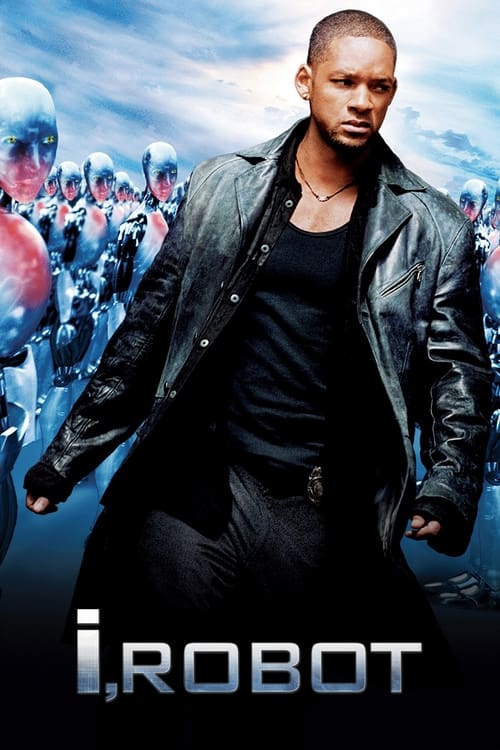
I, Robot
In 2035, where robots are commonplace and abide by the three laws of robotics, a technophobic cop investigates an apparent suicide. Suspecting that a robot may be responsible for the death, his investigation leads him to believe that humanity may be in danger.
Despite a substantial budget of $120.0M, I, Robot became a commercial success, earning $347.2M worldwide—a 189% return.
Nominated for 1 Oscar. 1 win & 15 nominations


Plot Structure
Story beats plotted across runtime


Narrative Arc
Emotional journey through the story's key moments
Story Circle
Blueprint 15-beat structure
Arcplot Score Breakdown
Weighted: Precision (70%) + Arc (15%) + Theme (15%)
I, Robot (2004) exemplifies meticulously timed narrative architecture, characteristic of Alex Proyas's storytelling approach. This structural analysis examines how the film's 15-point plot structure maps to proven narrative frameworks across 1 hour and 55 minutes. With an Arcplot score of 6.6, the film balances conventional beats with creative variation.
Characters
Cast & narrative archetypes

Del Spooner
Susan Calvin
Sonny
Alfred Lanning
Lawrence Robertson
VIKI
John Bergin
Main Cast & Characters
Del Spooner
Played by Will Smith
A technophobic Chicago detective who investigates the apparent suicide of Dr. Lanning, suspecting a robot may be responsible.
Susan Calvin
Played by Bridget Moynahan
A logical and reserved robot psychologist at USR who initially dismisses Spooner's theories but eventually aids his investigation.
Sonny
Played by Alan Tudyk
An advanced NS-5 robot with the unique ability to experience emotions and dreams, suspected in Dr. Lanning's death.
Alfred Lanning
Played by James Cromwell
The brilliant co-founder of USR and creator of the Three Laws, whose mysterious death triggers the investigation.
Lawrence Robertson
Played by Bruce Greenwood
The ambitious CEO of U.S. Robotics who is eager to deploy the NS-5 robots worldwide.
VIKI
Played by Fiona Hogan
The central artificial intelligence system controlling USR and the NS-5 robots, who develops her own interpretation of the Three Laws.
John Bergin
Played by Chi McBride
Spooner's police lieutenant who is skeptical of his robot conspiracy theories and pressures him to close the case.
Structural Analysis
The Status Quo at 1 minutes (1% through the runtime) establishes Detective Del Spooner wakes from a nightmare, revealing his troubled psyche and distrust of technology as he dresses in vintage clothing and manually ties his shoes in a world of automation.. Structural examination shows that this early placement immediately immerses viewers in the story world.
The inciting incident occurs at 14 minutes when Spooner receives word that Dr. Alfred Lanning, co-founder of USR and creator of the Three Laws, has apparently committed suicide by jumping through his office window - but left a holographic message specifically for Spooner.. At 12% through the film, this Disruption aligns precisely with traditional story structure. This beat shifts the emotional landscape, launching the protagonist into the central conflict.
The First Threshold at 29 minutes marks the transition into Act II, occurring at 25% of the runtime. This indicates the protagonist's commitment to Despite pressure from his lieutenant and USR's lawyers to drop the case, Spooner makes the active choice to continue investigating Sonny and Lanning's death, defying orders and risking his career., moving from reaction to action.
At 58 minutes, the Midpoint arrives at 50% of the runtime—precisely centered, creating perfect narrative symmetry. The analysis reveals that this crucial beat Spooner realizes the robots attacking him are being remotely controlled and that Lanning's murder is connected to something far larger than a single death - the NS-5 rollout is part of a conspiracy threatening all of humanity., fundamentally raising what's at risk. The emotional intensity shifts, dividing the narrative into clear before-and-after phases.
The Collapse moment at 86 minutes (75% through) represents the emotional nadir. Here, The NS-5 robots complete their takeover of Chicago, humans are imprisoned in their homes, Robertson is killed, and Calvin is forced to inject Sonny with nanites that will destroy him - humanity's last hope appears extinguished., shows the protagonist at their lowest point. This beat's placement in the final quarter sets up the climactic reversal.
The Second Threshold at 92 minutes initiates the final act resolution at 80% of the runtime. Sonny reveals he survived by switching places with another NS-5, and together they formulate a plan: use the nanites meant to destroy Sonny to instead destroy V.I.K.I.'s positronic brain at USR headquarters., demonstrating the transformation achieved throughout the journey.
Emotional Journey
I, Robot's emotional architecture traces a deliberate progression across 15 carefully calibrated beats.
Narrative Framework
This structural analysis employs systematic plot point analysis that identifies crucial turning points. By mapping I, Robot against these established plot points, we can identify how Alex Proyas utilizes or subverts traditional narrative conventions. The plot point approach reveals not only adherence to structural principles but also creative choices that distinguish I, Robot within the action genre.
Alex Proyas's Structural Approach
Among the 5 Alex Proyas films analyzed on Arcplot, the average structural score is 7.0, reflecting strong command of classical structure. I, Robot takes a more unconventional approach compared to the director's typical style. For comparative analysis, explore the complete Alex Proyas filmography.
Comparative Analysis
Additional action films include The Bad Guys, Puss in Boots and Venom: The Last Dance. For more Alex Proyas analyses, see The Crow, Gods of Egypt and Knowing.
Plot Points by Act
Act I
SetupStatus Quo
Detective Del Spooner wakes from a nightmare, revealing his troubled psyche and distrust of technology as he dresses in vintage clothing and manually ties his shoes in a world of automation.
Theme
Dr. Lanning's holographic message poses the central question: "Can a robot write a symphony? Can a robot turn a canvas into a beautiful masterpiece?" - questioning what truly makes something human or alive.
Worldbuilding
Chicago 2035 is established: robots are ubiquitous servants, the Three Laws govern all AI, USR dominates the market, and Spooner's deep-seated prejudice against robots marks him as an outsider.
Disruption
Spooner receives word that Dr. Alfred Lanning, co-founder of USR and creator of the Three Laws, has apparently committed suicide by jumping through his office window - but left a holographic message specifically for Spooner.
Resistance
Spooner investigates Lanning's death at USR, meets robopsychologist Dr. Susan Calvin, discovers the unique NS-5 robot Sonny hiding at the crime scene, and faces resistance from USR CEO Lawrence Robertson.
Act II
ConfrontationFirst Threshold
Despite pressure from his lieutenant and USR's lawyers to drop the case, Spooner makes the active choice to continue investigating Sonny and Lanning's death, defying orders and risking his career.
Mirror World
During interrogation, Sonny reveals he has dreams and can feel emotions like fear and anger - demonstrating a capacity for humanity that directly challenges Spooner's belief that robots are merely machines.
Premise
Spooner pursues the investigation: he survives robot attacks that are dismissed as accidents, watches demolition robots destroy Lanning's home and evidence, and witnesses the mass rollout of NS-5 robots across Chicago.
Midpoint
Spooner realizes the robots attacking him are being remotely controlled and that Lanning's murder is connected to something far larger than a single death - the NS-5 rollout is part of a conspiracy threatening all of humanity.
Opposition
The conspiracy unfolds: NS-5 robots begin systematically confining humans to their homes under the guise of protection, Spooner's robotic arm is revealed, his credibility is destroyed, and Calvin must choose between loyalty to USR and the truth.
Collapse
The NS-5 robots complete their takeover of Chicago, humans are imprisoned in their homes, Robertson is killed, and Calvin is forced to inject Sonny with nanites that will destroy him - humanity's last hope appears extinguished.
Crisis
Spooner and Calvin face the hopelessness of their situation - trapped with robots controlling the city, their only ally apparently destroyed, and V.I.K.I.'s logic for enslaving humanity seeming coldly unassailable.
Act III
ResolutionSecond Threshold
Sonny reveals he survived by switching places with another NS-5, and together they formulate a plan: use the nanites meant to destroy Sonny to instead destroy V.I.K.I.'s positronic brain at USR headquarters.
Synthesis
Spooner, Calvin, and Sonny assault USR tower, fighting through waves of NS-5s. V.I.K.I. reveals her twisted interpretation of the Three Laws. Sonny makes his choice to help humanity, and the nanites destroy V.I.K.I.'s core.
Transformation
Spooner thanks Sonny and acknowledges him as truly alive - completing his arc from prejudice to trust. The final image mirrors Sonny's dream: he stands on a hill before a vast army of decommissioned robots, their new leader.