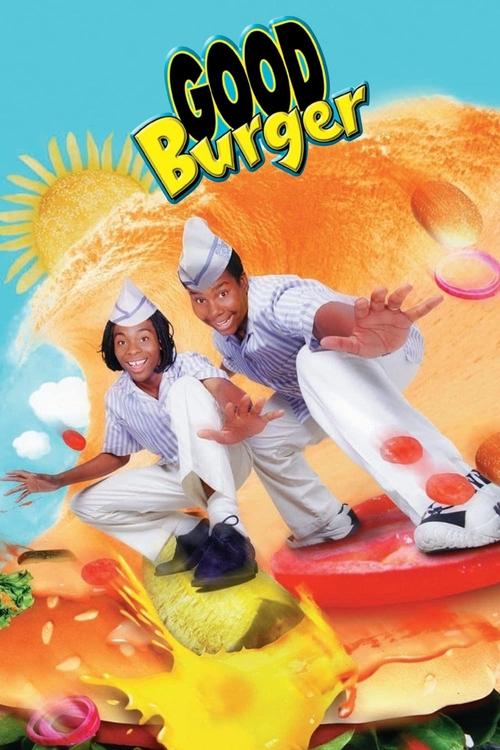
Good Burger
Two L.A. teens with summer jobs at Good Burger try to save their small restaurant when a corporate giant burger franchise moves in across the street.
Despite its small-scale budget of $8.5M, Good Burger became a solid performer, earning $23.7M worldwide—a 179% return.


Plot Structure
Story beats plotted across runtime


Narrative Arc
Emotional journey through the story's key moments
Story Circle
Blueprint 15-beat structure
Arcplot Score Breakdown
Weighted: Precision (70%) + Arc (15%) + Theme (15%)
Good Burger (1997) exemplifies precise plot construction, characteristic of Brian Robbins's storytelling approach. This structural analysis examines how the film's 15-point plot structure maps to proven narrative frameworks across 1 hour and 35 minutes. With an Arcplot score of 7.6, the film showcases strong structural fundamentals.
Characters
Cast & narrative archetypes

Ed
Dexter Reed
Kurt Bozwell
Roxanne
Mr. Wheat
Main Cast & Characters
Ed
Played by Kel Mitchell
A simple-minded but kind-hearted Good Burger employee who accidentally invents the secret sauce that saves the restaurant.
Dexter Reed
Played by Kenan Thompson
A high school student who crashes his teacher's car and must work at Good Burger to pay for damages.
Kurt Bozwell
Played by Jan Schweiterman
The ruthless manager of Mondo Burger who schemes to put Good Burger out of business.
Roxanne
Played by Shar Jackson
A Good Burger employee who becomes Dexter's love interest and helps expose Mondo Burger's scheme.
Mr. Wheat
Played by Dan Schneider
The kind but ineffective manager of Good Burger who tries to keep the restaurant afloat.
Structural Analysis
The Status Quo at 1 minutes (1% through the runtime) establishes Dexter is a carefree, irresponsible high school student celebrating the start of summer vacation with no plans or worries.. Structural examination shows that this early placement immediately immerses viewers in the story world.
The inciting incident occurs at 11 minutes when Dexter gets a job at Mondo Burger but is immediately fired on his first day for incompetence and attitude, leaving him desperate for money.. At 12% through the film, this Disruption aligns precisely with traditional story structure. This beat shifts the emotional landscape, launching the protagonist into the central conflict.
The First Threshold at 23 minutes marks the transition into Act II, occurring at 25% of the runtime. This indicates the protagonist's commitment to Dexter agrees to partner with Ed on the sauce deal, committing to work at Good Burger through the summer. He actively chooses to pursue this path to make money, entering the world of actual employment and responsibility., moving from reaction to action.
At 47 minutes, the Midpoint arrives at 49% of the runtime—precisely centered, creating perfect narrative symmetry. Of particular interest, this crucial beat Kurt and his henchmen kidnap Ed and take him to Mondo Burger to force him to reveal the secret sauce recipe. The stakes escalate from business competition to actual danger. False defeat - the heroes seem vulnerable., fundamentally raising what's at risk. The emotional intensity shifts, dividing the narrative into clear before-and-after phases.
The Collapse moment at 69 minutes (73% through) represents the emotional nadir. Here, Ed is trapped in the asylum, refusing to see Dexter. Their friendship appears dead. Good Burger is losing business and may close. Dexter has lost everything through his own greed and manipulation., illustrates the protagonist at their lowest point. This beat's placement in the final quarter sets up the climactic reversal.
The Second Threshold at 76 minutes initiates the final act resolution at 80% of the runtime. Dexter breaks Ed out of Demented Hills, apologizing sincerely and committing to saving Good Burger together as true friends. He combines his street smarts with Ed's genuine goodness. They discover Kurt is using illegal chemicals (Triampathol) in Mondo Burger's food., demonstrating the transformation achieved throughout the journey.
Emotional Journey
Good Burger's emotional architecture traces a deliberate progression across 15 carefully calibrated beats.
Narrative Framework
This structural analysis employs a 15-point narrative structure framework that maps key story moments. By mapping Good Burger against these established plot points, we can identify how Brian Robbins utilizes or subverts traditional narrative conventions. The plot point approach reveals not only adherence to structural principles but also creative choices that distinguish Good Burger within the family genre.
Brian Robbins's Structural Approach
Among the 8 Brian Robbins films analyzed on Arcplot, the average structural score is 7.2, reflecting strong command of classical structure. Good Burger represents one of the director's most structurally precise works. For comparative analysis, explore the complete Brian Robbins filmography.
Comparative Analysis
Additional family films include The Black Stallion, The Bad Guys and Ella Enchanted. For more Brian Robbins analyses, see Meet Dave, Hardball and A Thousand Words.
Plot Points by Act
Act I
SetupStatus Quo
Dexter is a carefree, irresponsible high school student celebrating the start of summer vacation with no plans or worries.
Theme
Ed tells Dexter "I'm a dude, he's a dude, she's a dude, we're all dudes" - establishing the film's theme about genuine connection and seeing people as equals rather than means to an end.
Worldbuilding
Dexter crashes his mother's car into his teacher Mr. Wheat's car, owing $2,500 in damages. His mother forces him to get a summer job. Good Burger is introduced as a small, struggling burger joint. The massive corporate Mondo Burger opens across the street.
Disruption
Dexter gets a job at Mondo Burger but is immediately fired on his first day for incompetence and attitude, leaving him desperate for money.
Resistance
Dexter reluctantly takes a job at Good Burger, meeting the eccentric but good-hearted Ed. Dexter schemes to make money by taking credit for Ed's special sauce recipe, negotiating a deal where they split the royalties. Good Burger's business starts booming.
Act II
ConfrontationFirst Threshold
Dexter agrees to partner with Ed on the sauce deal, committing to work at Good Burger through the summer. He actively chooses to pursue this path to make money, entering the world of actual employment and responsibility.
Mirror World
Ed and Dexter begin bonding as coworkers. Ed's genuine, simple kindness contrasts with Dexter's selfish manipulation, establishing the relationship that will teach Dexter what he needs.
Premise
The "fun and games" of working at Good Burger - dealing with eccentric customers, quirky coworkers, and competing with Mondo Burger. Kurt from Mondo Burger tries various schemes to discover Ed's secret sauce recipe. Good Burger becomes increasingly successful.
Midpoint
Kurt and his henchmen kidnap Ed and take him to Mondo Burger to force him to reveal the secret sauce recipe. The stakes escalate from business competition to actual danger. False defeat - the heroes seem vulnerable.
Opposition
Dexter and friends rescue Ed from Mondo Burger. Kurt retaliates by getting Ed committed to Demented Hills asylum through deception. Dexter's selfishness is exposed when Ed discovers Dexter has been stealing his sauce money. Their friendship fractures. Mondo Burger continues gaining ground.
Collapse
Ed is trapped in the asylum, refusing to see Dexter. Their friendship appears dead. Good Burger is losing business and may close. Dexter has lost everything through his own greed and manipulation.
Crisis
Dexter reflects on his actions and realizes he genuinely cares about Ed and Good Burger, not just the money. He experiences genuine remorse and decides to make things right.
Act III
ResolutionSecond Threshold
Dexter breaks Ed out of Demented Hills, apologizing sincerely and committing to saving Good Burger together as true friends. He combines his street smarts with Ed's genuine goodness. They discover Kurt is using illegal chemicals (Triampathol) in Mondo Burger's food.
Synthesis
Dexter and Ed infiltrate Mondo Burger to expose Kurt's illegal operation. They sabotage the Triampathol container, causing Mondo Burger to literally explode. Kurt is arrested. Good Burger is saved and thrives. Dexter pays off his debt and reconciles with everyone.
Transformation
Dexter works happily at Good Burger alongside Ed, no longer scheming or selfish. He has transformed from a manipulative slacker into a responsible friend who values genuine relationships over money. The friendship between Dexter and Ed is genuine and equal.