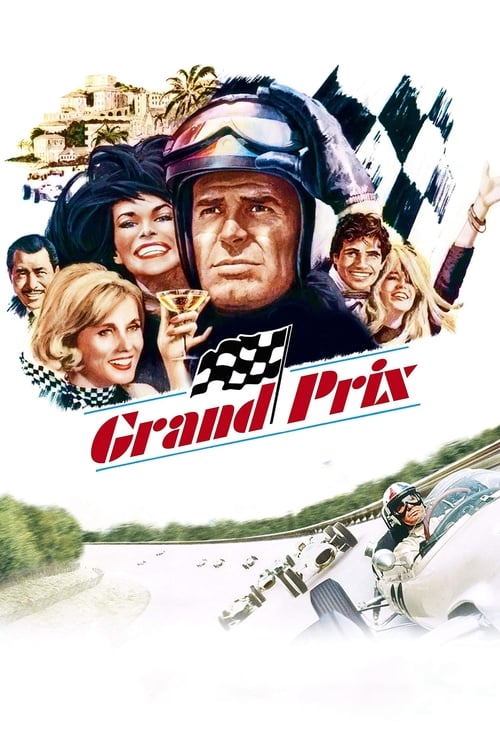
Grand Prix
The most daring drivers in the world have gathered to compete for the 1966 Formula One championship. After a spectacular wreck in the first of a series of races, American wheelman Pete Aron is dropped by his sponsor. Refusing to quit, he joins a Japanese racing team. While juggling his career with a torrid love affair involving an ex-teammate's wife, Pete must also contend with Jean-Pierre Sarti, a French contestant who has previously won two world titles.
Despite its small-scale budget of $9.0M, Grand Prix became a box office success, earning $20.8M worldwide—a 131% return.
3 Oscars. 3 wins & 4 nominations


Plot Structure
Story beats plotted across runtime


Narrative Arc
Emotional journey through the story's key moments
Story Circle
Blueprint 15-beat structure
Arcplot Score Breakdown
Weighted: Precision (70%) + Arc (15%) + Theme (15%)
Grand Prix (1966) exemplifies deliberately positioned plot construction, characteristic of John Frankenheimer's storytelling approach. This structural analysis examines how the film's 15-point plot structure maps to proven narrative frameworks across 2 hours and 56 minutes. With an Arcplot score of 7.6, the film showcases strong structural fundamentals.
Characters
Cast & narrative archetypes

Pete Aron
Jean-Pierre Sarti
Scott Stoddard
Nino Barlini
Louise Frederickson
Pat Stoddard
Monique Sarti
Izo Yamura
Main Cast & Characters
Pete Aron
Played by James Garner
An ambitious American Formula One driver struggling to redeem himself after causing a major crash that sidelines a teammate.
Jean-Pierre Sarti
Played by Yves Montand
A French racing champion torn between his obsession with winning and his responsibility to his wife and family.
Scott Stoddard
Played by Brian Bedford
A British racing driver injured in the crash caused by Aron, facing a difficult comeback and reconciliation with his estranged wife.
Nino Barlini
Played by Antonio Sabàto
A passionate Italian driver who races with heart and intensity, pursuing romance alongside racing glory.
Louise Frederickson
Played by Eva Marie Saint
An American magazine journalist covering the racing circuit who becomes romantically involved with Pete Aron.
Pat Stoddard
Played by Jessica Walter
Scott Stoddard's wife, struggling with the dangers of racing and her husband's obsession with the sport.
Monique Sarti
Played by Geneviève Page
Jean-Pierre Sarti's wife, dealing with her husband's dangerous career and emotional distance.
Izo Yamura
Played by Toshiro Mifune
A methodical Japanese racing team manager who gives Pete Aron a second chance with the Yamura racing team.
Structural Analysis
The Status Quo at 2 minutes (1% through the runtime) establishes Opening montage establishes the glamorous world of Formula One racing at Monte Carlo. The four drivers—Pete Aron, Jean-Pierre Sarti, Scott Stoddard, and Nino Barlini—are at the top of their game, living the dream of international motorsport glory.. Notably, this early placement immediately immerses viewers in the story world.
The inciting incident occurs at 18 minutes when The Monaco Grand Prix race begins and ends in disaster. Pete Aron makes an aggressive move that causes a massive crash involving Scott Stoddard, who is severely injured. Aron is blamed for the accident and immediately fired from the Jordan-BRM team.. At 10% through the film, this Disruption aligns precisely with traditional story structure. This beat shifts the emotional landscape, launching the protagonist into the central conflict.
The First Threshold at 43 minutes marks the transition into Act II, occurring at 24% of the runtime. This illustrates the protagonist's commitment to Japanese industrialist Izo Yamura offers Pete Aron a chance to return to racing by driving for his new Yamura team. Pete actively chooses to accept, committing to prove himself and reclaim his reputation on the track., moving from reaction to action.
At 88 minutes, the Midpoint arrives at 50% of the runtime—precisely centered, creating perfect narrative symmetry. Notably, this crucial beat Pete Aron wins a major Grand Prix race, achieving a false victory. He appears vindicated and successful, but his relationship with Pat complicates things, and the championship battle intensifies. The stakes are raised as all four drivers remain in contention., fundamentally raising what's at risk. The emotional intensity shifts, dividing the narrative into clear before-and-after phases.
The Collapse moment at 129 minutes (73% through) represents the emotional nadir. Here, Jean-Pierre Sarti dies in a racing crash at Monza. The "whiff of death" is literal—the champion and father figure of the racing community is killed pursuing glory. This shatters the illusion of invincibility and forces all the drivers to confront mortality., shows the protagonist at their lowest point. This beat's placement in the final quarter sets up the climactic reversal.
The Second Threshold at 139 minutes initiates the final act resolution at 79% of the runtime. The drivers choose to race in the final Grand Prix at Watkins Glen, synthesizing their grief with their passion. They understand now that racing isn't about recklessness but about honoring the sport and those who died pursuing excellence. Pete gains clarity about who he is and what he's fighting for., demonstrating the transformation achieved throughout the journey.
Emotional Journey
Grand Prix's emotional architecture traces a deliberate progression across 15 carefully calibrated beats.
Narrative Framework
This structural analysis employs structural analysis methodology used to understand storytelling architecture. By mapping Grand Prix against these established plot points, we can identify how John Frankenheimer utilizes or subverts traditional narrative conventions. The plot point approach reveals not only adherence to structural principles but also creative choices that distinguish Grand Prix within the action genre.
John Frankenheimer's Structural Approach
Among the 11 John Frankenheimer films analyzed on Arcplot, the average structural score is 7.2, reflecting strong command of classical structure. Grand Prix represents one of the director's most structurally precise works. For comparative analysis, explore the complete John Frankenheimer filmography.
Comparative Analysis
Additional action films include The Bad Guys, Puss in Boots and Venom: The Last Dance. For more John Frankenheimer analyses, see Prophecy, The Train and The Island of Dr. Moreau.
Plot Points by Act
Act I
SetupStatus Quo
Opening montage establishes the glamorous world of Formula One racing at Monte Carlo. The four drivers—Pete Aron, Jean-Pierre Sarti, Scott Stoddard, and Nino Barlini—are at the top of their game, living the dream of international motorsport glory.
Theme
A journalist or team manager comments on the nature of racing: "The difference between a great driver and a champion is the willingness to push beyond fear." This establishes the central question of courage versus recklessness.
Worldbuilding
Introduction to the world of Formula One: the teams, rivalries, relationships, and stakes. Pete Aron drives for Jordan-BRM, Scott Stoddard is his teammate, Jean-Pierre Sarti is the experienced champion for Ferrari, and Nino Barlini represents the passionate Italian underdog. The pre-race tensions and team dynamics are established.
Disruption
The Monaco Grand Prix race begins and ends in disaster. Pete Aron makes an aggressive move that causes a massive crash involving Scott Stoddard, who is severely injured. Aron is blamed for the accident and immediately fired from the Jordan-BRM team.
Resistance
Pete struggles with being blacklisted from racing. He debates whether to fight back or accept his fate. He works as a television commentator, experiencing the sport from the outside. Meanwhile, Scott Stoddard recovers in the hospital, and Jean-Pierre Sarti continues racing while dealing with his failing marriage.
Act II
ConfrontationFirst Threshold
Japanese industrialist Izo Yamura offers Pete Aron a chance to return to racing by driving for his new Yamura team. Pete actively chooses to accept, committing to prove himself and reclaim his reputation on the track.
Mirror World
Pete begins a romantic relationship with Pat Stoddard, Scott's estranged wife. This relationship introduces the theme of loyalty versus desire and forces Pete to confront the cost of his choices both on and off the track.
Premise
The promise of the premise: spectacular Formula One racing across Europe. Pete races for Yamura, proving his talent. Scott Stoddard makes his comeback despite his injuries. Jean-Pierre Sarti dominates races while his personal life crumbles. Nino Barlini pursues his dreams with passionate intensity. The racing sequences deliver the spectacle audiences came for.
Midpoint
Pete Aron wins a major Grand Prix race, achieving a false victory. He appears vindicated and successful, but his relationship with Pat complicates things, and the championship battle intensifies. The stakes are raised as all four drivers remain in contention.
Opposition
The pressure intensifies as the championship race tightens. Jean-Pierre's marriage to Louise falls apart completely. Scott pushes himself dangerously hard to overcome his physical limitations. Pete's relationship with Pat becomes more serious but threatens his focus. The drivers' personal flaws and obsessions begin catching up with them.
Collapse
Jean-Pierre Sarti dies in a racing crash at Monza. The "whiff of death" is literal—the champion and father figure of the racing community is killed pursuing glory. This shatters the illusion of invincibility and forces all the drivers to confront mortality.
Crisis
The drivers process Jean-Pierre's death. They question whether the pursuit of victory is worth the ultimate price. Pete, Scott, and Nino each face their dark night of the soul, contemplating walking away from racing versus honoring Jean-Pierre by continuing.
Act III
ResolutionSecond Threshold
The drivers choose to race in the final Grand Prix at Watkins Glen, synthesizing their grief with their passion. They understand now that racing isn't about recklessness but about honoring the sport and those who died pursuing excellence. Pete gains clarity about who he is and what he's fighting for.
Synthesis
The final race at Watkins Glen serves as the ultimate test. Pete, Scott, and Nino battle for the championship with newfound maturity and respect for the sport. The race is thrilling but also elegiac, a tribute to Jean-Pierre and to the spirit of Formula One racing.
Transformation
Pete Aron wins the World Championship. Unlike the opening, he is humbled and changed—no longer the reckless hotshot but a mature champion who understands the responsibility that comes with glory. The closing image mirrors the opening's glamour but with wisdom and loss tempering the triumph.