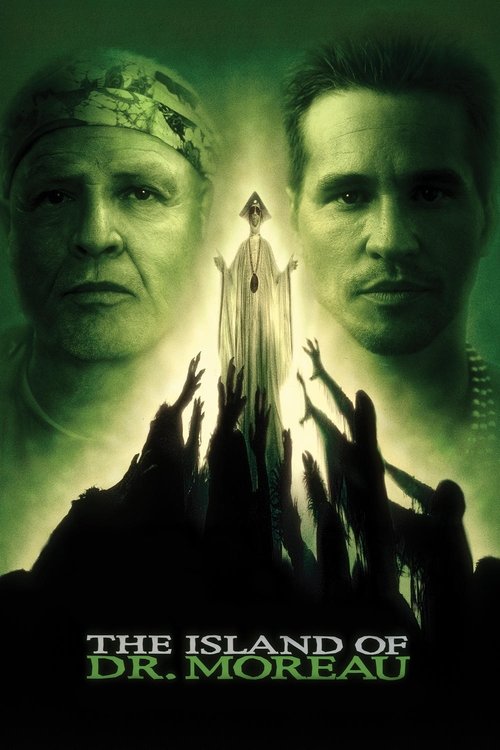
The Island of Dr. Moreau
A plane crash surviving attorney stumbles upon a mysterious island and is shocked to discover that a brilliant scientist and his lab assistant have found a way to combine human and animal DNA—with horrific results.
Working with a mid-range budget of $40.0M, the film achieved a respectable showing with $49.6M in global revenue (+24% profit margin).
2 wins & 10 nominations


Plot Structure
Story beats plotted across runtime


Narrative Arc
Emotional journey through the story's key moments
Story Circle
Blueprint 15-beat structure
Arcplot Score Breakdown
Weighted: Precision (70%) + Arc (15%) + Theme (15%)
The Island of Dr. Moreau (1996) exhibits precise narrative design, characteristic of John Frankenheimer's storytelling approach. This structural analysis examines how the film's 15-point plot structure maps to proven narrative frameworks across 1 hour and 36 minutes. With an Arcplot score of 6.9, the film balances conventional beats with creative variation.
Structural Analysis
The Status Quo at 1 minutes (1% through the runtime) establishes Edward Douglas drifts in a life raft after a plane crash, surrounded by death and desperation in the open sea. His civilized world has already been stripped away, leaving him in a primal state of survival.. Notably, this early placement immediately immerses viewers in the story world.
The inciting incident occurs at 12 minutes when Douglas arrives on Moreau's island and witnesses disturbing hybrid creatures for the first time. The ship departs without him, stranding him in this nightmarish place against his will.. At 12% through the film, this Disruption aligns precisely with traditional story structure. This beat shifts the emotional landscape, launching the protagonist into the central conflict.
The First Threshold at 23 minutes marks the transition into Act II, occurring at 24% of the runtime. This demonstrates the protagonist's commitment to Douglas witnesses a live birth/surgery of a hybrid creature and discovers the full horror of Moreau's work. He attempts to flee into the jungle, crossing into the territory of the beast-people and fully entering the nightmare world., moving from reaction to action.
At 47 minutes, the Midpoint arrives at 49% of the runtime—precisely centered, creating perfect narrative symmetry. Significantly, this crucial beat Hyena-Swine kills a rabbit and tastes blood, breaking the Law. The beast-people begin to question the rules, and cracks appear in Moreau's control. The false peace is shattered as the creatures' animal nature begins reasserting itself., fundamentally raising what's at risk. The emotional intensity shifts, dividing the narrative into clear before-and-after phases.
The Collapse moment at 72 minutes (75% through) represents the emotional nadir. Here, Dr. Moreau is killed by his own creations in a brutal uprising. The father of the beast-people is torn apart by his children, representing the death of God and the complete collapse of order on the island., illustrates the protagonist at their lowest point. This beat's placement in the final quarter sets up the climactic reversal.
The Second Threshold at 76 minutes initiates the final act resolution at 79% of the runtime. Douglas realizes he must stop Hyena-Swine, who has become the new tyrannical leader, to save himself and the remaining peaceful hybrids. He chooses to fight rather than simply flee, embracing action over passive survival., demonstrating the transformation achieved throughout the journey.
Emotional Journey
The Island of Dr. Moreau's emotional architecture traces a deliberate progression across 15 carefully calibrated beats.
Narrative Framework
This structural analysis employs a 15-point narrative structure framework that maps key story moments. By mapping The Island of Dr. Moreau against these established plot points, we can identify how John Frankenheimer utilizes or subverts traditional narrative conventions. The plot point approach reveals not only adherence to structural principles but also creative choices that distinguish The Island of Dr. Moreau within the science fiction genre.
John Frankenheimer's Structural Approach
Among the 11 John Frankenheimer films analyzed on Arcplot, the average structural score is 7.2, reflecting strong command of classical structure. The Island of Dr. Moreau takes a more unconventional approach compared to the director's typical style. For comparative analysis, explore the complete John Frankenheimer filmography.
Comparative Analysis
Additional science fiction films include The Postman, Mad Max 2 and AVP: Alien vs. Predator. For more John Frankenheimer analyses, see Prophecy, The Train and French Connection II.
Plot Points by Act
Act I
SetupStatus Quo
Edward Douglas drifts in a life raft after a plane crash, surrounded by death and desperation in the open sea. His civilized world has already been stripped away, leaving him in a primal state of survival.
Theme
Montgomery remarks on the nature of survival and what separates man from beast while rescuing Douglas. The theme of humanity's thin veneer over animal instinct is established.
Worldbuilding
Douglas is rescued by Montgomery and brought aboard a ship carrying caged animals. The mysterious nature of their destination and Montgomery's evasive answers establish an atmosphere of dread and scientific secrecy.
Disruption
Douglas arrives on Moreau's island and witnesses disturbing hybrid creatures for the first time. The ship departs without him, stranding him in this nightmarish place against his will.
Resistance
Douglas explores the compound, meets the enigmatic Dr. Moreau, and learns about the experiments creating human-animal hybrids. He debates whether to trust Moreau or attempt escape, while witnessing the unsettling Law that governs the beast-people.
Act II
ConfrontationFirst Threshold
Douglas witnesses a live birth/surgery of a hybrid creature and discovers the full horror of Moreau's work. He attempts to flee into the jungle, crossing into the territory of the beast-people and fully entering the nightmare world.
Mirror World
Douglas forms a connection with Aissa, Moreau's hybrid "daughter" who retains her humanity despite her origins. She represents hope that civilization can exist within the beast, embodying the film's central thematic question.
Premise
Douglas navigates life among the beast-people, witnessing Moreau's godlike control through electronic implants that cause pain. He observes the fragile social order maintained by the Law and grows closer to Aissa while searching for a way to escape.
Midpoint
Hyena-Swine kills a rabbit and tastes blood, breaking the Law. The beast-people begin to question the rules, and cracks appear in Moreau's control. The false peace is shattered as the creatures' animal nature begins reasserting itself.
Opposition
Montgomery descends into nihilistic drinking and sabotage. The beast-people grow increasingly rebellious as they discover the implants can be removed. Moreau's authority crumbles as the hybrids taste freedom and violence.
Collapse
Dr. Moreau is killed by his own creations in a brutal uprising. The father of the beast-people is torn apart by his children, representing the death of God and the complete collapse of order on the island.
Crisis
Chaos engulfs the island as the beast-people rampage. Montgomery, drunk and nihilistic, provides them with weapons and is killed in the ensuing violence. Douglas and Aissa flee as the compound burns.
Act III
ResolutionSecond Threshold
Douglas realizes he must stop Hyena-Swine, who has become the new tyrannical leader, to save himself and the remaining peaceful hybrids. He chooses to fight rather than simply flee, embracing action over passive survival.
Synthesis
Douglas confronts Hyena-Swine in the burning compound. Using Moreau's technology against the beast-leader, he destroys the threat. Aissa is mortally wounded in the conflict. Douglas escapes on a boat as the island burns behind him.
Transformation
Douglas drifts alone on the ocean once more, mirroring his opening state but now forever changed. His voiceover reflects on the beast within all humans, suggesting civilization is merely a thin mask over our animal nature.