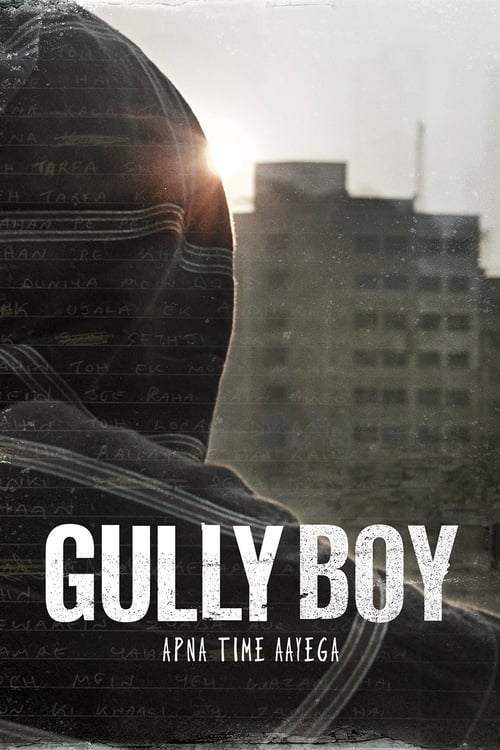
Gully Boy
A coming-of-age story based on the lives of street rappers in Mumbai.
Despite its tight budget of $5.8M, Gully Boy became a box office success, earning $28.3M worldwide—a 389% return. The film's fresh perspective found its audience, showing that strong storytelling can transcend budget limitations.
76 wins & 67 nominations


Plot Structure
Story beats plotted across runtime


Narrative Arc
Emotional journey through the story's key moments
Story Circle
Blueprint 15-beat structure
Arcplot Score Breakdown
Weighted: Precision (70%) + Arc (15%) + Theme (15%)
Gully Boy (2019) showcases precise plot construction, characteristic of Zoya Akhtar's storytelling approach. This structural analysis examines how the film's 15-point plot structure maps to proven narrative frameworks across 2 hours and 36 minutes. With an Arcplot score of 7.4, the film balances conventional beats with creative variation.
Characters
Cast & narrative archetypes

Murad Ahmed
Safeena Firdausi
MC Sher
Shakir
Razia Ahmed
Moeen
Sky
Main Cast & Characters
Murad Ahmed
Played by Ranveer Singh
A young street rapper from Dharavi slum who dreams of escaping poverty through his music and authentic voice.
Safeena Firdausi
Played by Alia Bhatt
Murad's fiercely protective girlfriend, a medical student with a volatile temper and intense loyalty.
MC Sher
Played by Siddhant Chaturvedi
An established underground rapper who becomes Murad's mentor and collaborator in the Mumbai hip-hop scene.
Shakir
Played by Vijay Raaz
Murad's father, a frustrated driver with traditional values who dismisses his son's artistic ambitions.
Razia Ahmed
Played by Amruta Subhash
Murad's mother, a quiet woman trapped in a difficult marriage who silently supports her son.
Moeen
Played by Vijay Varma
Murad's childhood friend who gets involved in crime and represents the path Murad could have taken.
Sky
Played by Kalki Koechlin
A successful rap artist and organizer of the underground rap competition that could launch Murad's career.
Structural Analysis
The Status Quo at 2 minutes (1% through the runtime) establishes Murad lives in cramped conditions in Dharavi slum, sharing a small room with his family. He works as a driver for his wealthy college friends while hiding his poetry notebooks, representing his suppressed dreams in a world of economic constraint.. Structural examination shows that this early placement immediately immerses viewers in the story world.
The inciting incident occurs at 18 minutes when Murad witnesses an underground rap battle and is electrified by the raw expression and power of hip-hop. He sees MC Sher perform and realizes rap could be the vehicle for his suppressed poetry and voice.. At 12% through the film, this Disruption aligns precisely with traditional story structure. This beat shifts the emotional landscape, launching the protagonist into the central conflict.
The First Threshold at 39 minutes marks the transition into Act II, occurring at 25% of the runtime. This illustrates the protagonist's commitment to Murad performs his first rap "Mere Gully Mein" with MC Sher. He makes the active choice to step into the world of hip-hop, recording and sharing his music despite knowing it will conflict with his father's expectations and his prescribed future., moving from reaction to action.
At 77 minutes, the Midpoint arrives at 49% of the runtime—precisely centered, creating perfect narrative symmetry. Significantly, this crucial beat Murad's music video goes viral and he gets invited to perform at a major concert. False victory - his rap career seems to be taking off, but this success intensifies the conflict with his traditional father and raises the stakes for what he must sacrifice., fundamentally raising what's at risk. The emotional intensity shifts, dividing the narrative into clear before-and-after phases.
The Collapse moment at 117 minutes (75% through) represents the emotional nadir. Here, Murad's father destroys his notebooks and music equipment in a violent rage, and Murad is forced to move out. His father's brutal rejection represents the death of any hope for family acceptance and the loss of his home and security., shows the protagonist at their lowest point. This beat's placement in the final quarter sets up the climactic reversal.
The Second Threshold at 125 minutes initiates the final act resolution at 80% of the runtime. Murad receives news that he's been selected for a major rap competition with industry professionals. He realizes that his authentic voice - forged through struggle and grounded in his community - is his greatest strength. He chooses to fully commit to his artistic path., demonstrating the transformation achieved throughout the journey.
Emotional Journey
Gully Boy's emotional architecture traces a deliberate progression across 15 carefully calibrated beats.
Narrative Framework
This structural analysis employs proven narrative structure principles that track dramatic progression. By mapping Gully Boy against these established plot points, we can identify how Zoya Akhtar utilizes or subverts traditional narrative conventions. The plot point approach reveals not only adherence to structural principles but also creative choices that distinguish Gully Boy within the drama genre.
Comparative Analysis
Additional drama films include After Thomas, South Pacific and Dirty Dancing: Havana Nights.
Plot Points by Act
Act I
SetupStatus Quo
Murad lives in cramped conditions in Dharavi slum, sharing a small room with his family. He works as a driver for his wealthy college friends while hiding his poetry notebooks, representing his suppressed dreams in a world of economic constraint.
Theme
MC Sher tells Murad "Apna time aayega" (Our time will come) - establishing the central theme that talent and dreams can transcend social class and economic circumstances, and that finding one's voice is the path to liberation.
Worldbuilding
Setup of Murad's world: his oppressive father, his relationship with girlfriend Safeena, the class divide at college, his job as a driver for rich kids, and his secret passion for writing poetry. The constraints of poverty and patriarchal expectations are established.
Disruption
Murad witnesses an underground rap battle and is electrified by the raw expression and power of hip-hop. He sees MC Sher perform and realizes rap could be the vehicle for his suppressed poetry and voice.
Resistance
Murad debates whether to pursue rap. He tentatively connects with MC Sher, writes his first rap verses in secret, and struggles with fear of judgment and family obligations. He hesitates between the safety of his prescribed path and the risk of artistic expression.
Act II
ConfrontationFirst Threshold
Murad performs his first rap "Mere Gully Mein" with MC Sher. He makes the active choice to step into the world of hip-hop, recording and sharing his music despite knowing it will conflict with his father's expectations and his prescribed future.
Mirror World
MC Sher becomes Murad's mentor and friend, representing the thematic counterpoint - someone who has pursued his artistic dreams despite poverty. Their partnership embodies the possibility of authenticity and artistic community over material success.
Premise
The promise of the premise: Murad experiences the joy of creating rap, building his reputation in the underground scene, collaborating with MC Sher, and seeing his YouTube views grow. He explores his artistic identity while balancing family obligations and his relationship with Safeena.
Midpoint
Murad's music video goes viral and he gets invited to perform at a major concert. False victory - his rap career seems to be taking off, but this success intensifies the conflict with his traditional father and raises the stakes for what he must sacrifice.
Opposition
Opposition intensifies from multiple fronts: his father becomes more controlling and violent, his relationship with Safeena grows strained as she faces her own family pressures, and he struggles with whether his art is worth the cost to his family and relationships.
Collapse
Murad's father destroys his notebooks and music equipment in a violent rage, and Murad is forced to move out. His father's brutal rejection represents the death of any hope for family acceptance and the loss of his home and security.
Crisis
Murad processes the loss, staying with MC Sher and facing the reality that pursuing his dreams means complete separation from his father's world. He contemplates whether his art is worth the isolation and poverty, experiencing his dark night of the soul.
Act III
ResolutionSecond Threshold
Murad receives news that he's been selected for a major rap competition with industry professionals. He realizes that his authentic voice - forged through struggle and grounded in his community - is his greatest strength. He chooses to fully commit to his artistic path.
Synthesis
Murad prepares for and performs at the competition, synthesizing everything he's learned about authenticity, community, and artistic voice. He delivers a powerful performance that embodies both his personal story and the broader struggles of his community, fully claiming his identity as a rapper.
Transformation
Murad performs on stage with confidence and pride, surrounded by his community. Unlike the opening where he hid his poetry, he now openly claims his artistic identity. His transformation from silenced to self-expressed is complete, embodying "Apna time aayega" - his time has come.