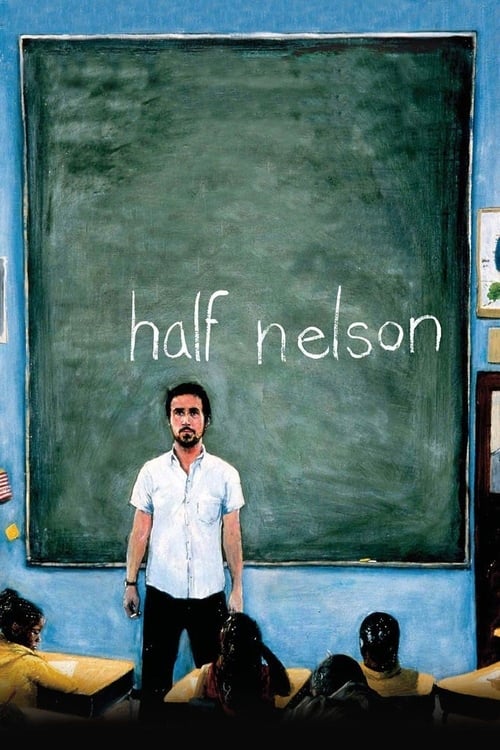
Half Nelson
Despite his dedication to the junior-high students who fill his classroom, idealistic teacher Dan Dunne leads a secret life of addiction that the majority of his students will never know. But things change when a troubled student Drey makes a startling discovery of his secret life, causing a tenuous bond between the two that could either end disastrously or provide a catalyst of hope.
Despite its extremely modest budget of $700K, Half Nelson became a runaway success, earning $4.9M worldwide—a remarkable 602% return. The film's unconventional structure attracted moviegoers, illustrating how strong storytelling can transcend budget limitations.
Nominated for 1 Oscar. 29 wins & 48 nominations


Plot Structure
Story beats plotted across runtime


Narrative Arc
Emotional journey through the story's key moments
Story Circle
Blueprint 15-beat structure
Arcplot Score Breakdown
Weighted: Precision (70%) + Arc (15%) + Theme (15%)
Half Nelson (2006) reveals strategically placed plot construction, characteristic of Ryan Fleck's storytelling approach. This structural analysis examines how the film's 15-point plot structure maps to proven narrative frameworks across 1 hour and 47 minutes. With an Arcplot score of 7.2, the film balances conventional beats with creative variation.
Characters
Cast & narrative archetypes

Dan Dunne
Drey
Frank
Rachel
Main Cast & Characters
Dan Dunne
Played by Ryan Gosling
An idealistic middle school history teacher struggling with crack cocaine addiction while inspiring his students with unconventional teaching methods.
Drey
Played by Shareeka Epps
A 13-year-old student who discovers her teacher's drug addiction and forms an unlikely friendship with him while navigating her own troubled home life.
Frank
Played by Anthony Mackie
A local drug dealer who becomes a mentor figure to Drey, offering her stability while potentially leading her down a dangerous path.
Rachel
Played by Monique Gabriela Curnen
Dan's ex-girlfriend and fellow teacher who tries to maintain a friendship with him while worrying about his deteriorating condition.
Structural Analysis
The Status Quo at 1 minutes (1% through the runtime) establishes Dan Dunne teaches inner-city middle school history with passionate, unconventional methods, using dialectics to challenge students' thinking while hiding his crack cocaine addiction.. The analysis reveals that this early placement immediately immerses viewers in the story world.
The inciting incident occurs at 14 minutes when After a basketball game, Drey discovers Dan smoking crack in the girls' locker room bathroom. His secret is exposed to the one student who looks up to him most.. At 13% through the film, this Disruption is delayed, allowing extended setup of the story world. This beat shifts the emotional landscape, launching the protagonist into the central conflict.
The First Threshold at 27 minutes marks the transition into Act II, occurring at 25% of the runtime. This demonstrates the protagonist's commitment to Dan and Drey actively choose to maintain their friendship despite the dangerous secret between them. They go for food together, crossing from teacher-student into a more complex, mutual relationship., moving from reaction to action.
At 54 minutes, the Midpoint arrives at 51% of the runtime—precisely centered, creating perfect narrative symmetry. Of particular interest, this crucial beat Dan sees Drey in Frank's car and realizes she's being recruited into drug dealing—the same world that's destroying him. His failure to be the role model she needs becomes devastatingly clear., fundamentally raising what's at risk. The emotional intensity shifts, dividing the narrative into clear before-and-after phases.
The Collapse moment at 81 minutes (76% through) represents the emotional nadir. Here, After a disastrous encounter with Rachel where his addiction is fully exposed, Dan hits rock bottom, using crack alone in his apartment, completely isolated and defeated., shows the protagonist at their lowest point. This beat's placement in the final quarter sets up the climactic reversal.
The Second Threshold at 87 minutes initiates the final act resolution at 82% of the runtime. Drey, shaken after her drug run, calls Dan for help. This mutual vulnerability—her needing him and him being needed—provides a moment of clarity for both., demonstrating the transformation achieved throughout the journey.
Emotional Journey
Half Nelson's emotional architecture traces a deliberate progression across 15 carefully calibrated beats.
Narrative Framework
This structural analysis employs systematic plot point analysis that identifies crucial turning points. By mapping Half Nelson against these established plot points, we can identify how Ryan Fleck utilizes or subverts traditional narrative conventions. The plot point approach reveals not only adherence to structural principles but also creative choices that distinguish Half Nelson within the drama genre.
Comparative Analysis
Additional drama films include After Thomas, South Pacific and Dirty Dancing: Havana Nights.
Plot Points by Act
Act I
SetupStatus Quo
Dan Dunne teaches inner-city middle school history with passionate, unconventional methods, using dialectics to challenge students' thinking while hiding his crack cocaine addiction.
Theme
Dan teaches his class about change and dialectics: "One thing can't exist without the other... push and pull, thesis and antithesis." The theme of opposing forces and the struggle between them is introduced.
Worldbuilding
Dan's double life is established: inspiring teacher by day, drug addict by night. We see his relationship with students, particularly Drey, his coaching of the girls' basketball team, and his self-destructive spiral.
Disruption
After a basketball game, Drey discovers Dan smoking crack in the girls' locker room bathroom. His secret is exposed to the one student who looks up to him most.
Resistance
Dan and Drey form an unlikely bond after she finds him. Neither speaks of what happened, but they begin spending time together outside school. Dan struggles with whether to continue his destructive path or change.
Act II
ConfrontationFirst Threshold
Dan and Drey actively choose to maintain their friendship despite the dangerous secret between them. They go for food together, crossing from teacher-student into a more complex, mutual relationship.
Mirror World
Drey's relationship with Frank, a local drug dealer, deepens. Frank represents the opposite path from Dan—someone who offers Drey stability and protection in the same world that's destroying her teacher.
Premise
Dan and Drey's unconventional friendship develops as they each try to save the other. Dan attempts to stay clean and be a better mentor; Drey tries to keep Dan from completely falling apart while being pulled toward Frank's world.
Midpoint
Dan sees Drey in Frank's car and realizes she's being recruited into drug dealing—the same world that's destroying him. His failure to be the role model she needs becomes devastatingly clear.
Opposition
Dan spirals deeper into addiction while trying unsuccessfully to intervene in Drey's involvement with Frank. His attempts at connection fail—with Drey, with ex-girlfriend Rachel, with himself. Drey moves further into Frank's world.
Collapse
After a disastrous encounter with Rachel where his addiction is fully exposed, Dan hits rock bottom, using crack alone in his apartment, completely isolated and defeated.
Crisis
Dan sits in the darkness of his addiction and failure. Meanwhile, Drey makes her first drug run for Frank, crossing into the world Dan wanted to save her from.
Act III
ResolutionSecond Threshold
Drey, shaken after her drug run, calls Dan for help. This mutual vulnerability—her needing him and him being needed—provides a moment of clarity for both.
Synthesis
Dan picks up Drey and they spend time together. Dan confronts Frank, asserting himself as a protective figure in Drey's life. Though neither is saved, they acknowledge their bond and shared struggle.
Transformation
Dan and Drey sit together in his car in ambiguous silence. Neither has escaped their circumstances, but both have found connection. The dialectic continues—not resolved, but acknowledged.