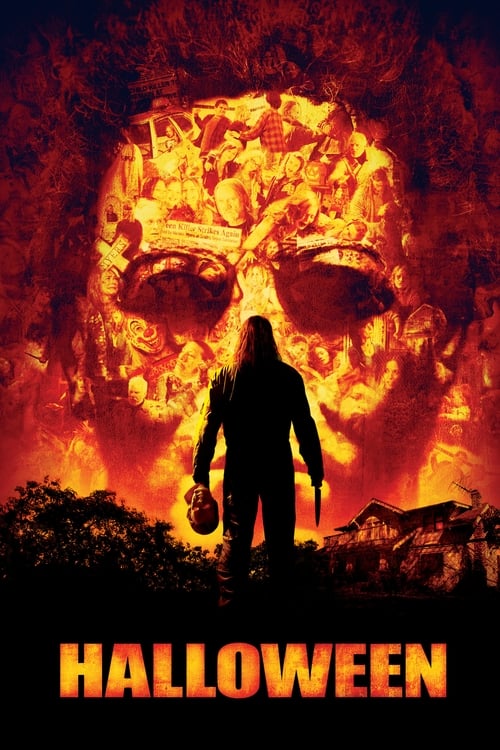
Halloween
The early years of young Michael Myers and the events leading up to his fateful Halloween night murder rampage in the quiet town of Haddonfield, Illinois.
Despite a respectable budget of $15.0M, Halloween became a commercial success, earning $80.5M worldwide—a 436% return.
3 wins & 2 nominations


Plot Structure
Story beats plotted across runtime


Narrative Arc
Emotional journey through the story's key moments
Story Circle
Blueprint 15-beat structure
Arcplot Score Breakdown
Weighted: Precision (70%) + Arc (15%) + Theme (15%)
Halloween (2007) demonstrates strategically placed story structure, characteristic of Rob Zombie's storytelling approach. This structural analysis examines how the film's 15-point plot structure maps to proven narrative frameworks across 1 hour and 50 minutes. With an Arcplot score of 7.3, the film balances conventional beats with creative variation.
Characters
Cast & narrative archetypes

Michael Myers (Young)
Michael Myers (Adult)
Laurie Strode
Dr. Samuel Loomis
Deborah Myers
Ronnie White
Sheriff Leigh Brackett
Annie Brackett
Main Cast & Characters
Michael Myers (Young)
Played by Daeg Faerch
A troubled 10-year-old boy who commits his first murders on Halloween night, showing early signs of psychopathy and detachment.
Michael Myers (Adult)
Played by Tyler Mane
The grown killer who escapes Smith's Grove Sanitarium to return to Haddonfield and continue his murderous rampage.
Laurie Strode
Played by Scout Taylor-Compton
A kind-hearted teenage babysitter who becomes Michael's primary target and must fight for survival.
Dr. Samuel Loomis
Played by Malcolm McDowell
Michael's psychiatrist who becomes obsessed with understanding and stopping his patient after recognizing his evil nature.
Deborah Myers
Played by Sheri Moon Zombie
Michael's mother, a stripper who loves her son despite his disturbing behavior, eventually unable to cope with what he becomes.
Ronnie White
Played by William Forsythe
Deborah's abusive boyfriend who verbally torments young Michael, contributing to his psychological breakdown.
Sheriff Leigh Brackett
Played by Brad Dourif
Haddonfield's sheriff who investigates Michael's killings and tries to protect the town, including his daughter Annie.
Annie Brackett
Played by Danielle Harris
Laurie's best friend and fellow babysitter who becomes one of Michael's victims.
Structural Analysis
The Status Quo at 1 minutes (1% through the runtime) establishes Young Michael Myers lives in a broken home with an abusive stepfather, bullying older sister, and overwhelmed mother. He tortures animals and is isolated at school, establishing the toxic environment that shapes him.. Of particular interest, this early placement immediately immerses viewers in the story world.
The inciting incident occurs at 12 minutes when On Halloween night, 10-year-old Michael snaps and murders his stepfather, his sister Judith, and her boyfriend in a brutal killing spree, forever shattering any possibility of a normal life.. At 11% through the film, this Disruption aligns precisely with traditional story structure. This beat shifts the emotional landscape, launching the protagonist into the central conflict.
The First Threshold at 26 minutes marks the transition into Act II, occurring at 24% of the runtime. This demonstrates the protagonist's commitment to Fifteen years later, adult Michael Myers makes the active choice to escape from Smith's Grove Sanitarium, killing staff members and returning to Haddonfield to find his baby sister Laurie, whom he has never forgotten., moving from reaction to action.
At 55 minutes, the Midpoint arrives at 50% of the runtime—precisely centered, creating perfect narrative symmetry. Notably, this crucial beat Michael begins his killing spree in earnest, murdering Laurie's friends one by one. The stakes escalate from stalking to active violence, and the night of terror truly begins. The fun is over., fundamentally raising what's at risk. The emotional intensity shifts, dividing the narrative into clear before-and-after phases.
The Collapse moment at 83 minutes (75% through) represents the emotional nadir. Here, Laurie is cornered in the Myers house, completely alone and defenseless. She learns the horrifying truth that Michael is her brother and comes face-to-face with pure evil. All hope seems lost as she confronts her connection to the monster., reveals the protagonist at their lowest point. This beat's placement in the final quarter sets up the climactic reversal.
The Second Threshold at 88 minutes initiates the final act resolution at 80% of the runtime. Dr. Loomis arrives and shoots Michael, giving Laurie the opportunity to fight back. She realizes she must become something darker to survive, tapping into a primal survival instinct that connects her to the evil she faces., demonstrating the transformation achieved throughout the journey.
Emotional Journey
Halloween's emotional architecture traces a deliberate progression across 15 carefully calibrated beats.
Narrative Framework
This structural analysis employs a 15-point narrative structure framework that maps key story moments. By mapping Halloween against these established plot points, we can identify how Rob Zombie utilizes or subverts traditional narrative conventions. The plot point approach reveals not only adherence to structural principles but also creative choices that distinguish Halloween within the horror genre.
Rob Zombie's Structural Approach
Among the 4 Rob Zombie films analyzed on Arcplot, the average structural score is 7.1, reflecting strong command of classical structure. Halloween represents one of the director's most structurally precise works. For comparative analysis, explore the complete Rob Zombie filmography.
Comparative Analysis
Additional horror films include Thinner, A Nightmare on Elm Street and Mary Reilly. For more Rob Zombie analyses, see The Devil's Rejects, House of 1000 Corpses and Halloween II.
Plot Points by Act
Act I
SetupStatus Quo
Young Michael Myers lives in a broken home with an abusive stepfather, bullying older sister, and overwhelmed mother. He tortures animals and is isolated at school, establishing the toxic environment that shapes him.
Theme
Dr. Loomis speaks with young Michael about the nature of evil and whether some people are born bad or made bad by their circumstances, introducing the film's central thematic question about the origins of evil.
Worldbuilding
The dysfunctional Myers household is established: Michael is bullied at school, tortures animals, makes disturbing masks, and retreats into silence. His mother Deborah works as a stripper while his stepfather Ronnie is verbally abusive.
Disruption
On Halloween night, 10-year-old Michael snaps and murders his stepfather, his sister Judith, and her boyfriend in a brutal killing spree, forever shattering any possibility of a normal life.
Resistance
Michael is institutionalized at Smith's Grove Sanitarium. Dr. Loomis attempts to reach him through therapy sessions while Michael creates masks obsessively. His mother visits regularly until she commits suicide, causing Michael to descend into complete silence and isolation.
Act II
ConfrontationFirst Threshold
Fifteen years later, adult Michael Myers makes the active choice to escape from Smith's Grove Sanitarium, killing staff members and returning to Haddonfield to find his baby sister Laurie, whom he has never forgotten.
Mirror World
Laurie Strode is introduced living a normal teenage life with caring adoptive parents, friends, and prospects. She represents the life Michael could have had and embodies innocence that contrasts with Michael's corruption.
Premise
Michael stalks Haddonfield on Halloween, reclaiming his childhood home and observing Laurie from a distance. Dr. Loomis races to warn the authorities. Laurie and her friends go about typical teenage Halloween activities, unaware of the danger approaching.
Midpoint
Michael begins his killing spree in earnest, murdering Laurie's friends one by one. The stakes escalate from stalking to active violence, and the night of terror truly begins. The fun is over.
Opposition
Michael systematically kills everyone around Laurie. Dr. Loomis confronts Sheriff Brackett with the truth about Michael. Laurie discovers the bodies of her friends and realizes she is being hunted. The body count rises as Michael closes in.
Collapse
Laurie is cornered in the Myers house, completely alone and defenseless. She learns the horrifying truth that Michael is her brother and comes face-to-face with pure evil. All hope seems lost as she confronts her connection to the monster.
Crisis
Laurie fights desperately for survival against Michael's overwhelming strength and relentless pursuit. She is beaten, terrified, and pushed to her absolute limit, forced to find the will to survive within herself.
Act III
ResolutionSecond Threshold
Dr. Loomis arrives and shoots Michael, giving Laurie the opportunity to fight back. She realizes she must become something darker to survive, tapping into a primal survival instinct that connects her to the evil she faces.
Synthesis
Laurie fights back with brutal determination, shooting Michael in the face and refusing to let him destroy her. The final confrontation between brother and sister reaches its violent climax as Laurie proves she will do whatever it takes to survive.
Transformation
Laurie sits traumatized in the back of a police car, having survived but forever changed. Her innocence is destroyed, replaced by the thousand-yard stare of someone who has looked into the abyss. She is alive, but the girl she was is dead.