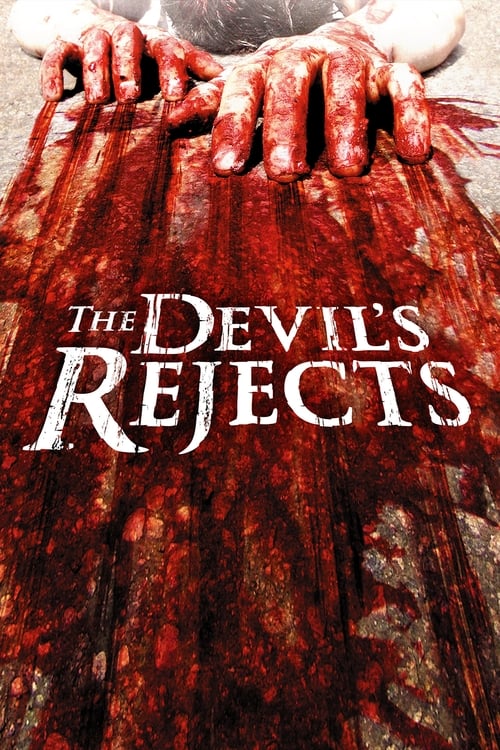
The Devil's Rejects
The murderous, backwoods Firefly family take to the road to escape the vengeful Sheriff Wydell, who is not afraid of being as ruthless as his target.
Despite its small-scale budget of $7.0M, The Devil's Rejects became a solid performer, earning $20.9M worldwide—a 199% return.
10 wins & 8 nominations


Plot Structure
Story beats plotted across runtime


Narrative Arc
Emotional journey through the story's key moments
Story Circle
Blueprint 15-beat structure
Arcplot Score Breakdown
Weighted: Precision (70%) + Arc (15%) + Theme (15%)
The Devil's Rejects (2005) showcases meticulously timed dramatic framework, characteristic of Rob Zombie's storytelling approach. This structural analysis examines how the film's 15-point plot structure maps to proven narrative frameworks across 1 hour and 51 minutes. With an Arcplot score of 7.3, the film balances conventional beats with creative variation.
Characters
Cast & narrative archetypes

Otis B. Driftwood
Baby Firefly
Captain J.T. Spaulding
Sheriff John Quincy Wydell
Tiny Firefly
Wendy Banjo
Adam Banjo
Roy Sullivan
Main Cast & Characters
Otis B. Driftwood
Played by Bill Moseley
The sadistic intellectual leader of the Firefly family, calculating and philosophical about his violence.
Baby Firefly
Played by Sheri Moon Zombie
The seductive and childlike psychopath, daughter of the Firefly clan with a penchant for brutality.
Captain J.T. Spaulding
Played by Sid Haig
The charismatic pimp and father figure of the Firefly family, operating under the guise of a chicken stand owner.
Sheriff John Quincy Wydell
Played by William Forsythe
The vengeful lawman obsessed with avenging his brother's death, willing to cross moral lines.
Tiny Firefly
Played by Matthew McGrory
The deformed, gentle giant of the Firefly family who ultimately helps Sheriff Wydell.
Wendy Banjo
Played by Priscilla Barnes
A music critic taken hostage by the Firefly clan who endures horrific torture.
Adam Banjo
Played by Lew Temple
Music critic and Wendy's husband, taken hostage and eventually murdered by the clan.
Roy Sullivan
Played by Geoffrey Lewis
Road musician taken hostage alongside the Banjos, tortured and killed.
Structural Analysis
The Status Quo at 1 minutes (1% through the runtime) establishes The Firefly farmhouse is shown at dawn with evidence of their murderous lifestyle, establishing the family's twisted domestic existence as serial killers living in rural isolation.. Significantly, this early placement immediately immerses viewers in the story world.
The inciting incident occurs at 13 minutes when The police raid forces Otis and Baby to flee their home, destroying their established way of life. Their sanctuary is compromised and Mother Firefly is taken into custody, scattering the family.. At 12% through the film, this Disruption aligns precisely with traditional story structure. This beat shifts the emotional landscape, launching the protagonist into the central conflict.
The First Threshold at 28 minutes marks the transition into Act II, occurring at 25% of the runtime. This indicates the protagonist's commitment to Captain Spaulding arrives at the motel and the Firefly trio reunites, making the active choice to go on the run together rather than split up. They commit fully to their outlaw existence with no possibility of return., moving from reaction to action.
At 56 minutes, the Midpoint arrives at 50% of the runtime—precisely centered, creating perfect narrative symmetry. Significantly, this crucial beat Sheriff Wydell hires the bounty hunters known as the Unholy Two to track the Fireflies, abandoning legal methods entirely. His transformation from lawman to vigilante mirrors the family he hunts, raising the stakes dramatically., fundamentally raising what's at risk. The emotional intensity shifts, dividing the narrative into clear before-and-after phases.
The Collapse moment at 83 minutes (75% through) represents the emotional nadir. Here, The Unholy Two capture Otis, Baby, and Captain Spaulding at the brothel. Bound and helpless, the family faces death as Wydell prepares to exact his brutal revenge, becoming the monster he sought to destroy., illustrates the protagonist at their lowest point. This beat's placement in the final quarter sets up the climactic reversal.
The Second Threshold at 89 minutes initiates the final act resolution at 80% of the runtime. Tiny Firefly, believed dead, arrives and kills the Unholy Two, freeing his family. This unexpected rescue provides a final chance at escape and survival, reigniting hope for the Firefly clan., demonstrating the transformation achieved throughout the journey.
Emotional Journey
The Devil's Rejects's emotional architecture traces a deliberate progression across 15 carefully calibrated beats.
Narrative Framework
This structural analysis employs a 15-point narrative structure framework that maps key story moments. By mapping The Devil's Rejects against these established plot points, we can identify how Rob Zombie utilizes or subverts traditional narrative conventions. The plot point approach reveals not only adherence to structural principles but also creative choices that distinguish The Devil's Rejects within the drama genre.
Rob Zombie's Structural Approach
Among the 4 Rob Zombie films analyzed on Arcplot, the average structural score is 7.1, reflecting strong command of classical structure. The Devil's Rejects represents one of the director's most structurally precise works. For comparative analysis, explore the complete Rob Zombie filmography.
Comparative Analysis
Additional drama films include After Thomas, South Pacific and Dirty Dancing: Havana Nights. For more Rob Zombie analyses, see Halloween, House of 1000 Corpses and Halloween II.
Plot Points by Act
Act I
SetupStatus Quo
The Firefly farmhouse is shown at dawn with evidence of their murderous lifestyle, establishing the family's twisted domestic existence as serial killers living in rural isolation.
Theme
Sheriff Wydell declares his mission to bring the Firefly family to justice for murdering his brother, establishing the theme: the pursuit of vengeance transforms the pursuer into the very evil they hunt.
Worldbuilding
The violent siege of the Firefly compound by Sheriff Wydell and state troopers establishes the dangerous world of the film. Mother Firefly is captured while Otis and Baby escape through underground tunnels, setting up the chase narrative.
Disruption
The police raid forces Otis and Baby to flee their home, destroying their established way of life. Their sanctuary is compromised and Mother Firefly is taken into custody, scattering the family.
Resistance
Otis and Baby take hostages at a motel while planning their escape. They contact Captain Spaulding to arrange a rendezvous, debating how to evade the law while Sheriff Wydell intensifies his investigation and begins crossing ethical lines.
Act II
ConfrontationFirst Threshold
Captain Spaulding arrives at the motel and the Firefly trio reunites, making the active choice to go on the run together rather than split up. They commit fully to their outlaw existence with no possibility of return.
Mirror World
The bond between the Firefly family members is revealed through their dark humor and loyalty to each other. Despite their monstrous acts, their genuine love for one another serves as a twisted mirror to conventional family values.
Premise
The Firefly family terrorizes their hostages and evades law enforcement as they travel toward a safehouse. Extended sequences of psychological torture at the motel deliver the film's exploitation horror premise while Wydell's obsession grows.
Midpoint
Sheriff Wydell hires the bounty hunters known as the Unholy Two to track the Fireflies, abandoning legal methods entirely. His transformation from lawman to vigilante mirrors the family he hunts, raising the stakes dramatically.
Opposition
The Fireflys reach Charlie's brothel believing they're safe, but the Unholy Two are closing in. Wydell executes Mother Firefly in prison and descends fully into madness. The net tightens as the hunters become the hunted.
Collapse
The Unholy Two capture Otis, Baby, and Captain Spaulding at the brothel. Bound and helpless, the family faces death as Wydell prepares to exact his brutal revenge, becoming the monster he sought to destroy.
Crisis
Wydell tortures the Firefly family with sadistic glee, stapling crime scene photos to their bodies and preparing to burn them alive. The family experiences the terror they've inflicted on countless victims.
Act III
ResolutionSecond Threshold
Tiny Firefly, believed dead, arrives and kills the Unholy Two, freeing his family. This unexpected rescue provides a final chance at escape and survival, reigniting hope for the Firefly clan.
Synthesis
Baby kills Sheriff Wydell, completing the cycle of vengeance. The surviving Fireflys flee in a convertible, finally free. As "Free Bird" plays, they drive toward a police roadblock, choosing to go out in a blaze of glory rather than surrender.
Transformation
In slow motion, the Firefly family charges the police roadblock with guns blazing, embracing their deaths as outlaws. The freeze-frame ending cements their transformation from hunted fugitives to martyred antiheroes in their own mythology.