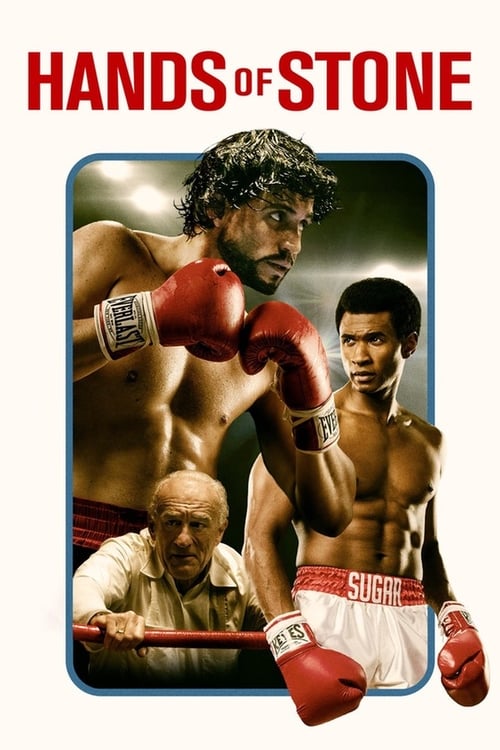
Hands of Stone
The legendary Roberto Duran and his equally legendary trainer Ray Arcel change each other's lives.
The film financial setback against its respectable budget of $20.0M, earning $5.0M globally (-75% loss). While initial box office returns were modest, the film has gained appreciation for its bold vision within the drama genre.






Plot Structure
Story beats plotted across runtime


Narrative Arc
Emotional journey through the story's key moments
Story Circle
Blueprint 15-beat structure
Arcplot Score Breakdown
Weighted: Precision (70%) + Arc (15%) + Theme (15%)
Hands of Stone (2016) exemplifies carefully calibrated dramatic framework, characteristic of Jonathan Jakubowicz's storytelling approach. This structural analysis examines how the film's 15-point plot structure maps to proven narrative frameworks across 1 hour and 51 minutes. With an Arcplot score of 7.7, the film showcases strong structural fundamentals.
Structural Analysis
The Status Quo at 1 minutes (1% through the runtime) establishes Young Roberto Durán fights in the streets of Panama, scrounging for money while American soldiers occupy the Canal Zone. He is hungry, angry, and determined to survive.. Structural examination shows that this early placement immediately immerses viewers in the story world.
The inciting incident occurs at 13 minutes when Carlos Eleta, a wealthy Panamanian businessman, approaches Roberto with an offer to turn professional and fight in the United States. This is Roberto's chance to escape poverty and become a champion.. At 12% through the film, this Disruption aligns precisely with traditional story structure. This beat shifts the emotional landscape, launching the protagonist into the central conflict.
The First Threshold at 28 minutes marks the transition into Act II, occurring at 25% of the runtime. This demonstrates the protagonist's commitment to Roberto agrees to let Ray Arcel train him and commits fully to the professional path. They travel to the United States to begin training for his first major fights. Roberto actively chooses to enter the world of championship boxing., moving from reaction to action.
At 56 minutes, the Midpoint arrives at 50% of the runtime—precisely centered, creating perfect narrative symmetry. Notably, this crucial beat Roberto defeats Ken Buchanan to win the lightweight championship at Madison Square Garden, becoming a national hero in Panama. This is a false victory - he has the belt but hasn't yet confronted his deeper demons or true test., fundamentally raising what's at risk. The emotional intensity shifts, dividing the narrative into clear before-and-after phases.
The Collapse moment at 83 minutes (75% through) represents the emotional nadir. Here, The "No Mas" fight - Roberto quits in the eighth round against Sugar Ray Leonard, saying "No more." His spirit breaks. The humiliation is complete; he loses everything he fought for - respect, dignity, his sense of self. This is his death moment., indicates the protagonist at their lowest point. This beat's placement in the final quarter sets up the climactic reversal.
The Second Threshold at 89 minutes initiates the final act resolution at 80% of the runtime. Ray returns to Roberto, helping him understand that true strength comes from getting back up, not from never falling. Roberto realizes he must fight for himself and his own respect, not for others' validation. He chooses to return to the ring., demonstrating the transformation achieved throughout the journey.
Emotional Journey
Hands of Stone's emotional architecture traces a deliberate progression across 15 carefully calibrated beats.
Narrative Framework
This structural analysis employs systematic plot point analysis that identifies crucial turning points. By mapping Hands of Stone against these established plot points, we can identify how Jonathan Jakubowicz utilizes or subverts traditional narrative conventions. The plot point approach reveals not only adherence to structural principles but also creative choices that distinguish Hands of Stone within the drama genre.
Comparative Analysis
Additional drama films include Eye for an Eye, South Pacific and Kiss of the Spider Woman.
Plot Points by Act
Act I
SetupStatus Quo
Young Roberto Durán fights in the streets of Panama, scrounging for money while American soldiers occupy the Canal Zone. He is hungry, angry, and determined to survive.
Theme
A character tells young Roberto: "A man fights for respect, not just money." This establishes the central theme of what truly makes a champion - internal dignity versus external validation.
Worldbuilding
Roberto rises through Panama's amateur boxing scene. We see his relationship with Felicidad, his resentment toward Americans, his raw talent, and his need to prove himself. Ray Arcel is introduced in parallel, a legendary trainer blackballed by the mob.
Disruption
Carlos Eleta, a wealthy Panamanian businessman, approaches Roberto with an offer to turn professional and fight in the United States. This is Roberto's chance to escape poverty and become a champion.
Resistance
Roberto debates whether to trust the Americans and the professional boxing establishment. Eleta recruits Ray Arcel to train Roberto. Ray is initially reluctant, haunted by his past, but sees something special in the young fighter.
Act II
ConfrontationFirst Threshold
Roberto agrees to let Ray Arcel train him and commits fully to the professional path. They travel to the United States to begin training for his first major fights. Roberto actively chooses to enter the world of championship boxing.
Mirror World
The relationship between Roberto and Ray deepens. Ray becomes a father figure, teaching Roberto that being a champion requires discipline and intelligence, not just rage. This mentorship carries the film's thematic weight.
Premise
Roberto's rise through the professional ranks - the training montages, victories, growing fame, and preparation for the championship fight against Ken Buchanan. We see the promise of boxing glory fulfilled as he becomes lightweight champion.
Midpoint
Roberto defeats Ken Buchanan to win the lightweight championship at Madison Square Garden, becoming a national hero in Panama. This is a false victory - he has the belt but hasn't yet confronted his deeper demons or true test.
Opposition
Success brings new pressures. Roberto's ego grows, he parties, gains weight, and starts ignoring Ray's advice. The challenge from Sugar Ray Leonard emerges. Roberto's personal flaws and need for respect become liabilities as he prepares for Leonard.
Collapse
The "No Mas" fight - Roberto quits in the eighth round against Sugar Ray Leonard, saying "No more." His spirit breaks. The humiliation is complete; he loses everything he fought for - respect, dignity, his sense of self. This is his death moment.
Crisis
Roberto spirals into depression and self-loathing. He is mocked worldwide, disconnected from Ray, and must face the darkness of his shame. He contemplates whether he can ever fight again or if his career is over.
Act III
ResolutionSecond Threshold
Ray returns to Roberto, helping him understand that true strength comes from getting back up, not from never falling. Roberto realizes he must fight for himself and his own respect, not for others' validation. He chooses to return to the ring.
Synthesis
Roberto's comeback fights, culminating in defeating Davey Moore for the junior middleweight title. He proves he is not defined by one moment of weakness but by his ability to rise again. He integrates Ray's lessons with his own fire.
Transformation
Roberto stands victorious, but more importantly, at peace. He has learned that a champion is defined not by never falling, but by always rising. The final image shows him with dignity restored - transformed from an angry street fighter into a true champion.