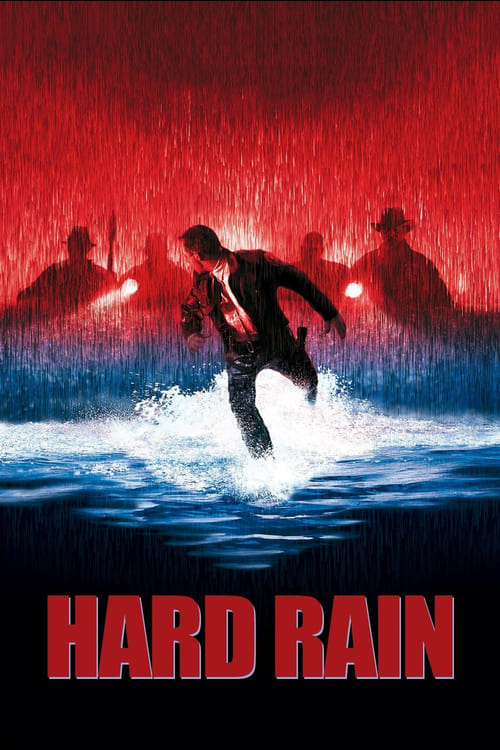
Hard Rain
An armored car driver tries to elude a gang of thieves while a flood ravages the countryside.
The film box office disappointment against its mid-range budget of $70.0M, earning $19.9M globally (-72% loss). While initial box office returns were modest, the film has gained appreciation for its compelling narrative within the thriller genre.


Plot Structure
Story beats plotted across runtime


Narrative Arc
Emotional journey through the story's key moments
Story Circle
Blueprint 15-beat structure
Arcplot Score Breakdown
Weighted: Precision (70%) + Arc (15%) + Theme (15%)
Hard Rain (1998) demonstrates deliberately positioned narrative design, characteristic of Mikael Salomon's storytelling approach. This structural analysis examines how the film's 15-point plot structure maps to proven narrative frameworks across 1 hour and 37 minutes. With an Arcplot score of 7.5, the film showcases strong structural fundamentals.
Characters
Cast & narrative archetypes

Tom
Jim
Karen
Sheriff Mike Collins
Kenny
Ray
Main Cast & Characters
Tom
Played by Christian Slater
An armored car driver who must protect $3 million during a catastrophic flood while being hunted by thieves and corrupt law enforcement.
Jim
Played by Morgan Freeman
The ruthless leader of a gang of thieves who will stop at nothing to steal the money from the armored car.
Karen
Played by Minnie Driver
A local woman who becomes caught up in the dangerous situation and forms an alliance with Tom.
Sheriff Mike Collins
Played by Randy Quaid
A corrupt sheriff who secretly works with the thieves to steal the money while maintaining a facade of authority.
Kenny
Played by Michael A. Goorjian
Jim's nervous and volatile accomplice who becomes increasingly unstable as the situation escalates.
Ray
Played by Dann Florek
Another member of Jim's crew who helps pursue the stolen money through the flooded town.
Structural Analysis
The Status Quo at 1 minutes (1% through the runtime) establishes Tom and his uncle Charlie drive an armored truck through a massive rainstorm in Huntingburg, Indiana, transporting $3 million in collected money. They're professional, experienced guards doing a routine job in increasingly dangerous weather.. The analysis reveals that this early placement immediately immerses viewers in the story world.
The inciting incident occurs at 11 minutes when Jim and his gang of armed robbers ambush the armored truck, shooting out the tires. Charlie is shot and critically wounded. Tom manages to escape with the money bags into the flooding town, beginning a desperate cat-and-mouse chase.. At 11% through the film, this Disruption aligns precisely with traditional story structure. This beat shifts the emotional landscape, launching the protagonist into the central conflict.
The First Threshold at 23 minutes marks the transition into Act II, occurring at 24% of the runtime. This illustrates the protagonist's commitment to Tom decides to hide the money throughout the town rather than hand it over, committing himself to protecting it at all costs. He actively chooses to stay in the flooding danger zone and face Jim's gang rather than escape. This decision transforms him from passive victim to active protector., moving from reaction to action.
At 48 minutes, the Midpoint arrives at 50% of the runtime—precisely centered, creating perfect narrative symmetry. Notably, this crucial beat False defeat: The sheriff reveals himself as corrupt, working with Jim. Tom is captured and forced at gunpoint to reveal where he hid the money. His trust in authority is shattered, and he realizes everyone is compromised. The stakes raise dramatically - it's not just criminals he's fighting, but the very people who should protect the town., fundamentally raising what's at risk. The emotional intensity shifts, dividing the narrative into clear before-and-after phases.
The Collapse moment at 72 minutes (75% through) represents the emotional nadir. Here, Tom is trapped underwater in a submerged building, nearly drowning as Jim and the corrupt sheriff fight above him. Karen is captured and used as bait. The money seems lost to the flood. Tom's partner Charlie dies from his wounds. Everything Tom tried to protect - the money, Karen, his uncle - seems to slip away in the dark, rising water., demonstrates the protagonist at their lowest point. This beat's placement in the final quarter sets up the climactic reversal.
The Second Threshold at 78 minutes initiates the final act resolution at 80% of the runtime. Tom synthesizes Charlie's warning about trust with Karen's example of genuine goodness. He realizes he can't save everything, but he can choose to trust Karen and do the right thing. He stops fighting for the money and starts fighting to save Karen and stop the corrupt officials, using his knowledge of where the money is hidden as leverage., demonstrating the transformation achieved throughout the journey.
Emotional Journey
Hard Rain's emotional architecture traces a deliberate progression across 15 carefully calibrated beats.
Narrative Framework
This structural analysis employs systematic plot point analysis that identifies crucial turning points. By mapping Hard Rain against these established plot points, we can identify how Mikael Salomon utilizes or subverts traditional narrative conventions. The plot point approach reveals not only adherence to structural principles but also creative choices that distinguish Hard Rain within the thriller genre.
Mikael Salomon's Structural Approach
Among the 2 Mikael Salomon films analyzed on Arcplot, the average structural score is 7.5, reflecting strong command of classical structure. Hard Rain takes a more unconventional approach compared to the director's typical style. For comparative analysis, explore the complete Mikael Salomon filmography.
Comparative Analysis
Additional thriller films include The Warriors, Thunderball and Rustom. For more Mikael Salomon analyses, see A Far Off Place.
Plot Points by Act
Act I
SetupStatus Quo
Tom and his uncle Charlie drive an armored truck through a massive rainstorm in Huntingburg, Indiana, transporting $3 million in collected money. They're professional, experienced guards doing a routine job in increasingly dangerous weather.
Theme
Charlie tells Tom: "You can't trust anybody in this world." This theme of trust versus betrayal will define every relationship Tom encounters during the flood.
Worldbuilding
Establishing the flood emergency in Huntingburg. The town is evacuating as water levels rise dangerously. We meet Tom as a by-the-book security guard, see his relationship with his experienced uncle Charlie, and understand the rising stakes of the natural disaster threatening to consume the town.
Disruption
Jim and his gang of armed robbers ambush the armored truck, shooting out the tires. Charlie is shot and critically wounded. Tom manages to escape with the money bags into the flooding town, beginning a desperate cat-and-mouse chase.
Resistance
Tom debates what to do with the money as he's hunted through the flooding town. He hides the money bags in various locations. He encounters the local sheriff who seems helpful but suspicious. Tom must decide whether to trust anyone or handle this alone while the floodwaters rise and Jim's gang closes in.
Act II
ConfrontationFirst Threshold
Tom decides to hide the money throughout the town rather than hand it over, committing himself to protecting it at all costs. He actively chooses to stay in the flooding danger zone and face Jim's gang rather than escape. This decision transforms him from passive victim to active protector.
Mirror World
Tom takes refuge in a church where he meets Karen, a local woman who stayed behind to restore the church's stained glass windows. Unlike everyone else Tom has met, she seems genuinely trustworthy and good. Their developing relationship represents the counter-argument to Charlie's cynical worldview.
Premise
The promise of the premise: a high-stakes chase through a flooding town. Tom and Karen navigate the rising waters while Jim's gang hunts them. Tom uses the flood to his advantage, hiding money in submerged locations. Multiple parties converge: Jim's criminals, the corrupt local sheriff and deputies, and Karen caught in the middle. Spectacular water-based action sequences and close calls.
Midpoint
False defeat: The sheriff reveals himself as corrupt, working with Jim. Tom is captured and forced at gunpoint to reveal where he hid the money. His trust in authority is shattered, and he realizes everyone is compromised. The stakes raise dramatically - it's not just criminals he's fighting, but the very people who should protect the town.
Opposition
All sides close in. Jim's gang and the corrupt sheriff's team hunt for the money, turning on each other as greed takes over. Tom and Karen are separated and reunited multiple times. The floodwaters reach critical levels, adding a ticking clock. Tom's hiding spots are discovered one by one. Betrayals multiply as temporary alliances form and dissolve.
Collapse
Tom is trapped underwater in a submerged building, nearly drowning as Jim and the corrupt sheriff fight above him. Karen is captured and used as bait. The money seems lost to the flood. Tom's partner Charlie dies from his wounds. Everything Tom tried to protect - the money, Karen, his uncle - seems to slip away in the dark, rising water.
Crisis
Tom processes the loss of his uncle and his failure to protect anything. He realizes the money itself has corrupted everyone it touched. In his darkest moment underwater, he must decide what truly matters: the money he's been protecting, or Karen's life and doing what's right.
Act III
ResolutionSecond Threshold
Tom synthesizes Charlie's warning about trust with Karen's example of genuine goodness. He realizes he can't save everything, but he can choose to trust Karen and do the right thing. He stops fighting for the money and starts fighting to save Karen and stop the corrupt officials, using his knowledge of where the money is hidden as leverage.
Synthesis
Final confrontation at the church as the flood peaks. Tom uses the environment and his knowledge against Jim and the sheriff. The various parties converge in a spectacular finale involving boats, floods, and gunfire. Tom rescues Karen. The corrupt are defeated by their own greed - fighting each other over money while the flood consumes them. Tom chooses to let the money go to save lives.
Transformation
As the floodwaters recede and federal agents arrive, Tom and Karen stand together amid the devastation. Unlike the opening where Tom was alone with his cynical uncle, he's now with Karen, having learned that some people can be trusted. He's transformed from a man who trusted no one to someone who risked everything for another person.