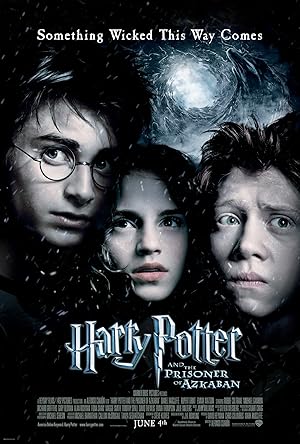
Harry Potter and the Prisoner of Azkaban
Harry Potter (Daniel Radcliffe) is having a tough time with his relatives (yet again). He runs away after using magic to inflate Uncle Vernon's (Richard Griffiths') sister Marge (Pam Ferris), who was being offensive towards Harry's parents. Initially scared for using magic outside the school, he is pleasantly surprised that he won't be penalized after all. However, he soon learns that a dangerous criminal and Voldemort's trusted aide Sirius Black (Gary Oldman) has escaped from Azkaban Prison and wants to kill Harry to avenge the Dark Lord. To worsen the conditions for Harry, vile creatures called Dementors are appointed to guard the school gates and inexplicably happen to have the most horrible effect on him. Little does Harry know that by the end of this year, many holes in his past (whatever he knows of it) will be filled up and he will have a clearer vision of what the future has in store.
Despite a substantial budget of $130.0M, Harry Potter and the Prisoner of Azkaban became a box office phenomenon, earning $789.8M worldwide—a remarkable 508% return.
Nominated for 2 Oscars. 17 wins & 56 nominations


Plot Structure
Story beats plotted across runtime


Narrative Arc
Emotional journey through the story's key moments
Story Circle
Blueprint 15-beat structure
Arcplot Score Breakdown
Weighted: Precision (70%) + Arc (15%) + Theme (15%)
Harry Potter and the Prisoner of Azkaban (2004) exhibits meticulously timed narrative design, characteristic of Chris Columbus's storytelling approach. This structural analysis examines how the film's 15-point plot structure maps to proven narrative frameworks across 2 hours and 22 minutes. With an Arcplot score of 3.5, the film takes an unconventional approach to traditional narrative frameworks.
Characters
Cast & narrative archetypes

Harry Potter
Hermione Granger
Ron Weasley
Sirius Black
Remus Lupin
Severus Snape
Albus Dumbledore
Peter Pettigrew
Main Cast & Characters
Harry Potter
Played by Daniel Radcliffe
A young wizard haunted by his past, facing new threats while discovering the truth about his parents' fate.
Hermione Granger
Played by Emma Watson
Harry's brilliant and loyal friend who uses logic and knowledge to help solve mysteries.
Ron Weasley
Played by Rupert Grint
Harry's steadfast best friend who struggles with fear but shows courage when it matters most.
Sirius Black
Played by Gary Oldman
An escaped prisoner believed to be a dangerous murderer, but whose true loyalties remain hidden.
Remus Lupin
Played by David Thewlis
The new Defense Against the Dark Arts teacher who harbors a dark secret and a connection to Harry's past.
Severus Snape
Played by Alan Rickman
The suspicious Potions Master whose hatred for Harry runs deep and whose true allegiances remain unclear.
Albus Dumbledore
Played by Michael Gambon
The wise Headmaster of Hogwarts who guides Harry with cryptic wisdom and unwavering faith.
Peter Pettigrew
Played by Timothy Spall
A presumed-dead friend of Harry's parents whose true fate holds the key to a terrible betrayal.
Structural Analysis
The Status Quo at 1 minutes (1% through the runtime) establishes Harry practices magic under his bedcovers at night at the Dursleys' house, secretly casting Lumos to read - showing his isolation, his forbidden identity, and his longing for the wizarding world.. Structural examination shows that this early placement immediately immerses viewers in the story world.
The inciting incident occurs at 15 minutes when On the Hogwarts Express, a Dementor enters Harry's compartment searching for Sirius Black. Harry faints as he hears a woman screaming - his first encounter with the creatures that force him to relive his worst memories, disrupting his return to safety.. At 11% through the film, this Disruption aligns precisely with traditional story structure. This beat shifts the emotional landscape, launching the protagonist into the central conflict.
The First Threshold at 32 minutes marks the transition into Act II, occurring at 22% of the runtime. This demonstrates the protagonist's commitment to Harry learns the full truth about Sirius Black - that he was his parents' best friend who allegedly betrayed them to Voldemort and is now hunting Harry. Rather than hiding as advised, Harry decides he wants to confront Black, crossing into his quest for truth about his parents' death., moving from reaction to action.
At 64 minutes, the Midpoint arrives at 45% of the runtime—arriving early, accelerating into Act IIb complications. Significantly, this crucial beat Harry learns that Sirius Black is his godfather and was supposed to be his guardian. More devastatingly, he overhears that Sirius allegedly betrayed the Potters' location to Voldemort, making him responsible for their deaths - transforming Sirius from abstract threat to deeply personal enemy., fundamentally raising what's at risk. The emotional intensity shifts, dividing the narrative into clear before-and-after phases.
The Collapse moment at 95 minutes (67% through) represents the emotional nadir. Here, By the lake, hundreds of Dementors descend upon Harry, Sirius, and Hermione. Harry's Patronus fails as he watches Sirius's soul being sucked out. Harry collapses, believing he sees his father across the lake before losing consciousness - the apparent death of his godfather and last family connection., demonstrates the protagonist at their lowest point. This beat's placement in the final quarter sets up the climactic reversal.
The Second Threshold at 102 minutes initiates the final act resolution at 72% of the runtime. Hermione reveals she possesses a Time-Turner. She and Harry travel back three hours, gaining the chance to save both Buckbeak and Sirius. Harry crosses into Act Three with the realization that he can change the past - and that the mysterious savior by the lake might have been himself., demonstrating the transformation achieved throughout the journey.
Emotional Journey
Harry Potter and the Prisoner of Azkaban's emotional architecture traces a deliberate progression across 15 carefully calibrated beats.
Narrative Framework
This structural analysis employs systematic plot point analysis that identifies crucial turning points. By mapping Harry Potter and the Prisoner of Azkaban against these established plot points, we can identify how Chris Columbus utilizes or subverts traditional narrative conventions. The plot point approach reveals not only adherence to structural principles but also creative choices that distinguish Harry Potter and the Prisoner of Azkaban within the adventure genre.
Chris Columbus's Structural Approach
Among the 15 Chris Columbus films analyzed on Arcplot, the average structural score is 6.3, demonstrating varied approaches to story architecture. Harry Potter and the Prisoner of Azkaban takes a more unconventional approach compared to the director's typical style. For comparative analysis, explore the complete Chris Columbus filmography.
Comparative Analysis
Additional adventure films include The Black Stallion, The Bad Guys and Puss in Boots. For more Chris Columbus analyses, see Harry Potter and the Philosopher's Stone, Nine Months and Percy Jackson & the Olympians: The Lightning Thief.
Plot Points by Act
Act I
SetupStatus Quo
Harry practices magic under his bedcovers at night at the Dursleys' house, secretly casting Lumos to read - showing his isolation, his forbidden identity, and his longing for the wizarding world.
Theme
After Harry accidentally inflates Aunt Marge, he flees into the night. The Knight Bus conductor Stan Shunpike warns him that Sirius Black has escaped from Azkaban, asking "Why would he want to catch you?" - introducing the theme of confronting one's past and the truth about family legacy.
Worldbuilding
Harry's miserable summer with the Dursleys, the Aunt Marge incident, his escape on the Knight Bus, reunion with Ron and Hermione at the Leaky Cauldron, and Mr. Weasley's cryptic warning about Sirius Black establishes the growing danger surrounding Harry.
Disruption
On the Hogwarts Express, a Dementor enters Harry's compartment searching for Sirius Black. Harry faints as he hears a woman screaming - his first encounter with the creatures that force him to relive his worst memories, disrupting his return to safety.
Resistance
Professor Lupin revives Harry and introduces himself as the new Defense Against the Dark Arts teacher. Harry learns Dementors affect him severely, Hagrid begins teaching and Buckbeak's incident occurs, and Lupin's first boggart lesson reveals everyone's deepest fears - but Harry is excluded from facing his.
Act II
ConfrontationFirst Threshold
Harry learns the full truth about Sirius Black - that he was his parents' best friend who allegedly betrayed them to Voldemort and is now hunting Harry. Rather than hiding as advised, Harry decides he wants to confront Black, crossing into his quest for truth about his parents' death.
Mirror World
Professor Lupin takes Harry aside for private lessons to combat Dementors, revealing a paternal warmth and connection to Harry's past. Lupin becomes Harry's true guide - a living link to his father who will teach him to summon his happiest memories to create protection.
Premise
Harry trains with Lupin to master the Patronus Charm, struggles with Dementors at Quidditch, explores Hogsmeade using the Marauder's Map, and pieces together the history of his father's friendship with Sirius, Lupin, and the betrayer Pettigrew.
Midpoint
Harry learns that Sirius Black is his godfather and was supposed to be his guardian. More devastatingly, he overhears that Sirius allegedly betrayed the Potters' location to Voldemort, making him responsible for their deaths - transforming Sirius from abstract threat to deeply personal enemy.
Opposition
Harry vows to kill Sirius Black. Buckbeak's execution approaches, Ron's pet Scabbers goes missing, tensions rise between the trio. Harry masters a weak Patronus but remains haunted. The trio visits Hagrid before the execution, setting the stage for the Shrieking Shack confrontation.
Collapse
By the lake, hundreds of Dementors descend upon Harry, Sirius, and Hermione. Harry's Patronus fails as he watches Sirius's soul being sucked out. Harry collapses, believing he sees his father across the lake before losing consciousness - the apparent death of his godfather and last family connection.
Crisis
Harry awakens in the hospital wing to learn Sirius has been captured and will receive the Dementor's Kiss at midnight. Dumbledore speaks cryptically about saving "more than one innocent life tonight" and suggests Hermione knows what to do - presenting an impossible deadline.
Act III
ResolutionSecond Threshold
Hermione reveals she possesses a Time-Turner. She and Harry travel back three hours, gaining the chance to save both Buckbeak and Sirius. Harry crosses into Act Three with the realization that he can change the past - and that the mysterious savior by the lake might have been himself.
Synthesis
Harry and Hermione relive the night, rescue Buckbeak, and return to the lake. Harry realizes no one is coming to save them - he must cast the Patronus himself. Drawing on the memory of his parents and the truth about his family, he produces a fully corporeal stag Patronus, saves Sirius, and frees his godfather on Buckbeak.
Transformation
Harry receives a new Firebolt broomstick from Sirius and soars into the sky, free and joyful. Unlike the opening image of hiding under covers, Harry now embraces his magical identity openly - transformed by the knowledge that his father lives on through him, and that family can be found, not just inherited.