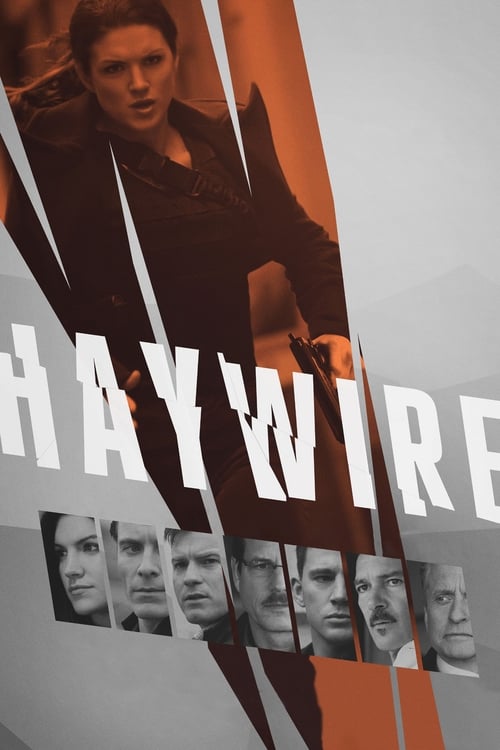
Haywire
A black ops soldier seeks payback after she is betrayed and left for dead.
Working with a mid-range budget of $23.0M, the film achieved a respectable showing with $33.4M in global revenue (+45% profit margin).


Plot Structure
Story beats plotted across runtime


Narrative Arc
Emotional journey through the story's key moments
Story Circle
Blueprint 15-beat structure
Arcplot Score Breakdown
Weighted: Precision (70%) + Arc (15%) + Theme (15%)
Haywire (2011) reveals strategically placed narrative architecture, characteristic of Steven Soderbergh's storytelling approach. This structural analysis examines how the film's 15-point plot structure maps to proven narrative frameworks across 1 hour and 33 minutes. With an Arcplot score of 7.2, the film balances conventional beats with creative variation.
Characters
Cast & narrative archetypes

Mallory Kane
Kenneth
Paul
Rodrigo
Coblenz
Aaron
John Kane
Main Cast & Characters
Mallory Kane
Played by Gina Carano
A highly skilled black ops operative betrayed by her employer, fighting to survive while uncovering the conspiracy against her.
Kenneth
Played by Ewan McGregor
Mallory's handler and ex-boyfriend who orchestrates her betrayal for business and personal reasons.
Paul
Played by Michael Fassbender
A fellow operative who poses as Mallory's partner but is actually assigned to kill her.
Rodrigo
Played by Antonio Banderas
A government official who initially hires Kenneth's firm but is part of the conspiracy against Mallory.
Coblenz
Played by Michael Douglas
A shadowy government agent who manipulates events and reveals the deeper conspiracy to Mallory.
Aaron
Played by Channing Tatum
A young man Mallory kidnaps and involves in her escape, serving as witness to her story.
John Kane
Played by Bill Paxton
Mallory's father, a former Marine who provides her shelter and tactical support.
Structural Analysis
The Status Quo at 1 minutes (1% through the runtime) establishes Mallory Kane sits alone in a diner in upstate New York, on the run and visibly tense. This opening establishes her as a skilled operative now in survival mode, wounded and isolated.. Notably, this early placement immediately immerses viewers in the story world.
The inciting incident occurs at 12 minutes when During the Dublin mission flashback, Mallory realizes something is wrong when Paul Deveraux's behavior becomes suspicious. She discovers she's been set up when assassins attack her in her hotel room, forcing her to kill Paul in self-defense.. At 13% through the film, this Disruption is delayed, allowing extended setup of the story world. This beat shifts the emotional landscape, launching the protagonist into the central conflict.
The First Threshold at 24 minutes marks the transition into Act II, occurring at 26% of the runtime. This reveals the protagonist's commitment to Mallory makes the active choice to stop running and go on the offensive. She decides to contact her father and systematically hunt down everyone involved in the conspiracy, transforming from fugitive to hunter., moving from reaction to action.
At 48 minutes, the Midpoint arrives at 52% of the runtime—precisely centered, creating perfect narrative symmetry. Structural examination shows that this crucial beat Mallory discovers the full scope of the conspiracy: she was used to eliminate a witness (the journalist in Barcelona), then set up to be killed in Dublin to cover the crime. The stakes escalate when she realizes government official Rodrigo is involved at the highest levels., fundamentally raising what's at risk. The emotional intensity shifts, dividing the narrative into clear before-and-after phases.
The Collapse moment at 69 minutes (74% through) represents the emotional nadir. Here, Assassins attack Mallory at her father's house. Though she survives, the assault on her family home represents the invasion of her last safe space. Her father is now directly endangered, and she faces the possibility that she might not be able to protect everyone she cares about., shows the protagonist at their lowest point. This beat's placement in the final quarter sets up the climactic reversal.
The Second Threshold at 75 minutes initiates the final act resolution at 81% of the runtime. Mallory synthesizes evidence and creates a plan to expose the conspiracy publicly while drawing Kenneth into a trap. She combines her operational skills with her father's strategic advice to turn the tables on her betrayers once and for all., demonstrating the transformation achieved throughout the journey.
Emotional Journey
Haywire's emotional architecture traces a deliberate progression across 15 carefully calibrated beats.
Narrative Framework
This structural analysis employs systematic plot point analysis that identifies crucial turning points. By mapping Haywire against these established plot points, we can identify how Steven Soderbergh utilizes or subverts traditional narrative conventions. The plot point approach reveals not only adherence to structural principles but also creative choices that distinguish Haywire within the action genre.
Steven Soderbergh's Structural Approach
Among the 17 Steven Soderbergh films analyzed on Arcplot, the average structural score is 7.1, reflecting strong command of classical structure. Haywire represents one of the director's most structurally precise works. For comparative analysis, explore the complete Steven Soderbergh filmography.
Comparative Analysis
Additional action films include The Bad Guys, Puss in Boots and Venom: The Last Dance. For more Steven Soderbergh analyses, see Ocean's Twelve, Ocean's Thirteen and Contagion.
Plot Points by Act
Act I
SetupStatus Quo
Mallory Kane sits alone in a diner in upstate New York, on the run and visibly tense. This opening establishes her as a skilled operative now in survival mode, wounded and isolated.
Theme
Aaron tells Mallory during the Barcelona flashback: "You shouldn't think of me as your boss, more of a facilitator." This introduces the theme of trust and betrayal in professional relationships where loyalty is commodified.
Worldbuilding
Through the diner confrontation and Barcelona flashback, we learn Mallory is a black ops contractor working for Kenneth's private security firm. The film establishes her skills, her professional world of covert operations, and her relationship with handler Kenneth and colleague Aaron.
Disruption
During the Dublin mission flashback, Mallory realizes something is wrong when Paul Deveraux's behavior becomes suspicious. She discovers she's been set up when assassins attack her in her hotel room, forcing her to kill Paul in self-defense.
Resistance
Mallory escapes Dublin and kidnaps Scott (the young man from the diner) to use his car. As she drives and explains her situation to Scott, she debates her next move: run or fight back. She begins piecing together who betrayed her and why.
Act II
ConfrontationFirst Threshold
Mallory makes the active choice to stop running and go on the offensive. She decides to contact her father and systematically hunt down everyone involved in the conspiracy, transforming from fugitive to hunter.
Mirror World
Mallory reaches her father John Kane, a former military man. Their relationship represents the alternative to her world of lies and betrayal—family loyalty and unconditional support. He immediately believes her and offers help without question.
Premise
Mallory executes her investigation, using her skills to track the conspiracy. We see her operational expertise in action as she survives attempts on her life, manipulates her pursuers, and closes in on Kenneth and the government official Coblenz who orchestrated her setup.
Midpoint
Mallory discovers the full scope of the conspiracy: she was used to eliminate a witness (the journalist in Barcelona), then set up to be killed in Dublin to cover the crime. The stakes escalate when she realizes government official Rodrigo is involved at the highest levels.
Opposition
Kenneth and his team intensify their hunt for Mallory. They track her to her father's house, putting her family in danger. Mallory must stay ahead of multiple threats while gathering final evidence to expose the conspiracy and clear her name.
Collapse
Assassins attack Mallory at her father's house. Though she survives, the assault on her family home represents the invasion of her last safe space. Her father is now directly endangered, and she faces the possibility that she might not be able to protect everyone she cares about.
Crisis
In the aftermath of the attack, Mallory must confront the emotional toll of her profession. She processes the reality that her life has put her father at risk and that trust in her world is impossible. She steels herself for the final confrontation.
Act III
ResolutionSecond Threshold
Mallory synthesizes evidence and creates a plan to expose the conspiracy publicly while drawing Kenneth into a trap. She combines her operational skills with her father's strategic advice to turn the tables on her betrayers once and for all.
Synthesis
Mallory executes her final operation, systematically eliminating threats and confronting Kenneth. She lures him to a beachside location where she extracts his confession, kills him, and ensures the evidence reaches the right authorities. She reclaims her agency and survives.
Transformation
Mallory walks away from Kenneth's body on the beach, fully transformed from operative to independent agent. Unlike the opening image of her wounded and running, she now moves forward with clarity, free from manipulation, having reclaimed control of her own life and fate.