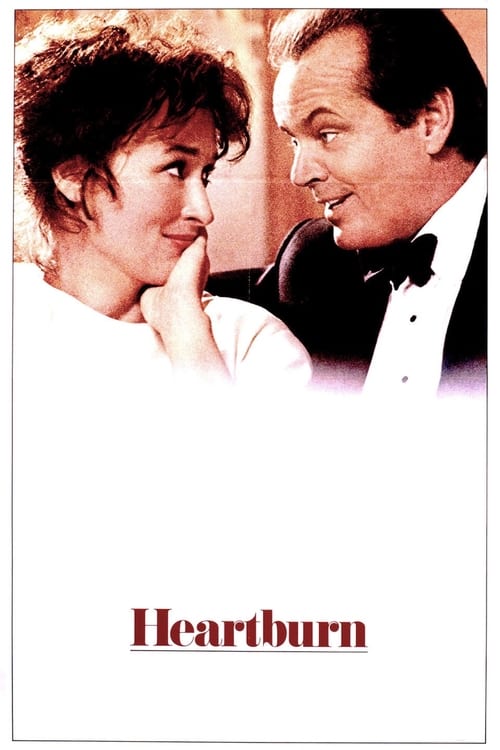
Heartburn
She's a magazine writer who gives up her career for love and family. He's a playboy newspaper columnist who can't quite give up his old tricks. And if that combination doesn't give a relationship heartburn, nothing will.
Despite a respectable budget of $15.0M, Heartburn became a box office success, earning $52.6M worldwide—a 251% return.
1 win & 3 nominations


Plot Structure
Story beats plotted across runtime


Narrative Arc
Emotional journey through the story's key moments
Story Circle
Blueprint 15-beat structure
Arcplot Score Breakdown
Weighted: Precision (70%) + Arc (15%) + Theme (15%)
Heartburn (1986) reveals strategically placed plot construction, characteristic of Mike Nichols's storytelling approach. This structural analysis examines how the film's 15-point plot structure maps to proven narrative frameworks across 1 hour and 48 minutes. With an Arcplot score of 7.0, the film balances conventional beats with creative variation.
Characters
Cast & narrative archetypes

Rachel Samstat
Mark Forman
Thelma Rice
Richard
Vera
Betty
Main Cast & Characters
Rachel Samstat
Played by Meryl Streep
A food writer who discovers her husband's affair while pregnant with their second child.
Mark Forman
Played by Jack Nicholson
A political columnist whose affair destroys his marriage to Rachel.
Thelma Rice
Played by Stockard Channing
Rachel's best friend and confidante who provides support during the marriage crisis.
Richard
Played by Richard Masur
Rachel's therapist who helps her process the betrayal and marriage breakdown.
Vera
Played by Maureen Stapleton
Rachel's outspoken and supportive friend who encourages her independence.
Betty
Played by Catherine O'Hara
Mark's father's partner and family friend who witnesses the marriage's dissolution.
Structural Analysis
The Status Quo at 1 minutes (1% through the runtime) establishes Rachel Samstat is a successful food writer in New York, independent and witty, hosting a dinner party. She's established in her career but single, content with her sophisticated urban life.. Significantly, this early placement immediately immerses viewers in the story world.
The inciting incident occurs at 12 minutes when Mark proposes marriage to Rachel. This disrupts her carefully controlled single life in New York and forces her to choose between independence and love.. At 11% through the film, this Disruption aligns precisely with traditional story structure. This beat shifts the emotional landscape, launching the protagonist into the central conflict.
The First Threshold at 26 minutes marks the transition into Act II, occurring at 24% of the runtime. This demonstrates the protagonist's commitment to Rachel actively chooses to marry Mark and move to Washington, D.C., leaving behind her New York life. She commits fully to the relationship and enters a new world of marriage and political Washington., moving from reaction to action.
At 51 minutes, the Midpoint arrives at 48% of the runtime—precisely centered, creating perfect narrative symmetry. Of particular interest, this crucial beat Rachel discovers Mark is having an affair with Thelma Rice, a mutual friend. This false defeat shatters her trust and transforms her pregnancy from joy to imprisonment. The stakes are raised dramatically., fundamentally raising what's at risk. The emotional intensity shifts, dividing the narrative into clear before-and-after phases.
The Collapse moment at 77 minutes (71% through) represents the emotional nadir. Here, Rachel discovers Mark has lied again about ending the affair. Seven months pregnant, she realizes the marriage is truly dead. Her dream of a loving family dies. She hits rock bottom emotionally., indicates the protagonist at their lowest point. This beat's placement in the final quarter sets up the climactic reversal.
The Second Threshold at 87 minutes initiates the final act resolution at 81% of the runtime. Rachel realizes she must choose herself over the marriage. She synthesizes her independence from Act 1 with what she's learned about love and betrayal. She finds the strength to leave Mark permanently., demonstrating the transformation achieved throughout the journey.
Emotional Journey
Heartburn's emotional architecture traces a deliberate progression across 15 carefully calibrated beats.
Narrative Framework
This structural analysis employs a 15-point narrative structure framework that maps key story moments. By mapping Heartburn against these established plot points, we can identify how Mike Nichols utilizes or subverts traditional narrative conventions. The plot point approach reveals not only adherence to structural principles but also creative choices that distinguish Heartburn within the comedy genre.
Mike Nichols's Structural Approach
Among the 16 Mike Nichols films analyzed on Arcplot, the average structural score is 7.0, demonstrating varied approaches to story architecture. Heartburn represents one of the director's most structurally precise works. For comparative analysis, explore the complete Mike Nichols filmography.
Comparative Analysis
Additional comedy films include The Bad Guys, Ella Enchanted and The Evening Star. For more Mike Nichols analyses, see Closer, Primary Colors and Charlie Wilson's War.
Plot Points by Act
Act I
SetupStatus Quo
Rachel Samstat is a successful food writer in New York, independent and witty, hosting a dinner party. She's established in her career but single, content with her sophisticated urban life.
Theme
Rachel's friend Vera warns her about the dangers of losing yourself in love and marriage, foreshadowing the central question: Can you maintain your identity when you give your heart completely to someone?
Worldbuilding
Rachel meets Mark Forman, a charismatic Washington columnist, at a wedding. Their whirlwind romance develops. We see Rachel's world of food writing, her New York apartment, her circle of sophisticated friends, and her initial hesitation about commitment.
Disruption
Mark proposes marriage to Rachel. This disrupts her carefully controlled single life in New York and forces her to choose between independence and love.
Resistance
Rachel debates whether to marry Mark and move to Washington. She consults with friends, considers the implications of leaving her New York life. Mark courts her persistently. Rachel wrestles with vulnerability and trust.
Act II
ConfrontationFirst Threshold
Rachel actively chooses to marry Mark and move to Washington, D.C., leaving behind her New York life. She commits fully to the relationship and enters a new world of marriage and political Washington.
Mirror World
Rachel becomes pregnant and enters the world of expectant motherhood. Her relationship with Mark deepens as they prepare for their baby. This pregnancy subplot carries the theme of vulnerability and trust.
Premise
The promise of the premise: Rachel navigating married life in Washington. She adapts to being a political wife, hosts dinner parties, develops friendships with other political wives, experiences pregnancy, and explores what it means to build a life with Mark.
Midpoint
Rachel discovers Mark is having an affair with Thelma Rice, a mutual friend. This false defeat shatters her trust and transforms her pregnancy from joy to imprisonment. The stakes are raised dramatically.
Opposition
Rachel confronts Mark but stays, trying to make the marriage work while pregnant. Mark's lies accumulate. Rachel's friends give conflicting advice. She's trapped between her commitment to the marriage and her self-respect. The affair continues, and Rachel's emotional state deteriorates.
Collapse
Rachel discovers Mark has lied again about ending the affair. Seven months pregnant, she realizes the marriage is truly dead. Her dream of a loving family dies. She hits rock bottom emotionally.
Crisis
Rachel processes her grief and betrayal. Heavily pregnant, she must face the reality of leaving and raising her children alone. She struggles with the loss of the life she imagined and the vulnerability of her situation.
Act III
ResolutionSecond Threshold
Rachel realizes she must choose herself over the marriage. She synthesizes her independence from Act 1 with what she's learned about love and betrayal. She finds the strength to leave Mark permanently.
Synthesis
Rachel returns to New York with her baby. She reclaims her life and identity as a writer. She delivers the baby, processes the experience, and begins to rebuild. Final confrontations with Mark establish clear boundaries.
Transformation
Rachel is back in New York with her children, cooking again, writing her story. She mirrors the opening image but transformed—still independent and witty, but now a mother, wiser about love, having survived heartbreak with her identity intact.