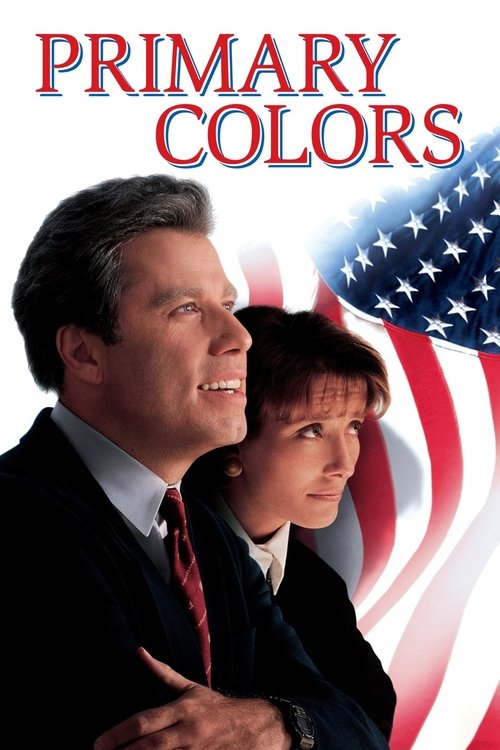
Primary Colors
In this adaptation of the best-selling roman à clef about Bill Clinton's 1992 run for the White House, the young and gifted Henry Burton is tapped to oversee the presidential campaign of Governor Jack Stanton. Burton is pulled into the politician's colorful world and looks on as Stanton -- who has a wandering eye that could be his downfall -- contends with his ambitious wife, Susan, and an outspoken adviser, Richard Jemmons.
The film disappointed at the box office against its mid-range budget of $65.0M, earning $52.1M globally (-20% loss).
Nominated for 2 Oscars. 10 wins & 31 nominations


Plot Structure
Story beats plotted across runtime


Narrative Arc
Emotional journey through the story's key moments
Story Circle
Blueprint 15-beat structure
Arcplot Score Breakdown
Weighted: Precision (70%) + Arc (15%) + Theme (15%)
Primary Colors (1998) showcases deliberately positioned plot construction, characteristic of Mike Nichols's storytelling approach. This structural analysis examines how the film's 15-point plot structure maps to proven narrative frameworks across 2 hours and 23 minutes. With an Arcplot score of 6.7, the film balances conventional beats with creative variation.
Characters
Cast & narrative archetypes

Henry Burton
Jack Stanton
Susan Stanton
Libby Holden
Richard Jemmons
Daisy Green
Main Cast & Characters
Henry Burton
Played by Adrian Lester
Idealistic young campaign manager who becomes disillusioned by the moral compromises of political life.
Jack Stanton
Played by John Travolta
Charismatic Southern governor running for president, brilliant politician with personal weaknesses that threaten his campaign.
Susan Stanton
Played by Emma Thompson
The governor's wife and political partner, fiercely intelligent and protective of their political future.
Libby Holden
Played by Kathy Bates
Passionate and unstable opposition researcher, loyal friend who will do anything to protect Jack Stanton.
Richard Jemmons
Played by Billy Bob Thornton
Veteran political strategist and campaign manager, pragmatic and media-savvy.
Daisy Green
Played by Maura Tierney
Young campaign worker and Henry's love interest, shares his idealism and moral concerns.
Structural Analysis
The Status Quo at 1 minutes (1% through the runtime) establishes Henry Burton, young idealistic political consultant and grandson of a civil rights hero, is established in his world of political consulting, searching for meaning and authentic leadership.. Notably, this early placement immediately immerses viewers in the story world.
The inciting incident occurs at 17 minutes when Henry is captivated by Jack Stanton's authentic moment with a literacy student, seeing the genuine leader he's been searching for. He decides this campaign matters.. At 12% through the film, this Disruption aligns precisely with traditional story structure. This beat shifts the emotional landscape, launching the protagonist into the central conflict.
The First Threshold at 35 minutes marks the transition into Act II, occurring at 24% of the runtime. This demonstrates the protagonist's commitment to Henry makes the full commitment to the campaign, becoming Jack's right-hand strategist. He crosses into the world of big-time presidential politics with all its moral complications., moving from reaction to action.
At 70 minutes, the Midpoint arrives at 49% of the runtime—precisely centered, creating perfect narrative symmetry. The analysis reveals that this crucial beat The sex scandal breaks. Cashmere McLeod comes forward with allegations against Jack. What seemed like a straightforward path to victory becomes a crisis, and the team must decide how far they'll go to save the campaign., fundamentally raising what's at risk. The emotional intensity shifts, dividing the narrative into clear before-and-after phases.
The Collapse moment at 106 minutes (74% through) represents the emotional nadir. Here, Libby Holden, the moral conscience of the campaign, commits suicide after being forced to use opposition research that destroys a rival candidate's life. The whiff of death: idealism and integrity die., shows the protagonist at their lowest point. This beat's placement in the final quarter sets up the climactic reversal.
The Second Threshold at 114 minutes initiates the final act resolution at 80% of the runtime. Henry achieves clarity: Jack Stanton is deeply flawed, but may still do more good than harm. He chooses to stay, not out of naiveté but with eyes wide open, accepting the moral complexity of real-world politics., demonstrating the transformation achieved throughout the journey.
Emotional Journey
Primary Colors's emotional architecture traces a deliberate progression across 15 carefully calibrated beats.
Narrative Framework
This structural analysis employs proven narrative structure principles that track dramatic progression. By mapping Primary Colors against these established plot points, we can identify how Mike Nichols utilizes or subverts traditional narrative conventions. The plot point approach reveals not only adherence to structural principles but also creative choices that distinguish Primary Colors within the drama genre.
Mike Nichols's Structural Approach
Among the 16 Mike Nichols films analyzed on Arcplot, the average structural score is 7.0, demonstrating varied approaches to story architecture. Primary Colors takes a more unconventional approach compared to the director's typical style. For comparative analysis, explore the complete Mike Nichols filmography.
Comparative Analysis
Additional drama films include After Thomas, South Pacific and Dirty Dancing: Havana Nights. For more Mike Nichols analyses, see Closer, Charlie Wilson's War and The Birdcage.
Plot Points by Act
Act I
SetupStatus Quo
Henry Burton, young idealistic political consultant and grandson of a civil rights hero, is established in his world of political consulting, searching for meaning and authentic leadership.
Theme
Jack Stanton asks Henry about the cost of political compromise: "What are you willing to do to win?" The central question of idealism versus pragmatism in politics is introduced.
Worldbuilding
Introduction to Jack Stanton's long-shot presidential campaign, his wife Susan, the small scrappy campaign team, and the world of Southern primary politics. Henry observes Jack's charisma and genuine connection with voters.
Disruption
Henry is captivated by Jack Stanton's authentic moment with a literacy student, seeing the genuine leader he's been searching for. He decides this campaign matters.
Resistance
Henry joins the campaign and begins learning the reality of working for Stanton. He recruits Libby Holden, his former mentor. The team navigates early primary strategy while Henry wrestles with whether to fully commit to this messy, complicated candidate.
Act II
ConfrontationFirst Threshold
Henry makes the full commitment to the campaign, becoming Jack's right-hand strategist. He crosses into the world of big-time presidential politics with all its moral complications.
Mirror World
Daisy Green joins the campaign, representing a grounded moral center. Her relationship with Henry provides a counterpoint to the campaign's increasing moral compromises.
Premise
The fun of the campaign trail: Stanton's charisma winning voters, strategic victories, the team bonding. Henry experiences the thrill of being part of a winning movement, even as small warning signs appear about Jack's personal indiscretions.
Midpoint
The sex scandal breaks. Cashmere McLeod comes forward with allegations against Jack. What seemed like a straightforward path to victory becomes a crisis, and the team must decide how far they'll go to save the campaign.
Opposition
The team goes into damage control. They investigate Cashmere, dig up dirt on opponents, and deploy increasingly questionable tactics. Henry watches himself compromise his ideals piece by piece. Jack's character flaws become undeniable, yet the team presses on.
Collapse
Libby Holden, the moral conscience of the campaign, commits suicide after being forced to use opposition research that destroys a rival candidate's life. The whiff of death: idealism and integrity die.
Crisis
Henry confronts the cost of victory. At Libby's funeral and in its aftermath, he faces what he's become and what the campaign has done. He sits with Susan Stanton, both understanding they've sacrificed their ideals.
Act III
ResolutionSecond Threshold
Henry achieves clarity: Jack Stanton is deeply flawed, but may still do more good than harm. He chooses to stay, not out of naiveté but with eyes wide open, accepting the moral complexity of real-world politics.
Synthesis
Election night. Stanton wins the presidency. Henry remains with the campaign, now the President-elect's team, having integrated his idealism with hard-won pragmatism. He's no longer innocent, but he's still engaged.
Transformation
Henry watches President-elect Stanton from a distance, his expression complex and knowing. Unlike the idealistic young man at the beginning, he now understands that political leadership requires moral compromise, and he's chosen to accept that reality.