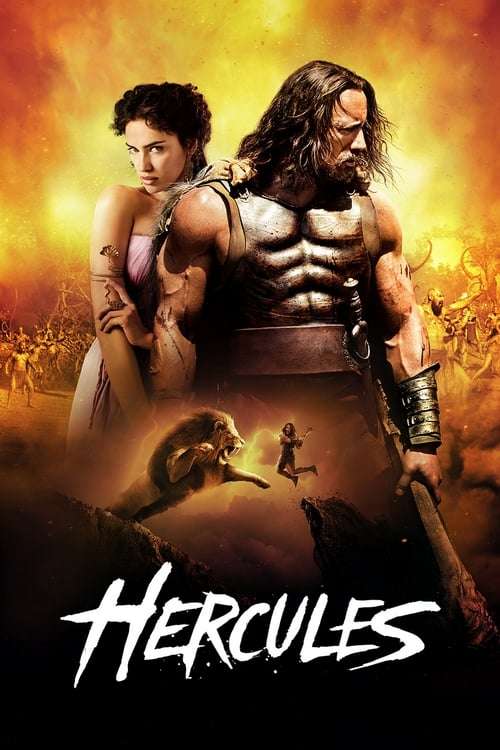
Hercules
When a new enemy threatens the innocent, Hercules must lead his fearless team of warriors in a battle against overwhelming odds.
Despite a substantial budget of $100.0M, Hercules became a solid performer, earning $244.8M worldwide—a 145% return.


Plot Structure
Story beats plotted across runtime


Narrative Arc
Emotional journey through the story's key moments
Story Circle
Blueprint 15-beat structure
Arcplot Score Breakdown
Weighted: Precision (70%) + Arc (15%) + Theme (15%)
Hercules (2014) reveals meticulously timed dramatic framework, characteristic of Brett Ratner's storytelling approach. This structural analysis examines how the film's 15-point plot structure maps to proven narrative frameworks across 1 hour and 38 minutes. With an Arcplot score of 6.6, the film balances conventional beats with creative variation.
Characters
Cast & narrative archetypes

Hercules
Amphiaraus
Autolycus
Atalanta
Tydeus
Iolaus
King Cotys
Princess Ergenia
Main Cast & Characters
Hercules
Played by Dwayne Johnson
A demigod mercenary haunted by his past, leading a band of warriors across ancient Greece.
Amphiaraus
Played by Ian McShane
A prophetic warrior and seer who foresees his own death, serves as spiritual advisor to the group.
Autolycus
Played by Rufus Sewell
A skilled storyteller and warrior who chronicles Hercules' exploits and spreads his legend.
Atalanta
Played by Ingrid Bolsø Berdal
A fierce Amazon warrior and master archer with a mysterious past, loyal to Hercules.
Tydeus
Played by Aksel Hennie
A savage mute warrior who communicates through grunts and violence, deeply loyal to the group.
Iolaus
Played by Reece Ritchie
Hercules' nephew and storyteller who embellishes tales of his uncle's divine heritage.
King Cotys
Played by John Hurt
The ruler of Thrace who hires Hercules to train his army and defeat a warlord.
Princess Ergenia
Played by Rebecca Ferguson
Daughter of King Cotys who seeks Hercules' help to protect Thrace from tyranny.
Structural Analysis
The Status Quo at 1 minutes (1% through the runtime) establishes Iolaus narrates the legendary twelve labors of Hercules to captive pirates, building the myth of the demigod son of Zeus. The opening establishes Hercules as a larger-than-life legend.. Of particular interest, this early placement immediately immerses viewers in the story world.
The inciting incident occurs at 12 minutes when Ergenia arrives on behalf of her father Lord Cotys, offering Hercules his weight in gold to train the Thracian army and defeat the warlord Rhesus. The massive payment disrupts their mercenary routine.. At 12% through the film, this Disruption aligns precisely with traditional story structure. This beat shifts the emotional landscape, launching the protagonist into the central conflict.
The First Threshold at 25 minutes marks the transition into Act II, occurring at 25% of the runtime. This reveals the protagonist's commitment to Hercules commits to training the Thracian army, actively choosing to become more than a mercenary. He begins transforming farmers into warriors, investing himself in their cause beyond just payment., moving from reaction to action.
At 49 minutes, the Midpoint arrives at 50% of the runtime—precisely centered, creating perfect narrative symmetry. Of particular interest, this crucial beat Hercules and the Thracian army achieve a decisive victory against Rhesus, capturing the warlord. This false victory appears to complete their mission, but Hercules begins questioning Cotys's true motives., fundamentally raising what's at risk. The emotional intensity shifts, dividing the narrative into clear before-and-after phases.
The Collapse moment at 74 minutes (75% through) represents the emotional nadir. Here, Cotys imprisons Hercules and threatens to execute his companions. Eurystheus is revealed as the man who murdered Hercules' family, working with Cotys. Hercules is chained, drugged, and forced to watch his team face death., shows the protagonist at their lowest point. This beat's placement in the final quarter sets up the climactic reversal.
The Second Threshold at 78 minutes initiates the final act resolution at 80% of the runtime. Hercules channels his rage and breaks free from the chains, toppling the statue of Hera. He finally embraces his identity - not as the son of Zeus, but as a true hero who fights for the innocent., demonstrating the transformation achieved throughout the journey.
Emotional Journey
Hercules's emotional architecture traces a deliberate progression across 15 carefully calibrated beats.
Narrative Framework
This structural analysis employs a 15-point narrative structure framework that maps key story moments. By mapping Hercules against these established plot points, we can identify how Brett Ratner utilizes or subverts traditional narrative conventions. The plot point approach reveals not only adherence to structural principles but also creative choices that distinguish Hercules within the action genre.
Brett Ratner's Structural Approach
Among the 10 Brett Ratner films analyzed on Arcplot, the average structural score is 7.2, reflecting strong command of classical structure. Hercules takes a more unconventional approach compared to the director's typical style. For comparative analysis, explore the complete Brett Ratner filmography.
Comparative Analysis
Additional action films include The Bad Guys, Puss in Boots and Venom: The Last Dance. For more Brett Ratner analyses, see Tower Heist, X-Men: The Last Stand and After the Sunset.
Plot Points by Act
Act I
SetupStatus Quo
Iolaus narrates the legendary twelve labors of Hercules to captive pirates, building the myth of the demigod son of Zeus. The opening establishes Hercules as a larger-than-life legend.
Theme
Amphiaraus tells Hercules that legends are created by men who need them. This establishes the film's central question: what separates myth from reality, and what truly makes a hero?
Worldbuilding
We meet Hercules and his mercenary band: Autolycus, Amphiaraus, Tydeus, Atalanta, and nephew Iolaus. They use Hercules' myth for profit, completing jobs as swords-for-hire. Flashbacks hint at the tragedy of Hercules' murdered family.
Disruption
Ergenia arrives on behalf of her father Lord Cotys, offering Hercules his weight in gold to train the Thracian army and defeat the warlord Rhesus. The massive payment disrupts their mercenary routine.
Resistance
Hercules and his team debate taking the job. They travel to Thrace and meet Lord Cotys and his grandson Arius. Hercules sees the ragtag army he must transform and weighs whether the gold is worth the effort.
Act II
ConfrontationFirst Threshold
Hercules commits to training the Thracian army, actively choosing to become more than a mercenary. He begins transforming farmers into warriors, investing himself in their cause beyond just payment.
Mirror World
Hercules bonds with young Arius, Ergenia's son, who idolizes him. This relationship mirrors his lost family and begins awakening his capacity for genuine heroism rather than performed legend.
Premise
The "fun and games" of the premise: Hercules trains the army using his team's expertise. Montages show the transformation from peasants to soldiers. The team faces Rhesus's forces in increasingly intense battles, winning through strategy and strength.
Midpoint
Hercules and the Thracian army achieve a decisive victory against Rhesus, capturing the warlord. This false victory appears to complete their mission, but Hercules begins questioning Cotys's true motives.
Opposition
Hercules discovers Lord Cotys is a tyrant using him to conquer, not defend. Cotys executes Rhesus and reveals his plan to dominate all of Greece. Hercules realizes he's been a pawn, training an army of oppression.
Collapse
Cotys imprisons Hercules and threatens to execute his companions. Eurystheus is revealed as the man who murdered Hercules' family, working with Cotys. Hercules is chained, drugged, and forced to watch his team face death.
Crisis
Hercules is chained to the pillars, drugged with wolfsbane, and forced to confront the truth about his family's death. He relives the horror of finding their bodies and faces his deepest guilt and failure.
Act III
ResolutionSecond Threshold
Hercules channels his rage and breaks free from the chains, toppling the statue of Hera. He finally embraces his identity - not as the son of Zeus, but as a true hero who fights for the innocent.
Synthesis
Hercules frees his companions and leads the people of Thrace against Cotys's army. He kills Eurystheus and defeats Cotys, using the army he trained to fight for freedom rather than tyranny. The people rally behind him.
Transformation
Hercules stands victorious, having become the hero his legend always claimed. He leaves the gold behind, transformed from a mercenary exploiting myths into a genuine protector. Iolaus begins telling the true story of Hercules.