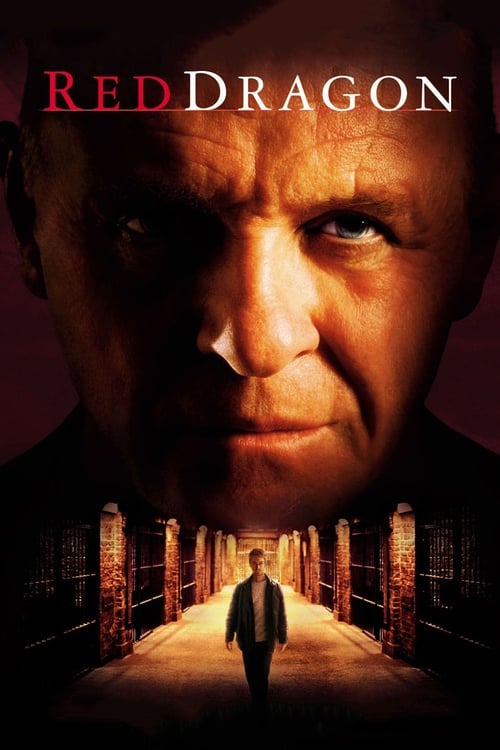
Red Dragon
Former FBI Agent Will Graham, who was once almost killed by the savage Hannibal 'The Cannibal' Lecter, now has no choice but to face him again, as it seems Lecter is the only one who can help Graham track down a new serial killer.
Despite a significant budget of $78.0M, Red Dragon became a commercial success, earning $209.2M worldwide—a 168% return.
4 wins & 10 nominations


Plot Structure
Story beats plotted across runtime


Narrative Arc
Emotional journey through the story's key moments
Story Circle
Blueprint 15-beat structure
Arcplot Score Breakdown
Weighted: Precision (70%) + Arc (15%) + Theme (15%)
Red Dragon (2002) showcases meticulously timed story structure, characteristic of Brett Ratner's storytelling approach. This structural analysis examines how the film's 15-point plot structure maps to proven narrative frameworks across 2 hours and 4 minutes. With an Arcplot score of 7.5, the film showcases strong structural fundamentals.
Characters
Cast & narrative archetypes

Will Graham
Hannibal Lecter
Francis Dolarhyde
Jack Crawford
Reba McClane
Molly Graham
Frederick Chilton
Freddy Lounds
Main Cast & Characters
Will Graham
Played by Edward Norton
Retired FBI profiler with unique ability to think like serial killers, reluctantly returns to catch the Tooth Fairy killer.
Hannibal Lecter
Played by Anthony Hopkins
Brilliant imprisoned psychiatrist and cannibalistic serial killer who provides cryptic assistance to Will Graham.
Francis Dolarhyde
Played by Ralph Fiennes
The Tooth Fairy killer, a disturbed man obsessed with William Blake's Red Dragon painting and his own transformation.
Jack Crawford
Played by Harvey Keitel
FBI Section Chief who convinces Will Graham to return from retirement to catch the serial killer.
Reba McClane
Played by Emily Watson
Blind photography lab technician who develops a romantic relationship with Francis Dolarhyde.
Molly Graham
Played by Mary-Louise Parker
Will Graham's wife who worries about his mental state as he returns to profiling work.
Frederick Chilton
Played by Anthony Heald
Ambitious and self-serving administrator of the Baltimore State Hospital for the Criminally Insane.
Freddy Lounds
Played by Philip Seymour Hoffman
Sleazy tabloid journalist from the National Tattler who exploits the Tooth Fairy investigation.
Structural Analysis
The Status Quo at 1 minutes (1% through the runtime) establishes Will Graham at a dinner party hosted by Hannibal Lecter, appearing relaxed and social in his role as FBI profiler. The calm before the storm of violence that will define his relationship with Lecter and his future.. Structural examination shows that this early placement immediately immerses viewers in the story world.
The inciting incident occurs at 13 minutes when FBI Agent Jack Crawford arrives at Graham's home to ask for help with a new serial killer case - "The Tooth Fairy" has murdered two families. Crawford shows crime scene photos that disturb Graham's hard-won peace.. At 11% through the film, this Disruption aligns precisely with traditional story structure. This beat shifts the emotional landscape, launching the protagonist into the central conflict.
The First Threshold at 30 minutes marks the transition into Act II, occurring at 24% of the runtime. This demonstrates the protagonist's commitment to Graham makes the active choice to visit Hannibal Lecter in prison to consult on the case. This irreversible decision brings him back into the world of darkness and reconnects him with the monster who nearly killed him. He crosses into Act 2., moving from reaction to action.
At 62 minutes, the Midpoint arrives at 50% of the runtime—precisely centered, creating perfect narrative symmetry. Significantly, this crucial beat False defeat: Freddy Lounds, the tabloid journalist, publishes Graham's taunting message to the killer. Lecter secretly communicates with Dolarhyde, giving him Graham's home address. The stakes raise dramatically - Graham's family is now in direct danger. The investigation becomes personal., fundamentally raising what's at risk. The emotional intensity shifts, dividing the narrative into clear before-and-after phases.
The Collapse moment at 91 minutes (73% through) represents the emotional nadir. Here, Graham realizes Dolarhyde has chosen his next victims and the full moon is imminent, but they cannot locate him in time. The investigation has failed. Graham feels responsible for the impending deaths and for endangering his own family. His worst fears are realized - his gift wasn't enough., demonstrates the protagonist at their lowest point. This beat's placement in the final quarter sets up the climactic reversal.
The Second Threshold at 101 minutes initiates the final act resolution at 82% of the runtime. Breakthrough: Graham synthesizes his empathic understanding with evidence, realizing how Dolarhyde selected his victims (home videos processed at his film lab). He combines his curse with detective work to locate the killer. He has the clarity to act., demonstrating the transformation achieved throughout the journey.
Emotional Journey
Red Dragon's emotional architecture traces a deliberate progression across 15 carefully calibrated beats.
Narrative Framework
This structural analysis employs a 15-point narrative structure framework that maps key story moments. By mapping Red Dragon against these established plot points, we can identify how Brett Ratner utilizes or subverts traditional narrative conventions. The plot point approach reveals not only adherence to structural principles but also creative choices that distinguish Red Dragon within the crime genre.
Brett Ratner's Structural Approach
Among the 10 Brett Ratner films analyzed on Arcplot, the average structural score is 7.2, reflecting strong command of classical structure. Red Dragon represents one of the director's most structurally precise works. For comparative analysis, explore the complete Brett Ratner filmography.
Comparative Analysis
Additional crime films include The Bad Guys, Rustom and The Whole Ten Yards. For more Brett Ratner analyses, see Tower Heist, X-Men: The Last Stand and After the Sunset.
Plot Points by Act
Act I
SetupStatus Quo
Will Graham at a dinner party hosted by Hannibal Lecter, appearing relaxed and social in his role as FBI profiler. The calm before the storm of violence that will define his relationship with Lecter and his future.
Theme
Lecter to Graham: "You have the same gift I do - pure empathy. It's a curse." This establishes the central thematic tension: the ability to think like killers both enables Graham's work and threatens to consume him.
Worldbuilding
Graham captures Lecter in a violent confrontation, nearly dies, and retires from the FBI to live peacefully with his family in Florida. We see his life as a boat mechanic, his wife Molly, and stepson Josh - the normal life he's built away from darkness.
Disruption
FBI Agent Jack Crawford arrives at Graham's home to ask for help with a new serial killer case - "The Tooth Fairy" has murdered two families. Crawford shows crime scene photos that disturb Graham's hard-won peace.
Resistance
Graham resists returning but is haunted by the images. He debates with his wife, visits crime scenes in Atlanta and Birmingham, and reluctantly uses his profiling abilities again. He struggles with whether he can do this work without losing himself.
Act II
ConfrontationFirst Threshold
Graham makes the active choice to visit Hannibal Lecter in prison to consult on the case. This irreversible decision brings him back into the world of darkness and reconnects him with the monster who nearly killed him. He crosses into Act 2.
Mirror World
First prison consultation with Lecter. Their relationship is the thematic mirror - Lecter represents what Graham could become if he loses his humanity. Lecter is charming, brilliant, and utterly evil, offering insights while playing psychological games.
Premise
The cat-and-mouse investigation unfolds. Graham profiles the killer, discovers he's obsessed with William Blake's "Red Dragon" painting, learns about the lunar cycle pattern. Meanwhile, we see Dolarhyde's life - his job, his relationship with blind colleague Reba. The parallel investigation builds tension.
Midpoint
False defeat: Freddy Lounds, the tabloid journalist, publishes Graham's taunting message to the killer. Lecter secretly communicates with Dolarhyde, giving him Graham's home address. The stakes raise dramatically - Graham's family is now in direct danger. The investigation becomes personal.
Opposition
Everything intensifies. Dolarhyde kidnaps and horrifically murders Lounds. Graham discovers Lecter's betrayal. Dolarhyde's relationship with Reba complicates his killing, creating internal conflict. Graham sends his family into hiding. The killer is evolving, becoming more dangerous and unpredictable.
Collapse
Graham realizes Dolarhyde has chosen his next victims and the full moon is imminent, but they cannot locate him in time. The investigation has failed. Graham feels responsible for the impending deaths and for endangering his own family. His worst fears are realized - his gift wasn't enough.
Crisis
Dark night of the soul. Graham processes his failure and isolation. Dolarhyde struggles with his transformation versus his love for Reba. The emotional low point before the final confrontation. Both hunter and hunted face their internal demons.
Act III
ResolutionSecond Threshold
Breakthrough: Graham synthesizes his empathic understanding with evidence, realizing how Dolarhyde selected his victims (home videos processed at his film lab). He combines his curse with detective work to locate the killer. He has the clarity to act.
Synthesis
The finale. FBI teams raid Dolarhyde's house. Dolarhyde attacks Graham's family home in Florida. Final confrontation between Graham and Dolarhyde. Graham must use his dark gift one last time, thinking like the killer to survive. Molly shoots Dolarhyde, saving Graham. The family survives.
Transformation
Graham reunites with his family on their boat, having survived the darkness again. Unlike the opening status quo, he now fully accepts that his gift is both curse and blessing. He chooses family over the FBI permanently, transformed by understanding he can use his empathy without being consumed by it.