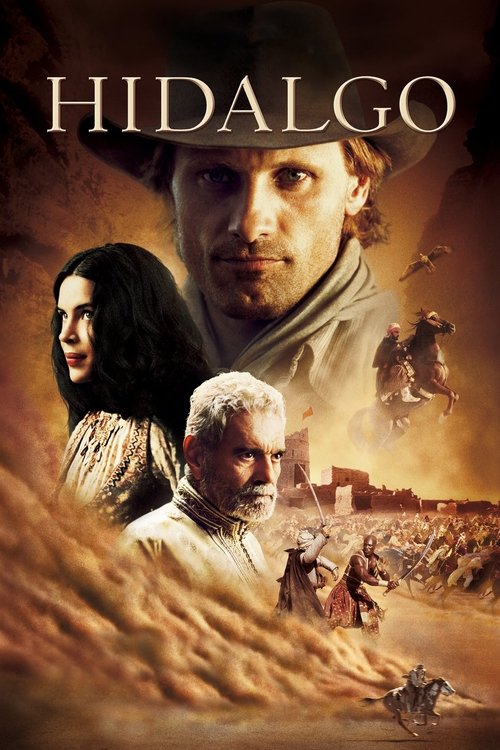
Hidalgo
Set in 1890, this is the story of a Pony Express courier who travels to Arabia to compete with his horse, Hidalgo, in a dangerous race for a massive contest prize, in an adventure that sends the pair around the world...
Working with a substantial budget of $100.0M, the film achieved a modest success with $108.1M in global revenue (+8% profit margin).
1 win & 2 nominations


Plot Structure
Story beats plotted across runtime


Narrative Arc
Emotional journey through the story's key moments
Story Circle
Blueprint 15-beat structure
Arcplot Score Breakdown
Weighted: Precision (70%) + Arc (15%) + Theme (15%)
Hidalgo (2004) exhibits precise narrative architecture, characteristic of Joe Johnston's storytelling approach. This structural analysis examines how the film's 15-point plot structure maps to proven narrative frameworks across 2 hours and 16 minutes. With an Arcplot score of 6.5, the film balances conventional beats with creative variation.
Characters
Cast & narrative archetypes

Frank T. Hopkins
Sheikh Riyadh
Jazira
Lady Anne Davenport
Katib
Prince Bin Al Reeh
Main Cast & Characters
Frank T. Hopkins
Played by Viggo Mortensen
A long-distance rider and dispatch carrier with Lakota heritage who enters the Ocean of Fire race in Arabia with his mustang Hidalgo.
Sheikh Riyadh
Played by Omar Sharif
Wealthy Arabian horse breeder and organizer of the Ocean of Fire race who respects Hopkins' courage and horsemanship.
Jazira
Played by Zuleikha Robinson
The Sheikh's spirited daughter who defies tradition, befriends Hopkins, and shares his respect for horses and independence.
Lady Anne Davenport
Played by Louise Lombard
Wealthy British horse enthusiast who sponsors Hopkins' entry into the race and advocates for his success.
Katib
Played by Said Taghmaoui
The Sheikh's loyal and traditional advisor who is suspicious of the American rider and his mixed heritage.
Prince Bin Al Reeh
Played by Adoni Maropis
Arrogant Arabian nobleman and favorite to win the race who sees Hopkins as an inferior threat and resorts to sabotage.
Structural Analysis
The Status Quo at 1 minutes (1% through the runtime) establishes Frank Hopkins rides as a dispatch carrier across the snowy plains, delivering the message that will trigger the massacre at Wounded Knee. His haunted expression reveals a man already broken, carrying the weight of complicity in tragedy.. The analysis reveals that this early placement immediately immerses viewers in the story world.
The inciting incident occurs at 16 minutes when An Arab envoy arrives at the Wild West show to challenge Frank: enter the Ocean of Fire, a 3,000-mile survival race across the Arabian Desert, to prove whether Hidalgo truly is the greatest endurance horse or merely a "painted mustang." The challenge ignites something in Frank.. At 12% through the film, this Disruption aligns precisely with traditional story structure. This beat shifts the emotional landscape, launching the protagonist into the central conflict.
The First Threshold at 34 minutes marks the transition into Act II, occurring at 25% of the runtime. This reveals the protagonist's commitment to Frank and Hidalgo arrive in Arabia and officially enter the Ocean of Fire race. He makes the irreversible choice to compete against the finest Arabian horses in the world, stepping into a completely foreign world where he is the despised outsider., moving from reaction to action.
At 68 minutes, the Midpoint arrives at 50% of the runtime—precisely centered, creating perfect narrative symmetry. Of particular interest, this crucial beat Frank and Hidalgo reach the halfway checkpoint, surprising everyone by keeping pace with the Arabian horses. A false victory: they've proven they can compete, but the hardest challenges lie ahead. The stakes raise as rival Al-Hattal intensifies his sabotage efforts., fundamentally raising what's at risk. The emotional intensity shifts, dividing the narrative into clear before-and-after phases.
The Collapse moment at 102 minutes (75% through) represents the emotional nadir. Here, Hidalgo collapses in the desert, unable to continue. Frank faces the devastating choice of whether to shoot his beloved horse to end his suffering. The "whiff of death" is literal as Frank raises his gun. Everything he's fought for seems lost., illustrates the protagonist at their lowest point. This beat's placement in the final quarter sets up the climactic reversal.
The Second Threshold at 109 minutes initiates the final act resolution at 80% of the runtime. Frank performs a Lakota healing ritual over Hidalgo, fully embracing his Native heritage for the first time. He chooses to accept both halves of himself. Miraculously, Hidalgo rises, and together they re-enter the race with renewed spirit and unified identity., demonstrating the transformation achieved throughout the journey.
Emotional Journey
Hidalgo's emotional architecture traces a deliberate progression across 15 carefully calibrated beats.
Narrative Framework
This structural analysis employs structural analysis methodology used to understand storytelling architecture. By mapping Hidalgo against these established plot points, we can identify how Joe Johnston utilizes or subverts traditional narrative conventions. The plot point approach reveals not only adherence to structural principles but also creative choices that distinguish Hidalgo within the western genre.
Joe Johnston's Structural Approach
Among the 9 Joe Johnston films analyzed on Arcplot, the average structural score is 6.9, demonstrating varied approaches to story architecture. Hidalgo takes a more unconventional approach compared to the director's typical style. For comparative analysis, explore the complete Joe Johnston filmography.
Comparative Analysis
Additional western films include All the Pretty Horses, Shenandoah and Lone Star. For more Joe Johnston analyses, see Captain America: The First Avenger, Jumanji and The Pagemaster.
Plot Points by Act
Act I
SetupStatus Quo
Frank Hopkins rides as a dispatch carrier across the snowy plains, delivering the message that will trigger the massacre at Wounded Knee. His haunted expression reveals a man already broken, carrying the weight of complicity in tragedy.
Theme
Buffalo Bill tells the Wild West show audience that Frank Hopkins is "the greatest endurance rider the West has ever known," while Frank watches the degrading reenactment of Wounded Knee. The theme emerges: true identity cannot be found in performances or others' definitions of who you are.
Worldbuilding
Frank's fractured existence is established: he drinks to forget his past, performs in Buffalo Bill's show despite hating it, and hides his Lakota heritage. His bond with Hidalgo is the only thing keeping him tethered to life. His guilt over Wounded Knee defines his self-loathing.
Disruption
An Arab envoy arrives at the Wild West show to challenge Frank: enter the Ocean of Fire, a 3,000-mile survival race across the Arabian Desert, to prove whether Hidalgo truly is the greatest endurance horse or merely a "painted mustang." The challenge ignites something in Frank.
Resistance
Frank debates entering the race. Buffalo Bill encourages him, seeing an opportunity for publicity. Frank visits his dying Lakota grandmother, who tells him to find his true path. The preparation phase shows Frank sobering up and reconnecting with Hidalgo as he considers risking everything.
Act II
ConfrontationFirst Threshold
Frank and Hidalgo arrive in Arabia and officially enter the Ocean of Fire race. He makes the irreversible choice to compete against the finest Arabian horses in the world, stepping into a completely foreign world where he is the despised outsider.
Mirror World
Frank meets Jazira, the Sheikh's daughter, who defies her culture's restrictions and dreams of racing herself. She represents the thematic mirror: someone else trapped by heritage and expectations, yearning for the freedom to define their own identity.
Premise
The race begins and Frank navigates the brutal desert landscape. He faces sandstorms, treacherous terrain, and sabotage from rivals. The "promise of the premise" delivers: a cowboy and his mustang against impossible odds in an exotic land, proving their worth through sheer will and endurance.
Midpoint
Frank and Hidalgo reach the halfway checkpoint, surprising everyone by keeping pace with the Arabian horses. A false victory: they've proven they can compete, but the hardest challenges lie ahead. The stakes raise as rival Al-Hattal intensifies his sabotage efforts.
Opposition
The desert becomes merciless. Hidalgo is injured by a rigged trap. Frank is captured by bandits seeking ransom and must rescue Jazira, who has been kidnapped. Sabotage, betrayal, and the unforgiving environment close in from all sides, threatening to end their quest.
Collapse
Hidalgo collapses in the desert, unable to continue. Frank faces the devastating choice of whether to shoot his beloved horse to end his suffering. The "whiff of death" is literal as Frank raises his gun. Everything he's fought for seems lost.
Crisis
In his darkest moment, Frank has a vision of his Lakota ancestors. He must choose whether to give up or find the strength to continue. He processes his guilt, his identity crisis, and what this journey truly means beyond winning a race.
Act III
ResolutionSecond Threshold
Frank performs a Lakota healing ritual over Hidalgo, fully embracing his Native heritage for the first time. He chooses to accept both halves of himself. Miraculously, Hidalgo rises, and together they re-enter the race with renewed spirit and unified identity.
Synthesis
Frank and Hidalgo race against Al-Hattal in a grueling final stretch. Frank outsmarts his rival, using both his Western grit and spiritual connection. They cross the finish line first, winning the Ocean of Fire. The Sheikh honors Frank, and Jazira earns her own freedom.
Transformation
Frank returns to America and uses his prize money to buy a herd of mustangs destined for slaughter. He releases them—and Hidalgo—onto Lakota reservation land to run free. No longer performing for others or hiding from himself, Frank has found peace with his identity.