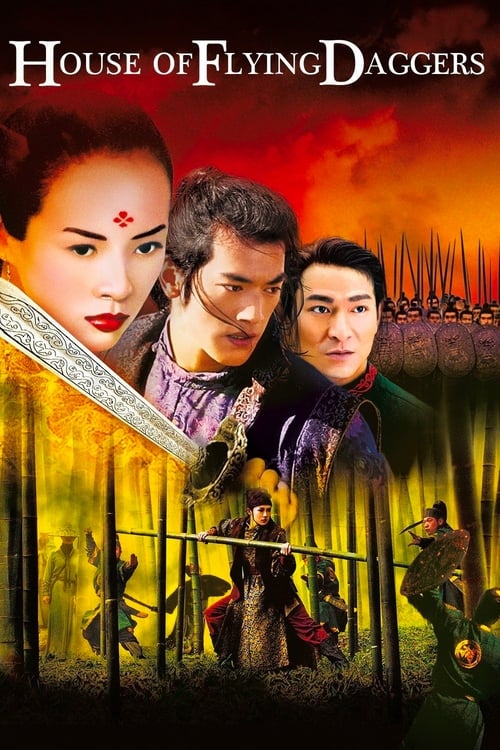
House of Flying Daggers
In 9th century China, a corrupt government wages war against a rebel army called the Flying Daggers. A romantic warrior breaks a beautiful rebel out of prison to help her rejoin her fellows, but things are not what they seem.
Despite a moderate budget of $15.0M, House of Flying Daggers became a box office phenomenon, earning $92.9M worldwide—a remarkable 519% return.
Nominated for 1 Oscar. 26 wins & 74 nominations


Plot Structure
Story beats plotted across runtime


Narrative Arc
Emotional journey through the story's key moments
Story Circle
Blueprint 15-beat structure
Arcplot Score Breakdown
Weighted: Precision (70%) + Arc (15%) + Theme (15%)
House of Flying Daggers (2004) showcases precise narrative architecture, characteristic of Zhang Yimou's storytelling approach. This structural analysis examines how the film's 15-point plot structure maps to proven narrative frameworks across 1 hour and 59 minutes. With an Arcplot score of 6.8, the film balances conventional beats with creative variation.
Characters
Cast & narrative archetypes

Mei
Jin
Leo
Main Cast & Characters
Mei
Played by Zhang Ziyi
A blind dancer at the Peony Pavilion, revealed to be an undercover member of the Flying Daggers rebel group caught in a love triangle.
Jin
Played by Takeshi Kaneshiro
A Tang Dynasty police captain who goes undercover to infiltrate the Flying Daggers, falling genuinely in love with Mei despite his initial deception.
Leo
Played by Andy Lau
Jin's superior officer and former friend who orchestrates the undercover operation but harbors his own secret love for Mei.
Structural Analysis
The Status Quo at 2 minutes (1% through the runtime) establishes Opening titles over bamboo forest establishing the Tang Dynasty 859 AD setting. The government hunts the rebel House of Flying Daggers organization. Jin and Leo are introduced as ambitious deputies seeking to capture the new leader.. Of particular interest, this early placement immediately immerses viewers in the story world.
The inciting incident occurs at 15 minutes when Mei is tortured by Jin (actually staged with Leo's knowledge). The plan is set: Jin will "rescue" her and infiltrate the Flying Daggers. What begins as a simple infiltration mission disrupts into something that will challenge loyalties.. At 13% through the film, this Disruption is delayed, allowing extended setup of the story world. This beat shifts the emotional landscape, launching the protagonist into the central conflict.
The First Threshold at 31 minutes marks the transition into Act II, occurring at 26% of the runtime. This demonstrates the protagonist's commitment to After the bamboo forest battle where Mei displays her deadly skills and reveals she isn't truly blind, Jin makes the choice to continue the mission despite his growing feelings. He commits to the deception, entering a dangerous game of love and loyalty., moving from reaction to action.
At 60 minutes, the Midpoint arrives at 50% of the runtime—precisely centered, creating perfect narrative symmetry. The analysis reveals that this crucial beat Mei is reunited with Nia, a Flying Daggers member, who reveals he is her true love. Jin realizes Mei has been using him just as he used her. False victory becomes false defeat—his feelings are real but the mission and relationship are both compromised. The stakes rise exponentially., fundamentally raising what's at risk. The emotional intensity shifts, dividing the narrative into clear before-and-after phases.
The Collapse moment at 89 minutes (75% through) represents the emotional nadir. Here, Leo, consumed by jealousy over Mei's love for Jin instead of him, attacks them both in the snow. The whiff of death—Leo mortally wounds Jin. Mei reveals she truly loves Jin, not Nia. All loyalties shatter. Everything they fought for collapses into tragedy., demonstrates the protagonist at their lowest point. This beat's placement in the final quarter sets up the climactic reversal.
The Second Threshold at 96 minutes initiates the final act resolution at 80% of the runtime. Nia, devastated by Mei's rejection, makes the fatal choice. Despite his love, he cannot forgive her betrayal. He throws daggers at Mei, wounding her mortally. The realization that love cannot overcome the web of deceptions they've all woven., demonstrating the transformation achieved throughout the journey.
Emotional Journey
House of Flying Daggers's emotional architecture traces a deliberate progression across 15 carefully calibrated beats.
Narrative Framework
This structural analysis employs structural analysis methodology used to understand storytelling architecture. By mapping House of Flying Daggers against these established plot points, we can identify how Zhang Yimou utilizes or subverts traditional narrative conventions. The plot point approach reveals not only adherence to structural principles but also creative choices that distinguish House of Flying Daggers within the adventure genre.
Zhang Yimou's Structural Approach
Among the 11 Zhang Yimou films analyzed on Arcplot, the average structural score is 6.8, demonstrating varied approaches to story architecture. House of Flying Daggers takes a more unconventional approach compared to the director's typical style. For comparative analysis, explore the complete Zhang Yimou filmography.
Comparative Analysis
Additional adventure films include The Black Stallion, The Bad Guys and Puss in Boots. For more Zhang Yimou analyses, see Full River Red, Cliff Walkers and The Flowers of War.
Plot Points by Act
Act I
SetupStatus Quo
Opening titles over bamboo forest establishing the Tang Dynasty 859 AD setting. The government hunts the rebel House of Flying Daggers organization. Jin and Leo are introduced as ambitious deputies seeking to capture the new leader.
Theme
Leo tells Jin about the Peony Pavilion dancer suspected of Flying Daggers connections: "Use whatever means necessary." The theme of deception, manipulation, and the cost of using people as pawns is established.
Worldbuilding
Jin visits the Peony Pavilion and encounters Mei, the blind dancer. Through the Echo Game performance, we see her extraordinary abilities. Jin arrests her to draw out the Flying Daggers, establishing the political intrigue and rebellion backdrop of the dying Tang Dynasty.
Disruption
Mei is tortured by Jin (actually staged with Leo's knowledge). The plan is set: Jin will "rescue" her and infiltrate the Flying Daggers. What begins as a simple infiltration mission disrupts into something that will challenge loyalties.
Resistance
Jin stages Mei's escape from prison. They flee together into the wilderness, with government soldiers (actually Leo's men) in pursuit. Jin debates internally whether to continue the deception as he begins developing real feelings for Mei during their journey.
Act II
ConfrontationFirst Threshold
After the bamboo forest battle where Mei displays her deadly skills and reveals she isn't truly blind, Jin makes the choice to continue the mission despite his growing feelings. He commits to the deception, entering a dangerous game of love and loyalty.
Mirror World
Jin and Mei share an intimate moment in the forest. Mei tends to Jin's wounds, and their connection deepens. This relationship subplot will carry the film's theme about the conflict between duty and genuine emotion, deception and truth.
Premise
Jin and Mei journey through stunning landscapes—bamboo forests, birch groves, mountain peaks. Spectacular action sequences include the Bamboo Grove battle and encounters with pursuers. Their romance blossoms even as both harbor secrets. The promise of wuxia spectacle and forbidden love.
Midpoint
Mei is reunited with Nia, a Flying Daggers member, who reveals he is her true love. Jin realizes Mei has been using him just as he used her. False victory becomes false defeat—his feelings are real but the mission and relationship are both compromised. The stakes rise exponentially.
Opposition
Leo appears and reveals the full conspiracy: Mei was never blind, Nia is actually the new Flying Daggers leader, and Jin's feelings have compromised the mission. Betrayals multiply. Jin is torn between duty and love. A three-way conflict emerges as winter arrives and tensions escalate.
Collapse
Leo, consumed by jealousy over Mei's love for Jin instead of him, attacks them both in the snow. The whiff of death—Leo mortally wounds Jin. Mei reveals she truly loves Jin, not Nia. All loyalties shatter. Everything they fought for collapses into tragedy.
Crisis
In the snow-covered battlefield, Mei cradles the dying Jin. Leo dies from his wounds. Nia, heartbroken by Mei's true feelings, prepares to leave. The dark night of the soul—all three men loved Mei, all were betrayed or rejected, and death pervades the frozen landscape.
Act III
ResolutionSecond Threshold
Nia, devastated by Mei's rejection, makes the fatal choice. Despite his love, he cannot forgive her betrayal. He throws daggers at Mei, wounding her mortally. The realization that love cannot overcome the web of deceptions they've all woven.
Synthesis
Mei and Jin lie dying together in the snow. Their blood mingles as flowers bloom around them—a poetic image of love and death intertwined. Nia walks away, alone, destroyed by what he's done. The finale resolves the triangle through tragic sacrifice rather than victory.
Transformation
Final image: Mei and Jin dead in the snow, surrounded by flowers, having found truth and real love only in death. A transformation from deception to authenticity, but at the ultimate cost. The beauty and tragedy of impossible love.