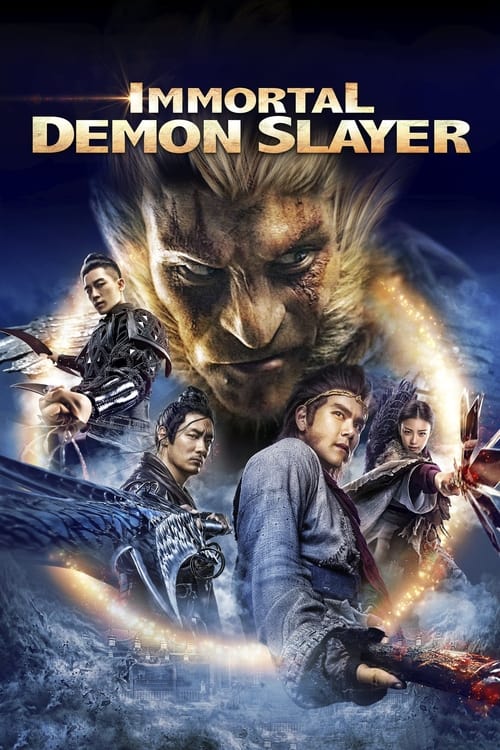
Immortal Demon Slayer
A giant rebelled against the heavens. It was declared a devil and defeated. The immortal heart evolved into Sun Wukong. The heavens found him, and ravaged his home. He enters the heavenly kingdom, disguised as a human, seeking retribution.
The film earned $103.8M at the global box office.











Plot Structure
Story beats plotted across runtime


Narrative Arc
Emotional journey through the story's key moments
Story Circle
Blueprint 15-beat structure
Arcplot Score Breakdown
Weighted: Precision (70%) + Arc (15%) + Theme (15%)
Immortal Demon Slayer (2017) showcases carefully calibrated plot construction, characteristic of Derek Kwok Chi-Kin's storytelling approach. This structural analysis examines how the film's 15-point plot structure maps to proven narrative frameworks across 2 hours and 10 minutes. With an Arcplot score of 7.7, the film showcases strong structural fundamentals.
Structural Analysis
The Status Quo at 2 minutes (1% through the runtime) establishes The protagonist lives as a skilled demon hunter in a world where immortal demons terrorize villages. We see their routine life of training and minor hunts, establishing their competence but also their isolation from normal society.. Of particular interest, this early placement immediately immerses viewers in the story world.
The inciting incident occurs at 16 minutes when A particularly powerful immortal demon attacks, destroying the protagonist's home village or killing someone close to them. This demon proves impossible to defeat with conventional methods, revealing the inadequacy of the protagonist's current abilities.. At 13% through the film, this Disruption is delayed, allowing extended setup of the story world. This beat shifts the emotional landscape, launching the protagonist into the central conflict.
The First Threshold at 33 minutes marks the transition into Act II, occurring at 25% of the runtime. This shows the protagonist's commitment to The protagonist makes the active choice to pursue the forbidden power or knowledge necessary to kill immortal demons. This might involve a dark ritual, accepting a cursed weapon, or entering a dangerous realm. They commit to the path despite knowing it may corrupt them., moving from reaction to action.
At 65 minutes, the Midpoint arrives at 50% of the runtime—precisely centered, creating perfect narrative symmetry. Structural examination shows that this crucial beat The protagonist achieves a major victory against a powerful immortal demon, appearing to prove that their dark path is working. False victory - they believe they've found the balance between power and humanity, but this success blinds them to the corruption taking hold. Stakes are raised as even greater threats emerge., fundamentally raising what's at risk. The emotional intensity shifts, dividing the narrative into clear before-and-after phases.
The Collapse moment at 98 minutes (75% through) represents the emotional nadir. Here, The protagonist fully transforms into a demon or loses complete control of their dark power, potentially killing an innocent or the mirror world character. The thing they feared most happens - they become the monster they sought to destroy. Alternatively, the main antagonist defeats them utterly, and their mentor or closest ally dies., indicates the protagonist at their lowest point. This beat's placement in the final quarter sets up the climactic reversal.
The Second Threshold at 104 minutes initiates the final act resolution at 80% of the runtime. The protagonist has a crucial realization - perhaps from the dying words of the mirror world character, or a memory of their humanity. They understand how to wield the dark power without losing themselves, or they choose to reject the power entirely and fight with their original strength plus newfound wisdom. Synthesis of the lesson., demonstrating the transformation achieved throughout the journey.
Emotional Journey
Immortal Demon Slayer's emotional architecture traces a deliberate progression across 15 carefully calibrated beats.
Narrative Framework
This structural analysis employs a 15-point narrative structure framework that maps key story moments. By mapping Immortal Demon Slayer against these established plot points, we can identify how Derek Kwok Chi-Kin utilizes or subverts traditional narrative conventions. The plot point approach reveals not only adherence to structural principles but also creative choices that distinguish Immortal Demon Slayer within the fantasy genre.
Comparative Analysis
Additional fantasy films include Harry Potter and the Philosopher's Stone, Conan the Barbarian and Batman Forever.
Plot Points by Act
Act I
SetupStatus Quo
The protagonist lives as a skilled demon hunter in a world where immortal demons terrorize villages. We see their routine life of training and minor hunts, establishing their competence but also their isolation from normal society.
Theme
A village elder or mentor figure speaks about the price of immortality and whether defeating evil requires becoming like the demons themselves - foreshadowing the protagonist's internal conflict between humanity and the dark power needed to defeat immortal foes.
Worldbuilding
Establishment of the demon-infested world, the hierarchy of demons, the protagonist's skills and relationships with other hunters or villagers, the rules of demon immortality, and the stakes - villages being destroyed, people living in fear.
Disruption
A particularly powerful immortal demon attacks, destroying the protagonist's home village or killing someone close to them. This demon proves impossible to defeat with conventional methods, revealing the inadequacy of the protagonist's current abilities.
Resistance
The protagonist debates whether to pursue forbidden knowledge or dark power to defeat immortal demons. They may seek out a mysterious mentor, ancient texts, or reluctantly consider methods that other hunters have warned against. Internal resistance to crossing moral lines.
Act II
ConfrontationFirst Threshold
The protagonist makes the active choice to pursue the forbidden power or knowledge necessary to kill immortal demons. This might involve a dark ritual, accepting a cursed weapon, or entering a dangerous realm. They commit to the path despite knowing it may corrupt them.
Mirror World
Introduction of a key relationship - perhaps another hunter, a reformed demon, or a person who represents what the protagonist is fighting for. This character embodies the theme of maintaining humanity while wielding dark power, serving as the protagonist's moral compass.
Premise
The protagonist trains with their new dark abilities, hunts increasingly powerful demons, and experiences the thrill and danger of their enhanced power. Action sequences showcase the "demon slayer" premise. However, signs of corruption or loss of humanity begin to appear.
Midpoint
The protagonist achieves a major victory against a powerful immortal demon, appearing to prove that their dark path is working. False victory - they believe they've found the balance between power and humanity, but this success blinds them to the corruption taking hold. Stakes are raised as even greater threats emerge.
Opposition
The protagonist's dark power grows but so does their inner demon. Allies begin to fear them, the mirror world character distances themselves, and the main immortal demon antagonist closes in. The protagonist's flaws - pride, anger, obsession with revenge - manifest as they lose control. External and internal enemies converge.
Collapse
The protagonist fully transforms into a demon or loses complete control of their dark power, potentially killing an innocent or the mirror world character. The thing they feared most happens - they become the monster they sought to destroy. Alternatively, the main antagonist defeats them utterly, and their mentor or closest ally dies.
Crisis
The protagonist confronts the darkness within themselves. In their lowest moment, they process the loss and face the reality that power without humanity is worthless. They must decide whether to surrender to the demon within or find another way. Dark night of the soul.
Act III
ResolutionSecond Threshold
The protagonist has a crucial realization - perhaps from the dying words of the mirror world character, or a memory of their humanity. They understand how to wield the dark power without losing themselves, or they choose to reject the power entirely and fight with their original strength plus newfound wisdom. Synthesis of the lesson.
Synthesis
The final confrontation with the immortal demon lord. The protagonist applies their new understanding - fighting with controlled power balanced by humanity, or pure technique enhanced by emotional strength. They execute a plan that uses both their demon-slaying skills and the wisdom gained from their journey. The battle tests their transformation.
Transformation
The protagonist stands victorious but fundamentally changed. Where the status quo showed isolation and pure combat skill, the transformation shows them integrated back into society, having found balance between power and humanity, or having sacrificed their dark abilities to save others. The mirror image proves their internal growth.