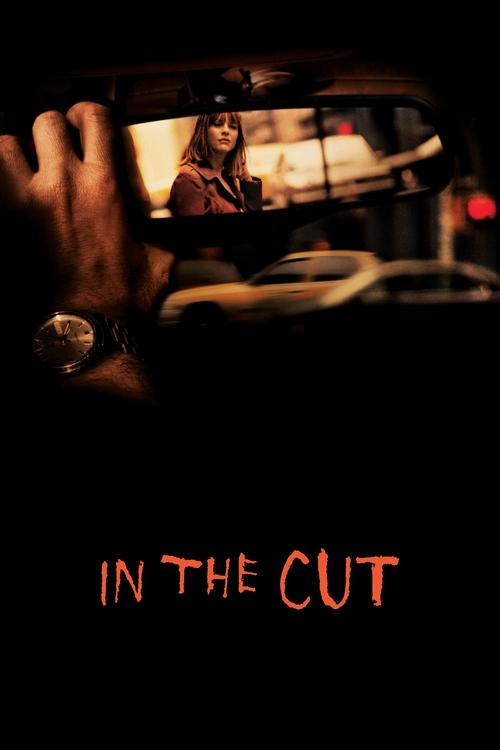
In the Cut
A New York City writing professor, Frannie Avery, has an affair with a police detective who is investigating the murder of a beautiful young woman in her neighborhood.
Working with a modest budget of $12.0M, the film achieved a respectable showing with $23.7M in global revenue (+98% profit margin).
1 win & 2 nominations


Plot Structure
Story beats plotted across runtime


Narrative Arc
Emotional journey through the story's key moments
Story Circle
Blueprint 15-beat structure
Arcplot Score Breakdown
Weighted: Precision (70%) + Arc (15%) + Theme (15%)
In the Cut (2003) showcases deliberately positioned narrative architecture, characteristic of Jane Campion's storytelling approach. This structural analysis examines how the film's 15-point plot structure maps to proven narrative frameworks across 1 hour and 59 minutes. With an Arcplot score of 6.8, the film balances conventional beats with creative variation.
Characters
Cast & narrative archetypes

Frannie Avery
Detective Giovanni Malloy
Pauline
Detective Richard Rodriguez
John Graham
Main Cast & Characters
Frannie Avery
Played by Meg Ryan
An introverted English teacher who becomes entangled in a murder investigation while exploring her own sexuality and desire.
Detective Giovanni Malloy
Played by Mark Ruffalo
A charming but potentially dangerous homicide detective investigating a serial killer, who begins an intense sexual relationship with Frannie.
Pauline
Played by Jennifer Jason Leigh
Frannie's half-sister, a dramatic and needy woman trapped in an abusive relationship who represents everything Frannie fears about female vulnerability.
Detective Richard Rodriguez
Played by Nick Damici
Malloy's partner, an aggressive and misogynistic cop whose threatening behavior makes him a suspect in Frannie's eyes.
John Graham
Played by Kevin Bacon
A troubled ex-boyfriend who stalks Frannie throughout the film, unable to let go of their past relationship.
Structural Analysis
The Status Quo at 1 minutes (1% through the runtime) establishes Frannie Avery teaches creative writing in her New York apartment, living a solitary, intellectual life disconnected from physical intimacy and danger.. Notably, this early placement immediately immerses viewers in the story world.
The inciting incident occurs at 15 minutes when Frannie witnesses a woman performing fellatio on a man in a bar basement, glimpsing a distinctive wrist tattoo—the same evening a dismembered woman's body is discovered nearby.. At 12% through the film, this Disruption aligns precisely with traditional story structure. This beat shifts the emotional landscape, launching the protagonist into the central conflict.
The First Threshold at 30 minutes marks the transition into Act II, occurring at 25% of the runtime. This indicates the protagonist's commitment to Frannie chooses to sleep with Malloy, actively entering a world of danger, sexuality, and loss of control despite knowing he may be connected to the murder., moving from reaction to action.
At 59 minutes, the Midpoint arrives at 50% of the runtime—precisely centered, creating perfect narrative symmetry. Of particular interest, this crucial beat Frannie's half-sister Pauline is murdered and dismembered, devastating Frannie and making the violence personal. The threat is no longer abstract—it's destroyed someone she loves., fundamentally raising what's at risk. The emotional intensity shifts, dividing the narrative into clear before-and-after phases.
The Collapse moment at 89 minutes (74% through) represents the emotional nadir. Here, Frannie discovers Malloy has the same wrist tattoo she saw on the killer in the bar basement, confirming her worst fear that the man she's been intimate with is the murderer., indicates the protagonist at their lowest point. This beat's placement in the final quarter sets up the climactic reversal.
The Second Threshold at 95 minutes initiates the final act resolution at 80% of the runtime. Frannie realizes the actual killer is Malloy's partner Rodriguez when he abducts her to the lighthouse, understanding she misread the signs but now must survive., demonstrating the transformation achieved throughout the journey.
Emotional Journey
In the Cut's emotional architecture traces a deliberate progression across 15 carefully calibrated beats.
Narrative Framework
This structural analysis employs proven narrative structure principles that track dramatic progression. By mapping In the Cut against these established plot points, we can identify how Jane Campion utilizes or subverts traditional narrative conventions. The plot point approach reveals not only adherence to structural principles but also creative choices that distinguish In the Cut within the drama genre.
Jane Campion's Structural Approach
Among the 3 Jane Campion films analyzed on Arcplot, the average structural score is 6.9, demonstrating varied approaches to story architecture. In the Cut takes a more unconventional approach compared to the director's typical style. For comparative analysis, explore the complete Jane Campion filmography.
Comparative Analysis
Additional drama films include After Thomas, South Pacific and Dirty Dancing: Havana Nights. For more Jane Campion analyses, see The Piano, Bright Star.
Plot Points by Act
Act I
SetupStatus Quo
Frannie Avery teaches creative writing in her New York apartment, living a solitary, intellectual life disconnected from physical intimacy and danger.
Theme
Frannie's student Cornelius discusses the dangerous allure of words and desire in his writing, foreshadowing the film's exploration of language, sexuality, and violence.
Worldbuilding
Establishment of Frannie's isolated world: her teaching, her research into urban slang, her half-sister Pauline's troubled romantic life, and the gritty Manhattan landscape.
Disruption
Frannie witnesses a woman performing fellatio on a man in a bar basement, glimpsing a distinctive wrist tattoo—the same evening a dismembered woman's body is discovered nearby.
Resistance
Detective Malloy investigates the murder and questions Frannie, who is drawn to him despite recognizing danger. She debates whether to engage with this violent world or retreat to safety.
Act II
ConfrontationFirst Threshold
Frannie chooses to sleep with Malloy, actively entering a world of danger, sexuality, and loss of control despite knowing he may be connected to the murder.
Mirror World
Frannie's relationship with Malloy deepens as he represents everything her intellectual life has repressed: physical danger, raw sexuality, and authentic emotional vulnerability.
Premise
Frannie explores her sexual awakening with Malloy while the murders continue. She navigates between desire and fear, consciousness and submission, safety and danger.
Midpoint
Frannie's half-sister Pauline is murdered and dismembered, devastating Frannie and making the violence personal. The threat is no longer abstract—it's destroyed someone she loves.
Opposition
Frannie's paranoia intensifies as evidence suggests Malloy may be the killer. She's trapped between desire for him and terror of him, unable to trust her own judgment.
Collapse
Frannie discovers Malloy has the same wrist tattoo she saw on the killer in the bar basement, confirming her worst fear that the man she's been intimate with is the murderer.
Crisis
Frannie flees in terror, isolated and helpless, processing the collapse of her judgment and the nearness of death. She's confronted with her complicity in her own endangerment.
Act III
ResolutionSecond Threshold
Frannie realizes the actual killer is Malloy's partner Rodriguez when he abducts her to the lighthouse, understanding she misread the signs but now must survive.
Synthesis
Frannie fights for her life against Rodriguez at the lighthouse. Malloy arrives and kills Rodriguez, saving Frannie. She survives by embracing both her vulnerability and strength.
Transformation
Frannie tends to the wounded Malloy in the lighthouse, transformed from isolated intellectual to someone who has integrated sexuality, danger, and authentic connection into her life.