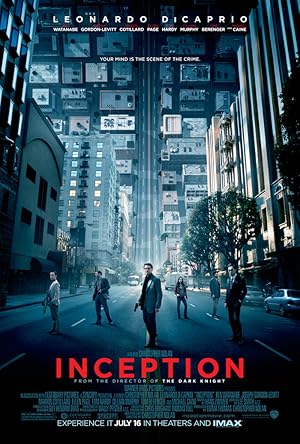
Inception
Dom Cobb is a skilled thief, the absolute best in the dangerous art of extraction, stealing valuable secrets from deep within the subconscious during the dream state, when the mind is at its most vulnerable. Cobb's rare ability has made him a coveted player in this treacherous new world of corporate espionage, but it has also made him an international fugitive and cost him everything he has ever loved. Now Cobb is being offered a chance at redemption. One last job could give him his life back but only if he can accomplish the impossible, inception. Instead of the perfect heist, Cobb and his team of specialists have to pull off the reverse: their task is not to steal an idea, but to plant one. If they succeed, it could be the perfect crime. But no amount of careful planning or expertise can prepare the team for the dangerous enemy that seems to predict their every move. An enemy that only Cobb could have seen coming.
Despite a major studio investment of $160.0M, Inception became a solid performer, earning $839.0M worldwide—a 424% return. This commercial performance validated the ambitious narrative scope, proving that audiences embrace compelling narrative even at blockbuster scale.
4 Oscars. 159 wins & 220 nominations
Roger Ebert
"The movie is a perplexing labyrinth without a simple through-line, and is sure to inspire truly endless analysis on the web."Read Full Review


Plot Structure
Story beats plotted across runtime


Narrative Arc
Emotional journey through the story's key moments
Story Circle
Blueprint 15-beat structure
Arcplot Score Breakdown
Weighted: Precision (70%) + Arc (15%) + Theme (15%)
Inception (2010) demonstrates deliberately positioned story structure, characteristic of Christopher Nolan's storytelling approach. This structural analysis examines how the film's 15-point plot structure maps to proven narrative frameworks across 2 hours and 28 minutes. With an Arcplot score of 8.1, the film showcases strong structural fundamentals.
Structural Analysis
The Status Quo at 1 minutes (1% through the runtime) establishes Bruce Wayne imprisoned in a Bhutanese prison, broken and angry. A world where fear controls everything and justice has failed.. The analysis reveals that this early placement immediately immerses viewers in the story world.
The inciting incident occurs at 14 minutes when Ra's al Ghul orders Bruce to execute a criminal. Bruce refuses and destroys the League's temple. He must find his own path.. At 10% through the film, this Disruption aligns precisely with traditional story structure. This beat shifts the emotional state to -5, launching the protagonist into the central conflict.
The First Threshold at 24 minutes marks the transition into Act II, occurring at 16% of the runtime. This shows the protagonist's commitment to Bruce decides to become a symbol. "As a man I am flesh and blood, but as a symbol I can be incorruptible, everlasting." Batman is born., moving from reaction to action.
At 60 minutes, the Midpoint arrives at 41% of the runtime—significantly early, compressing the first half. The analysis reveals that this crucial beat Batman captures Falcone. False victory - the mob is disrupted. But Scarecrow reveals a larger conspiracy. Stakes raise dramatically., fundamentally raising what's at risk. The emotional state shifts to 9, dividing the narrative into clear before-and-after phases.
The Collapse moment at 87 minutes (59% through) represents the emotional nadir. Here, Ra's releases fear toxin in the Narrows. Gotham descends into chaos. Rachel is poisoned. Bruce seemingly dies in the manor fire. Total defeat., demonstrates the protagonist at their lowest point with 3. This beat's placement in the final quarter sets up the climactic reversal.
The Second Threshold at 95 minutes initiates the final act resolution at 64% of the runtime. Bruce embraces his dual identity fully. Batman AND Bruce Wayne are both needed. Gordon and Batman plan to stop Ra's. A and B stories merge., demonstrating the transformation achieved throughout the journey. The emotional culmination reaches 3.
Emotional Journey
Inception's emotional architecture traces a deliberate progression from -5 to 9. The narrative's emotional pivot at the midpoint—9—divides the journey into distinct phases, with the first half building toward this moment of transformation and the second half exploring its consequences. With 4 core emotional states, the narrative maintains focused emotional clarity, allowing sustained thematic development.
Narrative Framework
This structural analysis employs systematic plot point analysis that identifies crucial turning points. By mapping Inception against these established plot points, we can identify how Christopher Nolan utilizes or subverts traditional narrative conventions. The plot point approach reveals not only adherence to structural principles but also creative choices that distinguish Inception within the action genre.
Christopher Nolan's Structural Approach
Among the 11 Christopher Nolan films analyzed on Arcplot, the average structural score is 7.3, reflecting strong command of classical structure. Inception represents one of the director's most structurally precise works. For comparative analysis, explore the complete Christopher Nolan filmography.
Comparative Analysis
Additional action films include The Bad Guys, Puss in Boots and Venom: The Last Dance. For more Christopher Nolan analyses, see Oppenheimer, Interstellar and Dunkirk.
Plot Points by Act
Act I
SetupStatus Quo
Bruce Wayne imprisoned in a Bhutanese prison, broken and angry. A world where fear controls everything and justice has failed.
Theme
Ducard asks Bruce why he is in prison. "To understand the criminal mind." The theme: conquering fear and becoming a symbol.
Worldbuilding
Flashbacks show young Bruce falling in the well, his parents murdered. Present Bruce trains with the League of Shadows. His broken world.
Disruption
Ra's al Ghul orders Bruce to execute a criminal. Bruce refuses and destroys the League's temple. He must find his own path.
Resistance
Bruce returns to Gotham. Should he reclaim Wayne Enterprises? Fight crime as himself? The city is corrupt. Can one man make a difference?
Act II
ConfrontationFirst Threshold
Bruce decides to become a symbol. "As a man I am flesh and blood, but as a symbol I can be incorruptible, everlasting." Batman is born.
Mirror World
Rachel Dawes represents Bruce's moral compass and connection to humanity. Their relationship carries the theme of justice vs. vengeance.
Premise
Batman takes on Gotham's underworld. The Batmobile chase. Interrogating Flass. Working with Gordon. The promise of the premise - Batman in action.
Midpoint
Batman captures Falcone. False victory - the mob is disrupted. But Scarecrow reveals a larger conspiracy. Stakes raise dramatically.
Opposition
Bruce is poisoned with fear toxin. Ra's al Ghul reveals he survived and plans to destroy Gotham. Wayne Manor burns. Everything falls apart.
Collapse
Ra's releases fear toxin in the Narrows. Gotham descends into chaos. Rachel is poisoned. Bruce seemingly dies in the manor fire. Total defeat.
Crisis
Bruce recovers but Gotham is tearing itself apart. Can Batman really save the city? Is the symbol enough? His darkest moment of doubt.
Act III
ResolutionSecond Threshold
Bruce embraces his dual identity fully. Batman AND Bruce Wayne are both needed. Gordon and Batman plan to stop Ra's. A and B stories merge.
Synthesis
The monorail battle. Batman defeats Ra's al Ghul. Gordon destroys the rail supports. The city is saved. Batman becomes Gotham's protector.
Transformation
Gordon activates the Bat-Signal. Batman stands watch over Gotham. The broken man from the opening is now the city's guardian. Gordon mentions a criminal who leaves Joker cards.