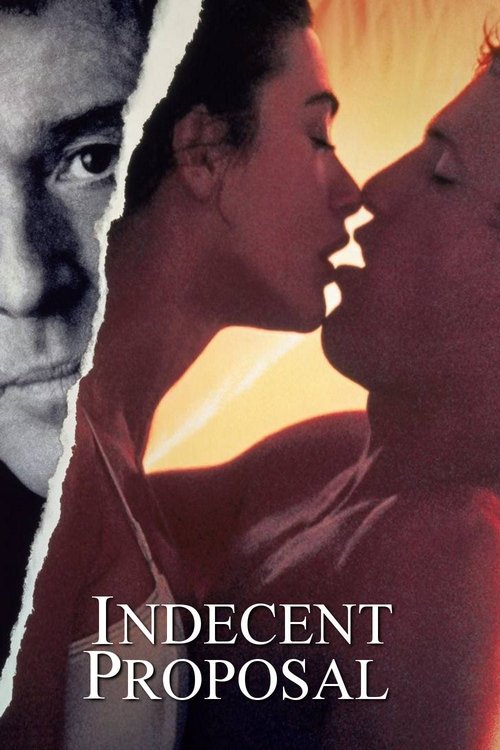
Indecent Proposal
John Gage offers a down-on-his-luck yuppie husband $1 million for the opportunity to spend the night with the man's wife.
Despite a respectable budget of $38.0M, Indecent Proposal became a commercial juggernaut, earning $266.6M worldwide—a remarkable 602% return.
7 wins & 8 nominations


Plot Structure
Story beats plotted across runtime


Narrative Arc
Emotional journey through the story's key moments
Story Circle
Blueprint 15-beat structure
Arcplot Score Breakdown
Weighted: Precision (70%) + Arc (15%) + Theme (15%)
Indecent Proposal (1993) reveals carefully calibrated narrative architecture, characteristic of Adrian Lyne's storytelling approach. This structural analysis examines how the film's 15-point plot structure maps to proven narrative frameworks across 1 hour and 57 minutes. With an Arcplot score of 7.7, the film showcases strong structural fundamentals.
Characters
Cast & narrative archetypes

Diana Murphy
David Murphy
John Gage
Main Cast & Characters
Diana Murphy
Played by Demi Moore
A loving wife and struggling real estate agent who becomes the center of a moral dilemma when offered a million dollars to spend a night with a billionaire.
David Murphy
Played by Woody Harrelson
An idealistic architect facing financial ruin who reluctantly agrees to let his wife accept a billionaire's indecent proposal.
John Gage
Played by Robert Redford
A charismatic billionaire who offers a married couple one million dollars for a night with the wife, believing everything has a price.
Structural Analysis
The Status Quo at 2 minutes (2% through the runtime) establishes David and Diana Murphy frolic on the beach in their beachfront dream home, deeply in love and carefree. The opening establishes their romantic idealism and perfect union.. Notably, this early placement immediately immerses viewers in the story world.
The inciting incident occurs at 14 minutes when David learns they are about to lose everything - the bank is foreclosing on their dream property. Their financial situation has reached crisis point, threatening their future together.. At 12% through the film, this Disruption aligns precisely with traditional story structure. This beat shifts the emotional landscape, launching the protagonist into the central conflict.
The First Threshold at 29 minutes marks the transition into Act II, occurring at 25% of the runtime. This shows the protagonist's commitment to After losing all their money, David and Diana actively choose to consider John Gage's proposal: one million dollars for one night with Diana. They cross into the moral dilemma that will define the story., moving from reaction to action.
At 59 minutes, the Midpoint arrives at 50% of the runtime—precisely centered, creating perfect narrative symmetry. Of particular interest, this crucial beat False defeat: Despite having the money and their home, David and Diana's relationship deteriorates. David's jealousy and insecurity intensify, while Diana can't escape the memory. The night they sold has raised the stakes - their marriage is now in jeopardy., fundamentally raising what's at risk. The emotional intensity shifts, dividing the narrative into clear before-and-after phases.
The Collapse moment at 86 minutes (74% through) represents the emotional nadir. Here, Diana leaves David, choosing to be with John Gage. The marriage dies - the very thing they tried to save through the deal has been destroyed by it. David is alone, having lost everything that mattered., shows the protagonist at their lowest point. This beat's placement in the final quarter sets up the climactic reversal.
The Second Threshold at 94 minutes initiates the final act resolution at 81% of the runtime. John Gage, recognizing Diana's true heart belongs to David, releases her from their relationship. This act of clarity allows Diana to understand what she needs - and David must decide if he can forgive and reclaim their love., demonstrating the transformation achieved throughout the journey.
Emotional Journey
Indecent Proposal's emotional architecture traces a deliberate progression across 15 carefully calibrated beats.
Narrative Framework
This structural analysis employs systematic plot point analysis that identifies crucial turning points. By mapping Indecent Proposal against these established plot points, we can identify how Adrian Lyne utilizes or subverts traditional narrative conventions. The plot point approach reveals not only adherence to structural principles but also creative choices that distinguish Indecent Proposal within the romance genre.
Adrian Lyne's Structural Approach
Among the 7 Adrian Lyne films analyzed on Arcplot, the average structural score is 7.3, reflecting strong command of classical structure. Indecent Proposal represents one of the director's most structurally precise works. For comparative analysis, explore the complete Adrian Lyne filmography.
Comparative Analysis
Additional romance films include South Pacific, Dirty Dancing: Havana Nights and The Evening Star. For more Adrian Lyne analyses, see Flashdance, Fatal Attraction and Nine 1/2 Weeks.
Plot Points by Act
Act I
SetupStatus Quo
David and Diana Murphy frolic on the beach in their beachfront dream home, deeply in love and carefree. The opening establishes their romantic idealism and perfect union.
Theme
During conversation about their relationship, the idea of testing love's boundaries is introduced - can anything break what they have? This foreshadows the central question about whether love can survive being treated as transactional.
Worldbuilding
Establishment of David and Diana's passionate marriage, David's architectural dreams, their financial struggles, and mounting debts. They are a couple fighting to save their home and future, unified by optimistic love.
Disruption
David learns they are about to lose everything - the bank is foreclosing on their dream property. Their financial situation has reached crisis point, threatening their future together.
Resistance
The couple decides to gamble their last $5,000 in Las Vegas as a desperate attempt to save their home. They debate the risk, experience initial success at the casino, and attract the attention of billionaire John Gage.
Act II
ConfrontationFirst Threshold
After losing all their money, David and Diana actively choose to consider John Gage's proposal: one million dollars for one night with Diana. They cross into the moral dilemma that will define the story.
Mirror World
John Gage represents the thematic counterpoint - a man who believes everything has a price, including love and loyalty. His worldview directly opposes David and Diana's romantic idealism.
Premise
The promise of the premise: exploring what happens when a couple sells intimacy. They accept the deal, Diana spends the night with Gage, they receive the money and save their home, but the aftermath slowly poisons their relationship with jealousy and regret.
Midpoint
False defeat: Despite having the money and their home, David and Diana's relationship deteriorates. David's jealousy and insecurity intensify, while Diana can't escape the memory. The night they sold has raised the stakes - their marriage is now in jeopardy.
Opposition
John Gage pursues Diana, offering her a different life. David's paranoia and anger escalate. The couple's communication breaks down completely. Diana is torn between her marriage and the escape Gage represents.
Collapse
Diana leaves David, choosing to be with John Gage. The marriage dies - the very thing they tried to save through the deal has been destroyed by it. David is alone, having lost everything that mattered.
Crisis
David processes the loss in despair. Diana, now with Gage, realizes wealth and luxury cannot replace genuine love. Both separately confront what they've lost and what truly matters.
Act III
ResolutionSecond Threshold
John Gage, recognizing Diana's true heart belongs to David, releases her from their relationship. This act of clarity allows Diana to understand what she needs - and David must decide if he can forgive and reclaim their love.
Synthesis
David and Diana separately work through their pain. A chance encounter at an auction house brings them face to face. They must choose: let the past destroy them or fight for what they once had.
Transformation
David and Diana reunite, choosing each other despite everything. The closing image mirrors the opening beach scene, but now their love has been tested and proven deeper than money or transaction - transformed through crisis into something more resilient.