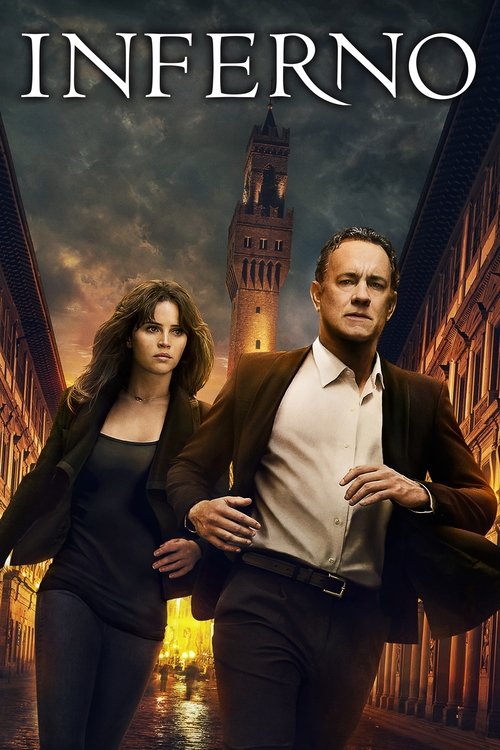
Inferno
After waking up in a hospital with amnesia, professor Robert Langdon and a doctor must race against time to foil a deadly global plot.
Despite a considerable budget of $75.0M, Inferno became a commercial success, earning $220.0M worldwide—a 193% return.
5 wins & 1 nomination


Plot Structure
Story beats plotted across runtime


Narrative Arc
Emotional journey through the story's key moments
Story Circle
Blueprint 15-beat structure
Arcplot Score Breakdown
Weighted: Precision (70%) + Arc (15%) + Theme (15%)
Inferno (2016) demonstrates deliberately positioned narrative architecture, characteristic of Ron Howard's storytelling approach. This structural analysis examines how the film's 15-point plot structure maps to proven narrative frameworks across 2 hours and 1 minutes. With an Arcplot score of 6.8, the film balances conventional beats with creative variation.
Characters
Cast & narrative archetypes

Robert Langdon
Sienna Brooks
Bertrand Zobrist
Harry Sims
Elizabeth Sinskey
Christoph Bouchard
Vayentha
Main Cast & Characters
Robert Langdon
Played by Tom Hanks
Harvard symbology professor racing to stop a bioterrorist plot while suffering from amnesia and visions of hell.
Sienna Brooks
Played by Felicity Jones
British doctor who helps Langdon escape assassins and recover his memory, harboring a shocking secret connection to the villain.
Bertrand Zobrist
Played by Ben Foster
Brilliant transhumanist billionaire who believes overpopulation will doom humanity and creates a virus to solve it.
Harry Sims
Played by Irrfan Khan
Head of the Consortium, a shadowy organization that provides services to clients, caught between professional duty and moral conflict.
Elizabeth Sinskey
Played by Sidse Babett Knudsen
Director of the World Health Organization who recruited Langdon to help stop Zobrist's bioterrorism plot.
Christoph Bouchard
Played by Omar Sy
WHO agent and ex-military operative working with Sinskey to track down Langdon and stop the virus.
Vayentha
Played by Ana Ularu
Deadly assassin pursuing Langdon through Florence, working for the Consortium with mysterious motives.
Structural Analysis
The Status Quo at 1 minutes (1% through the runtime) establishes Robert Langdon awakens in a Florence hospital with amnesia, suffering from terrifying hallucinations of hellish apocalyptic visions. He has no memory of the past two days and is disoriented and vulnerable.. Notably, this early placement immediately immerses viewers in the story world.
The inciting incident occurs at 15 minutes when A female assassin dressed as a police officer (Vayentha) arrives at the hospital and shoots at Langdon. Sienna helps him escape, forcing them to flee into the streets of Florence as fugitives with no understanding of why Langdon is being hunted.. At 12% through the film, this Disruption aligns precisely with traditional story structure. This beat shifts the emotional landscape, launching the protagonist into the central conflict.
The First Threshold at 30 minutes marks the transition into Act II, occurring at 25% of the runtime. This illustrates the protagonist's commitment to Langdon commits to following the trail of clues through Florence's art and architecture. He and Sienna head to the Palazzo Vecchio to find Vasari's painting containing the next clue, actively choosing to solve the puzzle rather than surrender to authorities., moving from reaction to action.
At 61 minutes, the Midpoint arrives at 50% of the runtime—precisely centered, creating perfect narrative symmetry. Structural examination shows that this crucial beat Langdon is captured by WHO agents and learns the truth: he was working WITH the WHO to find the virus. His memories were not erased by trauma but deliberately suppressed. Everything he believed about the past days was manufactured, a false defeat that reframes the entire mission., fundamentally raising what's at risk. The emotional intensity shifts, dividing the narrative into clear before-and-after phases.
The Collapse moment at 91 minutes (75% through) represents the emotional nadir. Here, The devastating betrayal is revealed: Sienna was Zobrist's lover and disciple all along. She escapes to Istanbul to ensure the virus is released, having manipulated Langdon throughout. His trusted partner becomes the true antagonist, and the plague may already be beyond stopping., indicates the protagonist at their lowest point. This beat's placement in the final quarter sets up the climactic reversal.
The Second Threshold at 97 minutes initiates the final act resolution at 80% of the runtime. Langdon realizes the final clue points to the exact location in the Basilica Cistern beneath Istanbul. He synthesizes all the Dante references and art history knowledge to pinpoint where Zobrist hid the bioweapon, committing to a final desperate mission underground., demonstrating the transformation achieved throughout the journey.
Emotional Journey
Inferno's emotional architecture traces a deliberate progression across 15 carefully calibrated beats.
Narrative Framework
This structural analysis employs systematic plot point analysis that identifies crucial turning points. By mapping Inferno against these established plot points, we can identify how Ron Howard utilizes or subverts traditional narrative conventions. The plot point approach reveals not only adherence to structural principles but also creative choices that distinguish Inferno within the mystery genre.
Ron Howard's Structural Approach
Among the 24 Ron Howard films analyzed on Arcplot, the average structural score is 7.0, demonstrating varied approaches to story architecture. Inferno takes a more unconventional approach compared to the director's typical style. For comparative analysis, explore the complete Ron Howard filmography.
Comparative Analysis
Additional mystery films include Lone Star, The Wicker Man and A Soldier's Story. For more Ron Howard analyses, see Apollo 13, Solo: A Star Wars Story and Cinderella Man.
Plot Points by Act
Act I
SetupStatus Quo
Robert Langdon awakens in a Florence hospital with amnesia, suffering from terrifying hallucinations of hellish apocalyptic visions. He has no memory of the past two days and is disoriented and vulnerable.
Theme
Through flashback video, billionaire geneticist Bertrand Zobrist declares that humanity is a disease and overpopulation will lead to extinction. He states: "The path to paradise begins in hell." This establishes the theme of whether extreme measures can be justified to save humanity.
Worldbuilding
Langdon's amnesia and disorientation are established. Dr. Sienna Brooks treats him. We learn Zobrist committed suicide after being pursued by WHO agents. Langdon discovers a bio-tube projector in his jacket showing Botticelli's Map of Hell, modified with hidden clues.
Disruption
A female assassin dressed as a police officer (Vayentha) arrives at the hospital and shoots at Langdon. Sienna helps him escape, forcing them to flee into the streets of Florence as fugitives with no understanding of why Langdon is being hunted.
Resistance
Sienna takes Langdon to her apartment where they analyze the projector's hidden message. Langdon debates whether to go to the authorities. They discover clues pointing to Dante's Inferno and realize they must solve the puzzle before a plague is released. The WHO and a shadowy organization called The Consortium are both pursuing them.
Act II
ConfrontationFirst Threshold
Langdon commits to following the trail of clues through Florence's art and architecture. He and Sienna head to the Palazzo Vecchio to find Vasari's painting containing the next clue, actively choosing to solve the puzzle rather than surrender to authorities.
Mirror World
Sienna reveals her past as a child prodigy and her disillusionment with humanity. She becomes Langdon's intellectual partner and emotional anchor, representing someone who understands Zobrist's fears about overpopulation but chooses hope over destruction.
Premise
Langdon and Sienna decode clues through Florence's greatest artworks and secret passages. They discover Dante's death mask, find hidden messages, and narrowly escape multiple pursuers. Classic Langdon puzzle-solving through Renaissance art and architecture unfolds.
Midpoint
Langdon is captured by WHO agents and learns the truth: he was working WITH the WHO to find the virus. His memories were not erased by trauma but deliberately suppressed. Everything he believed about the past days was manufactured, a false defeat that reframes the entire mission.
Opposition
The race intensifies as Langdon works with WHO director Elizabeth Sinskey. They track clues to Venice. The Consortium's leader realizes he was manipulated and switches sides. Multiple factions converge. Langdon discovers the plague is set to release in Istanbul's Hagia Sophia cistern.
Collapse
The devastating betrayal is revealed: Sienna was Zobrist's lover and disciple all along. She escapes to Istanbul to ensure the virus is released, having manipulated Langdon throughout. His trusted partner becomes the true antagonist, and the plague may already be beyond stopping.
Crisis
Langdon reels from Sienna's betrayal. The team races to Istanbul but fears they are too late. The virus bag may have already dissolved in the cistern waters. Langdon must process his failure while maintaining focus on preventing global catastrophe.
Act III
ResolutionSecond Threshold
Langdon realizes the final clue points to the exact location in the Basilica Cistern beneath Istanbul. He synthesizes all the Dante references and art history knowledge to pinpoint where Zobrist hid the bioweapon, committing to a final desperate mission underground.
Synthesis
A climactic race through Istanbul's Basilica Cistern during a concert. Langdon confronts Sienna, who has a change of heart and helps stop a zealot from manually rupturing the containment bag. The virus is contained. Sienna is shot but survives, arrested for her crimes.
Transformation
Langdon recovers in Florence, his memories restored. He visits Sienna in custody, showing compassion despite her betrayal. Unlike the opening's hellish visions and confusion, Langdon stands clear-headed, having prevented humanity's "Inferno" through knowledge, perseverance, and ultimate mercy.