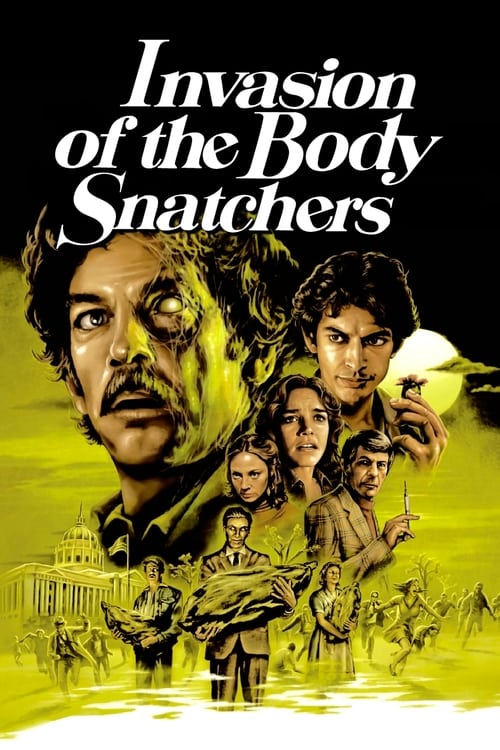
Invasion of the Body Snatchers
The residents of San Francisco are becoming drone-like shadows of their former selves, and as the phenomenon spreads, two Department of Health workers uncover the horrifying truth.
Despite its tight budget of $3.5M, Invasion of the Body Snatchers became a commercial juggernaut, earning $24.9M worldwide—a remarkable 613% return. The film's bold vision resonated with audiences, confirming that strong storytelling can transcend budget limitations.
3 wins & 11 nominations


Plot Structure
Story beats plotted across runtime


Narrative Arc
Emotional journey through the story's key moments
Story Circle
Blueprint 15-beat structure
Arcplot Score Breakdown
Weighted: Precision (70%) + Arc (15%) + Theme (15%)
Invasion of the Body Snatchers (1978) demonstrates meticulously timed narrative architecture, characteristic of Philip Kaufman's storytelling approach. This structural analysis examines how the film's 15-point plot structure maps to proven narrative frameworks across 1 hour and 56 minutes. With an Arcplot score of 6.9, the film balances conventional beats with creative variation.
Characters
Cast & narrative archetypes

Matthew Bennell
Elizabeth Driscoll
Jack Bellicec
Nancy Bellicec
Dr. David Kibner
Main Cast & Characters
Matthew Bennell
Played by Donald Sutherland
A San Francisco health inspector who discovers the alien pod invasion and fights to survive as humanity is replaced.
Elizabeth Driscoll
Played by Brooke Adams
A laboratory scientist who first notices people acting strangely and becomes Matthew's ally in the fight against the pods.
Jack Bellicec
Played by Jeff Goldblum
A writer and mud bath operator who discovers a partially-formed pod person and joins the resistance.
Nancy Bellicec
Played by Veronica Cartwright
Jack's wife who witnesses the pod conspiracy firsthand and helps the group attempt to survive.
Dr. David Kibner
Played by Leonard Nimoy
A charismatic psychiatrist and pop psychology author who dismisses concerns about changed people before revealing himself as one of the pod people.
Structural Analysis
The Status Quo at 1 minutes (1% through the runtime) establishes Matthew Bennell walks through San Francisco going about his normal routine as a health inspector, observing the city's mundane violations and urban life. The world appears ordinary but slightly sterile.. The analysis reveals that this early placement immediately immerses viewers in the story world.
The inciting incident occurs at 13 minutes when Elizabeth discovers a strange, incomplete duplicate of Geoffrey in her garden, sleeping and growing. The organic, pod-like nature of the threat becomes tangible. Something alien has invaded their world.. At 12% through the film, this Disruption aligns precisely with traditional story structure. This beat shifts the emotional landscape, launching the protagonist into the central conflict.
The First Threshold at 29 minutes marks the transition into Act II, occurring at 25% of the runtime. This reveals the protagonist's commitment to Jack Bellicec discovers a body without a face in his mud bath business - a blank duplicate that begins developing his features. Matthew and Elizabeth witness it. They now actively choose to investigate and fight this threat instead of ignoring it., moving from reaction to action.
At 57 minutes, the Midpoint arrives at 50% of the runtime—precisely centered, creating perfect narrative symmetry. Notably, this crucial beat The group realizes the full scope: Dr. Kibner himself is a pod person, and the conspiracy has infiltrated positions of authority. The stakes escalate from personal survival to the fate of humanity. No one can be trusted., fundamentally raising what's at risk. The emotional intensity shifts, dividing the narrative into clear before-and-after phases.
The Collapse moment at 86 minutes (74% through) represents the emotional nadir. Here, Nancy falls asleep and is duplicated. Jack finds her pod duplicate and in his grief and exhaustion, falls asleep himself. Both are lost. Matthew and Elizabeth witness the death of hope - they are the last ones left., shows the protagonist at their lowest point. This beat's placement in the final quarter sets up the climactic reversal.
The Second Threshold at 92 minutes initiates the final act resolution at 80% of the runtime. Matthew realizes they might destroy the pod farm and embryo storage facilities. A desperate plan emerges - if they can mimic the pods convincingly enough, they might sabotage the operation. A final glimmer of hope for resistance., demonstrating the transformation achieved throughout the journey.
Emotional Journey
Invasion of the Body Snatchers's emotional architecture traces a deliberate progression across 15 carefully calibrated beats.
Narrative Framework
This structural analysis employs proven narrative structure principles that track dramatic progression. By mapping Invasion of the Body Snatchers against these established plot points, we can identify how Philip Kaufman utilizes or subverts traditional narrative conventions. The plot point approach reveals not only adherence to structural principles but also creative choices that distinguish Invasion of the Body Snatchers within the science fiction genre.
Philip Kaufman's Structural Approach
Among the 8 Philip Kaufman films analyzed on Arcplot, the average structural score is 7.0, demonstrating varied approaches to story architecture. Invasion of the Body Snatchers takes a more unconventional approach compared to the director's typical style. For comparative analysis, explore the complete Philip Kaufman filmography.
Comparative Analysis
Additional science fiction films include The Postman, Mad Max 2 and AVP: Alien vs. Predator. For more Philip Kaufman analyses, see Quills, The Wanderers and Henry & June.
Plot Points by Act
Act I
SetupStatus Quo
Matthew Bennell walks through San Francisco going about his normal routine as a health inspector, observing the city's mundane violations and urban life. The world appears ordinary but slightly sterile.
Theme
Elizabeth Driscoll tells Matthew that her boyfriend Geoffrey is acting strange - "He's not Geoffrey anymore." The theme of identity, humanity, and what makes us ourselves is established through her concern about emotional disconnection.
Worldbuilding
Establishing Matthew's world: his work as health inspector, friendship with Elizabeth, the eccentric poet-psychiatrist Dr. Kibner, and the paranoid atmosphere of 1970s San Francisco. People begin noticing loved ones acting emotionally distant.
Disruption
Elizabeth discovers a strange, incomplete duplicate of Geoffrey in her garden, sleeping and growing. The organic, pod-like nature of the threat becomes tangible. Something alien has invaded their world.
Resistance
Matthew and Elizabeth investigate the phenomenon. They consult Dr. Kibner, who dismisses their concerns as mass hysteria. More people report loved ones being "different." Matthew remains skeptical but supportive, trying to find rational explanations.
Act II
ConfrontationFirst Threshold
Jack Bellicec discovers a body without a face in his mud bath business - a blank duplicate that begins developing his features. Matthew and Elizabeth witness it. They now actively choose to investigate and fight this threat instead of ignoring it.
Mirror World
The relationship between Matthew and Elizabeth deepens as they face the crisis together. Their human connection and emotional authenticity contrasts with the emotionless pod people. Their bond represents what's at stake.
Premise
The paranoid thriller delivers its promise: Matthew, Elizabeth, Jack, and Nancy evade the spreading pod conspiracy. They discover the mechanism - pods duplicate sleeping humans. They witness the transformation, flee from converted people, and try to stay awake.
Midpoint
The group realizes the full scope: Dr. Kibner himself is a pod person, and the conspiracy has infiltrated positions of authority. The stakes escalate from personal survival to the fate of humanity. No one can be trusted.
Opposition
The pod people actively hunt the survivors. Jack and Nancy are separated from Matthew and Elizabeth. The city transforms around them - more people become pods, coordinating to find the remaining humans. Sleep becomes impossible to resist.
Collapse
Nancy falls asleep and is duplicated. Jack finds her pod duplicate and in his grief and exhaustion, falls asleep himself. Both are lost. Matthew and Elizabeth witness the death of hope - they are the last ones left.
Crisis
Matthew and Elizabeth, alone and exhausted, try to blend in by mimicking the emotionless behavior of pod people. They stumble through the transformed city, struggling to stay awake and human, facing the inevitability of their situation.
Act III
ResolutionSecond Threshold
Matthew realizes they might destroy the pod farm and embryo storage facilities. A desperate plan emerges - if they can mimic the pods convincingly enough, they might sabotage the operation. A final glimmer of hope for resistance.
Synthesis
Matthew infiltrates the pod facility while Elizabeth hides. He navigates through the nightmare landscape of the warehouse filled with growing pods. Elizabeth, exhausted and emotional, struggles to stay awake and human in her hiding place.
Transformation
In the devastating final image, Matthew - now a pod person - points and shrieks at a human survivor, revealing he has been transformed. The invasion is complete. Humanity has lost. The emotionless automaton mirrors the opening's ordinary man, showing total corruption.