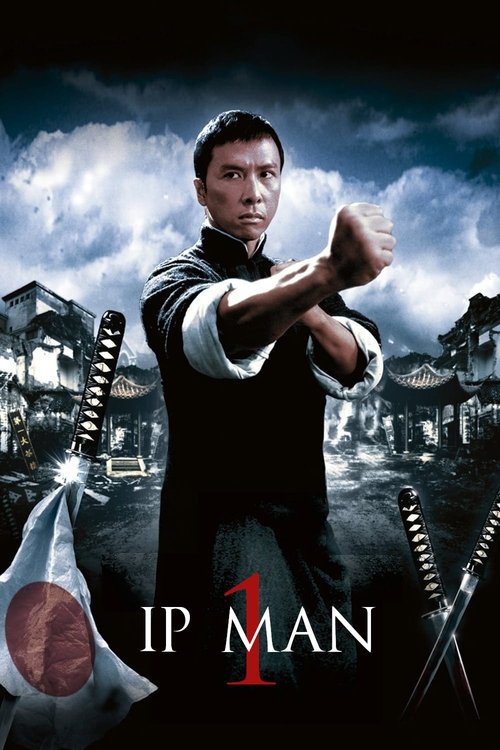
Ip Man
A semi-biographical account of Yip Man, the first martial arts master to teach the Chinese martial art of Wing Chun. The film focuses on events surrounding Ip that took place in the city of Foshan between the 1930s to 1940s during the Second Sino-Japanese War. Directed by Wilson Yip, the film stars Donnie Yen in the lead role, and features fight choreography by Sammo Hung.
Working with a modest budget of $11.7M, the film achieved a steady performer with $22.1M in global revenue (+89% profit margin).
12 wins & 19 nominations


Plot Structure
Story beats plotted across runtime


Narrative Arc
Emotional journey through the story's key moments
Story Circle
Blueprint 15-beat structure
Arcplot Score Breakdown
Weighted: Precision (70%) + Arc (15%) + Theme (15%)
Ip Man (2008) demonstrates deliberately positioned narrative design, characteristic of Wilson Yip's storytelling approach. This structural analysis examines how the film's 15-point plot structure maps to proven narrative frameworks across 1 hour and 46 minutes. With an Arcplot score of 7.7, the film showcases strong structural fundamentals.
Characters
Cast & narrative archetypes

Ip Man
Cheung Wing-sing
General Miura
Liu
Master Jin Shanzhao
Li Zhao
Main Cast & Characters
Ip Man
Played by Donnie Yen
A humble Wing Chun master living peacefully in Foshan who must defend Chinese honor against Japanese occupation.
Cheung Wing-sing
Played by Lynn Hung
Ip Man's devoted wife who supports her family through difficult times during the war.
General Miura
Played by Hiroyuki Ikeuchi
A Japanese general and karate master who seeks worthy opponents among Chinese martial artists.
Liu
Played by Chen Zhihui
A former bandit who becomes a factory worker and respects Ip Man after witnessing his skills.
Master Jin Shanzhao
Played by Calvin Cheng
A prideful martial arts master who challenges Ip Man early in the film.
Li Zhao
Played by Xing Yu
A rickshaw puller and friend of Ip Man who struggles to survive during the Japanese occupation.
Structural Analysis
The Status Quo at 2 minutes (2% through the runtime) establishes Ip Man practices Wing Chun in his peaceful courtyard while his wife watches. He lives a comfortable, dignified life as a wealthy martial arts master in Foshan, refusing to teach publicly.. Of particular interest, this early placement immediately immerses viewers in the story world.
The inciting incident occurs at 13 minutes when Northern Chinese martial artist Jin Shanzhao arrives and defeats local masters, challenging Foshan's martial arts reputation. Ip Man must confront him to defend local honor, disrupting his peaceful existence.. At 13% through the film, this Disruption is delayed, allowing extended setup of the story world. This beat shifts the emotional landscape, launching the protagonist into the central conflict.
The First Threshold at 26 minutes marks the transition into Act II, occurring at 24% of the runtime. This demonstrates the protagonist's commitment to Japanese soldiers seize Ip Man's home. He must move his family into a small worker's house and take a manual labor job at a coal mine. He actively chooses to adapt and work to survive rather than resist or flee., moving from reaction to action.
At 52 minutes, the Midpoint arrives at 50% of the runtime—precisely centered, creating perfect narrative symmetry. Significantly, this crucial beat Ip Man volunteers to fight ten Japanese soldiers at once to earn rice for workers. He defeats all ten in a spectacular display of Wing Chun, earning respect and resources. False victory - this draws dangerous attention., fundamentally raising what's at risk. The emotional intensity shifts, dividing the narrative into clear before-and-after phases.
The Collapse moment at 80 minutes (76% through) represents the emotional nadir. Here, Japanese forces discover Ip Man's identity and location. His friend is killed trying to warn him. Ip Man realizes he can no longer hide or remain passive - his family and community are in direct danger., reveals the protagonist at their lowest point. This beat's placement in the final quarter sets up the climactic reversal.
The Second Threshold at 85 minutes initiates the final act resolution at 81% of the runtime. Ip Man publicly challenges General Miura to a match, combining his martial skill with newfound purpose. He chooses to fight not for pride but for the dignity of the Chinese people, accepting potential death., demonstrating the transformation achieved throughout the journey.
Emotional Journey
Ip Man's emotional architecture traces a deliberate progression across 15 carefully calibrated beats.
Narrative Framework
This structural analysis employs a 15-point narrative structure framework that maps key story moments. By mapping Ip Man against these established plot points, we can identify how Wilson Yip utilizes or subverts traditional narrative conventions. The plot point approach reveals not only adherence to structural principles but also creative choices that distinguish Ip Man within the drama genre.
Wilson Yip's Structural Approach
Among the 4 Wilson Yip films analyzed on Arcplot, the average structural score is 7.5, reflecting strong command of classical structure. Ip Man represents one of the director's most structurally precise works. For comparative analysis, explore the complete Wilson Yip filmography.
Comparative Analysis
Additional drama films include After Thomas, South Pacific and Dirty Dancing: Havana Nights. For more Wilson Yip analyses, see Ip Man 2, Ip Man 4: The Finale and Ip Man 3.
Plot Points by Act
Act I
SetupStatus Quo
Ip Man practices Wing Chun in his peaceful courtyard while his wife watches. He lives a comfortable, dignified life as a wealthy martial arts master in Foshan, refusing to teach publicly.
Theme
Master Liao tells Ip Man: "Martial arts is about respect - respecting yourself and others." This encapsulates the film's core theme about dignity, humility, and the proper use of strength.
Worldbuilding
Introduction to 1930s Foshan martial arts community. Various masters and schools compete for reputation. Ip Man quietly demonstrates superior skill but remains humble, defeating challengers in his home but refusing to open a school.
Disruption
Northern Chinese martial artist Jin Shanzhao arrives and defeats local masters, challenging Foshan's martial arts reputation. Ip Man must confront him to defend local honor, disrupting his peaceful existence.
Resistance
Ip Man defeats Jin in a respectful match, maintaining harmony. Time passes peacefully. The Japanese invasion begins, and Foshan falls. Ip Man's world starts to collapse but he initially tries to maintain normalcy.
Act II
ConfrontationFirst Threshold
Japanese soldiers seize Ip Man's home. He must move his family into a small worker's house and take a manual labor job at a coal mine. He actively chooses to adapt and work to survive rather than resist or flee.
Mirror World
Ip Man encounters his former friend and fellow martial artist, now working for the Japanese. This relationship becomes the thematic mirror - showing the choice between collaboration and dignity.
Premise
Ip Man navigates occupied Foshan. Chinese masters are forced to fight Japanese soldiers for rice. Ip Man witnesses the humiliation of his people. His friend Li Zhao is murdered by the Japanese, intensifying the stakes.
Midpoint
Ip Man volunteers to fight ten Japanese soldiers at once to earn rice for workers. He defeats all ten in a spectacular display of Wing Chun, earning respect and resources. False victory - this draws dangerous attention.
Opposition
General Miura becomes obsessed with testing Chinese martial arts. Master Liu is killed in a match. Ip Man's former friend attempts to recruit him to teach Japanese soldiers. Pressure mounts from all sides.
Collapse
Japanese forces discover Ip Man's identity and location. His friend is killed trying to warn him. Ip Man realizes he can no longer hide or remain passive - his family and community are in direct danger.
Crisis
Ip Man processes the loss of his friend and confronts his choice: flee to save his family, or stand and fight for dignity. His wife supports his decision. He prepares mentally for the final confrontation.
Act III
ResolutionSecond Threshold
Ip Man publicly challenges General Miura to a match, combining his martial skill with newfound purpose. He chooses to fight not for pride but for the dignity of the Chinese people, accepting potential death.
Synthesis
Ip Man fights General Miura in public. He demonstrates superior Wing Chun while maintaining respect for martial arts. He defeats Miura but is shot by Japanese soldiers. He survives and escapes with help from Chinese witnesses.
Transformation
Epilogue text reveals Ip Man fled to Hong Kong where he finally opened a Wing Chun school, teaching Bruce Lee among others. The reluctant master became a teacher, transforming from passive gentleman to active defender of culture.