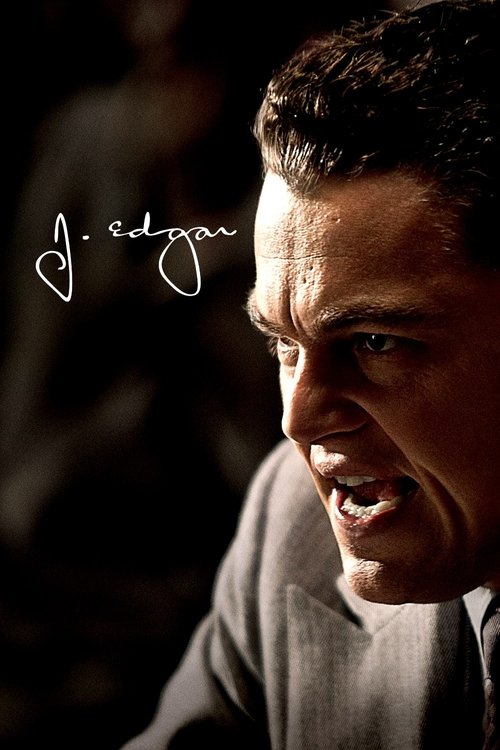
J. Edgar
As the face of law enforcement in the United States for almost 50 years, J. Edgar Hoover was feared and admired, reviled and revered. But behind closed doors, he held secrets that would have destroyed his image, his career, and his life.
Despite a respectable budget of $35.0M, J. Edgar became a commercial success, earning $84.6M worldwide—a 142% return.
5 wins & 17 nominations


Plot Structure
Story beats plotted across runtime


Narrative Arc
Emotional journey through the story's key moments
Story Circle
Blueprint 15-beat structure
Arcplot Score Breakdown
Weighted: Precision (70%) + Arc (15%) + Theme (15%)
J. Edgar (2011) reveals meticulously timed story structure, characteristic of Clint Eastwood's storytelling approach. This structural analysis examines how the film's 15-point plot structure maps to proven narrative frameworks across 2 hours and 17 minutes. With an Arcplot score of 6.8, the film balances conventional beats with creative variation.
Characters
Cast & narrative archetypes

J. Edgar Hoover
Clyde Tolson
Helen Gandy
Anna Marie Hoover
Robert F. Kennedy
Main Cast & Characters
J. Edgar Hoover
Played by Leonardo DiCaprio
The powerful and controversial FBI Director who shaped American law enforcement for nearly five decades while harboring personal secrets.
Clyde Tolson
Played by Armie Hammer
Hoover's devoted associate director and lifelong companion who maintained unwavering loyalty despite their complicated relationship.
Helen Gandy
Played by Naomi Watts
Hoover's fiercely loyal personal secretary who protected his secrets and managed his affairs for over fifty years.
Anna Marie Hoover
Played by Judi Dench
Edgar's domineering mother whose influence and expectations profoundly shaped his personality and life choices.
Robert F. Kennedy
Played by Jeffrey Donovan
The Attorney General who clashed with Hoover over civil rights and federal authority during the Kennedy administration.
Structural Analysis
The Status Quo at 2 minutes (1% through the runtime) establishes Elderly Hoover dictates memoirs to agent, establishing his obsessive need to control his narrative and legacy. Shows him as isolated, paranoid, clinging to power.. Significantly, this early placement immediately immerses viewers in the story world.
The inciting incident occurs at 16 minutes when The Wall Street bombing occurs, killing dozens. This terrorist attack gives Hoover the opportunity and justification to pursue his vision of a modern, scientific federal police force.. At 12% through the film, this Disruption aligns precisely with traditional story structure. This beat shifts the emotional landscape, launching the protagonist into the central conflict.
The First Threshold at 34 minutes marks the transition into Act II, occurring at 25% of the runtime. This illustrates the protagonist's commitment to Hoover is appointed Director of the Bureau of Investigation and hires Clyde Tolson as his assistant. He actively chooses to build his empire and enters the world of absolute control., moving from reaction to action.
At 69 minutes, the Midpoint arrives at 50% of the runtime—precisely centered, creating perfect narrative symmetry. Of particular interest, this crucial beat Bruno Hauptmann is captured for the Lindbergh kidnapping, but the case reveals fabricated evidence. False victory: Hoover is publicly triumphant but privately knows the truth is compromised. The lying becomes systematic., fundamentally raising what's at risk. The emotional intensity shifts, dividing the narrative into clear before-and-after phases.
The Collapse moment at 103 minutes (75% through) represents the emotional nadir. Here, Hoover's mother dies. The one person whose approval he desperately sought is gone. In grief, he tries on her dress and necklace - confronting the self he's denied his entire life. Whiff of death: his authentic self dies with her., shows the protagonist at their lowest point. This beat's placement in the final quarter sets up the climactic reversal.
The Second Threshold at 110 minutes initiates the final act resolution at 80% of the runtime. Tolson confronts Hoover about the lies in his memoirs - the fabricated hero stories. Hoover realizes his legacy is built on fiction, but chooses to continue the performance. He synthesizes: power over truth, always., demonstrating the transformation achieved throughout the journey.
Emotional Journey
J. Edgar's emotional architecture traces a deliberate progression across 15 carefully calibrated beats.
Narrative Framework
This structural analysis employs systematic plot point analysis that identifies crucial turning points. By mapping J. Edgar against these established plot points, we can identify how Clint Eastwood utilizes or subverts traditional narrative conventions. The plot point approach reveals not only adherence to structural principles but also creative choices that distinguish J. Edgar within the drama genre.
Clint Eastwood's Structural Approach
Among the 32 Clint Eastwood films analyzed on Arcplot, the average structural score is 6.5, demonstrating varied approaches to story architecture. J. Edgar represents one of the director's most structurally precise works. For comparative analysis, explore the complete Clint Eastwood filmography.
Comparative Analysis
Additional drama films include After Thomas, South Pacific and Dirty Dancing: Havana Nights. For more Clint Eastwood analyses, see True Crime, Million Dollar Baby and The Gauntlet.
Plot Points by Act
Act I
SetupStatus Quo
Elderly Hoover dictates memoirs to agent, establishing his obsessive need to control his narrative and legacy. Shows him as isolated, paranoid, clinging to power.
Theme
Young Hoover's mother tells him "I'd rather have a dead son than a daffodil for a son" - the thematic statement about denying one's true self to maintain appearances and power.
Worldbuilding
Establishes young Hoover's world at the Justice Department in 1919, his ambitions, his relationship with his domineering mother, the Red Scare context, and the Palmer Raids. Introduction to his methodical, obsessive nature.
Disruption
The Wall Street bombing occurs, killing dozens. This terrorist attack gives Hoover the opportunity and justification to pursue his vision of a modern, scientific federal police force.
Resistance
Hoover builds his case for a centralized Bureau of Investigation, develops fingerprint filing system, meets Clyde Tolson, and begins assembling his team. He debates how far to push his power and methods.
Act II
ConfrontationFirst Threshold
Hoover is appointed Director of the Bureau of Investigation and hires Clyde Tolson as his assistant. He actively chooses to build his empire and enters the world of absolute control.
Mirror World
Hoover and Tolson's relationship deepens beyond professional - dinner, personal conversations. Tolson represents the authentic life and love Hoover denies himself, the mirror to his public persona.
Premise
The "fun" of building the FBI empire: the Lindbergh kidnapping case, public hero worship, developing scientific crime-fighting methods, the performance of power and control. Hoover becomes a celebrity lawman.
Midpoint
Bruno Hauptmann is captured for the Lindbergh kidnapping, but the case reveals fabricated evidence. False victory: Hoover is publicly triumphant but privately knows the truth is compromised. The lying becomes systematic.
Opposition
Pressure mounts as Hoover battles Attorney Generals, presidents, and his own demons. His relationship with Tolson strains under denial. He accumulates secret files for blackmail. Paranoia and control intensify as threats to his power increase.
Collapse
Hoover's mother dies. The one person whose approval he desperately sought is gone. In grief, he tries on her dress and necklace - confronting the self he's denied his entire life. Whiff of death: his authentic self dies with her.
Crisis
Hoover processes the loss in isolation and rage. His emotional breakdown leads to a violent confrontation with Tolson where suppressed feelings erupt. He faces the devastation of his choices: a life of lies and loneliness.
Act III
ResolutionSecond Threshold
Tolson confronts Hoover about the lies in his memoirs - the fabricated hero stories. Hoover realizes his legacy is built on fiction, but chooses to continue the performance. He synthesizes: power over truth, always.
Synthesis
Elderly Hoover maintains his grip on power and secrets until his death. Tolson remains by his side, their relationship undefined. The finale shows Hoover dying alone in his home, his files and secrets secured.
Transformation
Tolson destroys Hoover's secret files after his death, the final act of protection and love. Mirrors the opening: Hoover controlled the narrative in life, but in death, even that control is an illusion. He died as he lived - alone, unloved publicly, his truth erased.