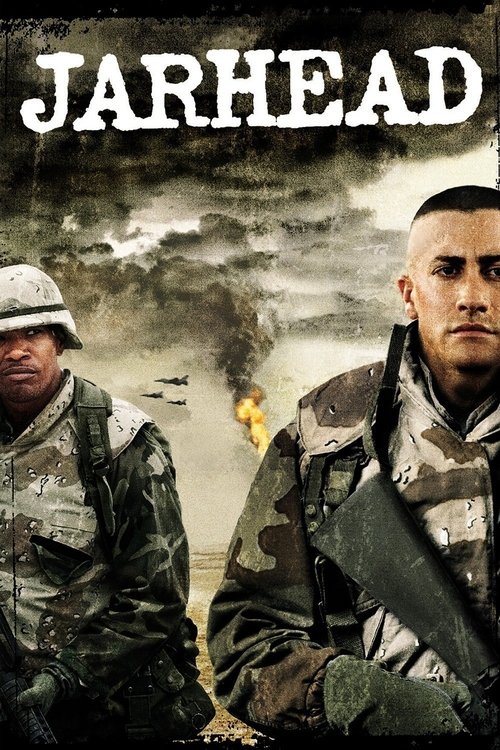
Jarhead
Jarhead is a film about a US Marine Anthony Swofford’s experience in the Gulf War. After putting up with an arduous boot camp, Swofford and his unit are sent to the Persian Gulf where they are eager to fight, but are forced to stay back from the action. Swofford struggles with the possibility of his girlfriend cheating on him, and as his mental state deteriorates, his desire to kill increases.
Working with a moderate budget of $72.0M, the film achieved a modest success with $97.1M in global revenue (+35% profit margin).
6 wins & 12 nominations


Plot Structure
Story beats plotted across runtime


Narrative Arc
Emotional journey through the story's key moments
Story Circle
Blueprint 15-beat structure
Arcplot Score Breakdown
Weighted: Precision (70%) + Arc (15%) + Theme (15%)
Jarhead (2005) demonstrates deliberately positioned narrative design, characteristic of Sam Mendes's storytelling approach. This structural analysis examines how the film's 15-point plot structure maps to proven narrative frameworks across 2 hours and 3 minutes. With an Arcplot score of 7.4, the film balances conventional beats with creative variation.
Characters
Cast & narrative archetypes

Anthony Swofford
Staff Sgt. Sykes
Troy
Alan Troy
Fergus O'Donnell
Fowler
Lt. Col. Kazinski
Main Cast & Characters
Anthony Swofford
Played by Jake Gyllenhaal
A young Marine sniper who struggles with the psychological toll of waiting for combat during the Gulf War.
Staff Sgt. Sykes
Played by Jamie Foxx
The tough, experienced platoon leader who trains and commands the scout sniper team.
Troy
Played by Peter Sarsgaard
Swofford's volatile and charismatic partner, a fellow Marine who becomes increasingly unstable.
Alan Troy
Played by Scott MacDonald
A Marine in the unit who struggles with news from home about his girlfriend's infidelity.
Fergus O'Donnell
Played by Brian Geraghty
A Marine who provides comic relief and camaraderie within the unit.
Fowler
Played by Evan Jones
A field radio operator who maintains contact with command and deals with the boredom of waiting.
Lt. Col. Kazinski
Played by Chris Cooper
The commanding officer who maintains military discipline and protocol during deployment.
Structural Analysis
The Status Quo at 1 minutes (1% through the runtime) establishes Swofford in boot camp getting his head shaved, establishing his entry into military life and loss of individual identity.. The analysis reveals that this early placement immediately immerses viewers in the story world.
The inciting incident occurs at 15 minutes when Saddam Hussein invades Kuwait; Swofford's unit receives deployment orders to Saudi Arabia for Operation Desert Shield.. At 13% through the film, this Disruption is delayed, allowing extended setup of the story world. This beat shifts the emotional landscape, launching the protagonist into the central conflict.
The First Threshold at 31 minutes marks the transition into Act II, occurring at 25% of the runtime. This illustrates the protagonist's commitment to Operation Desert Storm begins. The unit moves into combat position, crossing from waiting into active war zone, though the nature of this war will subvert expectations., moving from reaction to action.
At 62 minutes, the Midpoint arrives at 50% of the runtime—precisely centered, creating perfect narrative symmetry. Significantly, this crucial beat False defeat: Swofford and Troy finally get a mission - a sniper shot at enemy officers - but are denied permission to shoot. Their purpose is stolen., fundamentally raising what's at risk. The emotional intensity shifts, dividing the narrative into clear before-and-after phases.
The Collapse moment at 92 minutes (75% through) represents the emotional nadir. Here, Discovery of charred Iraqi bodies on the Highway of Death - the "whiff of death" and complete meaninglessness of their role in this mechanized slaughter., indicates the protagonist at their lowest point. This beat's placement in the final quarter sets up the climactic reversal.
The Second Threshold at 98 minutes initiates the final act resolution at 80% of the runtime. Swofford chooses to return home, accepting that this experience has changed him in ways he doesn't yet understand., demonstrating the transformation achieved throughout the journey.
Emotional Journey
Jarhead's emotional architecture traces a deliberate progression across 15 carefully calibrated beats.
Narrative Framework
This structural analysis employs systematic plot point analysis that identifies crucial turning points. By mapping Jarhead against these established plot points, we can identify how Sam Mendes utilizes or subverts traditional narrative conventions. The plot point approach reveals not only adherence to structural principles but also creative choices that distinguish Jarhead within the drama genre.
Sam Mendes's Structural Approach
Among the 9 Sam Mendes films analyzed on Arcplot, the average structural score is 6.5, demonstrating varied approaches to story architecture. Jarhead represents one of the director's most structurally precise works. For comparative analysis, explore the complete Sam Mendes filmography.
Comparative Analysis
Additional drama films include After Thomas, South Pacific and Dirty Dancing: Havana Nights. For more Sam Mendes analyses, see Revolutionary Road, American Beauty and Empire of Light.
Plot Points by Act
Act I
SetupStatus Quo
Swofford in boot camp getting his head shaved, establishing his entry into military life and loss of individual identity.
Theme
Drill instructor tells recruits they are "not even human fucking beings" - the dehumanization that defines their experience.
Worldbuilding
Boot camp and early training establish the Marine culture, hazing rituals, and Swofford's recruitment into Scout Sniper program under Staff Sergeant Sykes.
Disruption
Saddam Hussein invades Kuwait; Swofford's unit receives deployment orders to Saudi Arabia for Operation Desert Shield.
Resistance
Preparation and deployment to Saudi Arabia. Training in the desert, waiting, psychological deterioration begins. Swofford bonds with Troy as spotter partner.
Act II
ConfrontationFirst Threshold
Operation Desert Storm begins. The unit moves into combat position, crossing from waiting into active war zone, though the nature of this war will subvert expectations.
Mirror World
Swofford receives a video from his girlfriend that may show her with another man, introducing the parallel torment of relationships back home.
Premise
The "promise" of being a Marine sniper in war: endless waiting, psychological games, oil fires, boredom, near-misses with friendly fire, and zero actual combat.
Midpoint
False defeat: Swofford and Troy finally get a mission - a sniper shot at enemy officers - but are denied permission to shoot. Their purpose is stolen.
Opposition
Psychological breakdown intensifies. Swofford has mental breakdown, holds rifle to Troy's head. Marines discover burned bodies on Highway of Death. War ends anticlimactically.
Collapse
Discovery of charred Iraqi bodies on the Highway of Death - the "whiff of death" and complete meaninglessness of their role in this mechanized slaughter.
Crisis
War ends without catharsis. Marines process the emptiness, rage, and lack of purpose. They never fired their weapons in combat.
Act III
ResolutionSecond Threshold
Swofford chooses to return home, accepting that this experience has changed him in ways he doesn't yet understand.
Synthesis
Return home, failed relationship, discharge from service. Voiceover reflects on the permanent marking of being a Marine - "we are still in the desert."
Transformation
Swofford reflects that he will carry the war forever. At a veteran's funeral, he realizes all jarheads are bound by shared trauma, transformed permanently.