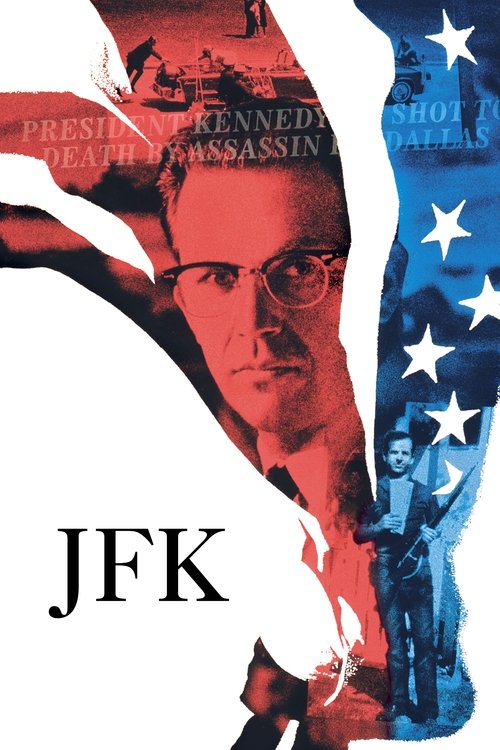
JFK
Follows the investigation into the assassination of President John F. Kennedy led by New Orleans district attorney Jim Garrison.
Despite a moderate budget of $40.0M, JFK became a box office success, earning $205.4M worldwide—a 414% return.
2 Oscars. 19 wins & 41 nominations


Plot Structure
Story beats plotted across runtime


Narrative Arc
Emotional journey through the story's key moments
Story Circle
Blueprint 15-beat structure
Arcplot Score Breakdown
Weighted: Precision (70%) + Arc (15%) + Theme (15%)
JFK (1991) showcases precise narrative design, characteristic of Oliver Stone's storytelling approach. This structural analysis examines how the film's 15-point plot structure maps to proven narrative frameworks across 3 hours and 9 minutes. With an Arcplot score of 6.8, the film balances conventional beats with creative variation.
Structural Analysis
The Status Quo at 2 minutes (1% through the runtime) establishes New Orleans District Attorney Jim Garrison lives a comfortable life with his family, focused on routine criminal cases and local politics, unaware of the conspiracy that will consume him.. Of particular interest, this early placement immediately immerses viewers in the story world.
The inciting incident occurs at 23 minutes when On a flight, Garrison reads the Warren Report for the first time and finds it absurd. He tells Lou Ivon, "I never realized Kennedy was killed so complicated," sparking his obsession with the inconsistencies.. At 12% through the film, this Disruption aligns precisely with traditional story structure. This beat shifts the emotional landscape, launching the protagonist into the central conflict.
The First Threshold at 48 minutes marks the transition into Act II, occurring at 25% of the runtime. This demonstrates the protagonist's commitment to Garrison makes the active choice to officially launch a grand jury investigation into the Kennedy assassination, despite warnings about taking on the federal government. He crosses into a world of conspiracy and danger., moving from reaction to action.
At 95 minutes, the Midpoint arrives at 50% of the runtime—precisely centered, creating perfect narrative symmetry. Structural examination shows that this crucial beat Garrison meets with Mr. X (Donald Sutherland) in Washington DC, who reveals the massive military-industrial complex conspiracy behind the assassination. False victory becomes false defeat: Garrison has the truth, but realizes the enemy is far more powerful than imagined., fundamentally raising what's at risk. The emotional intensity shifts, dividing the narrative into clear before-and-after phases.
The Collapse moment at 142 minutes (75% through) represents the emotional nadir. Here, Garrison's wife Liz confronts him about destroying their family for this obsession. His team is decimated, key witnesses are dead, and his reputation is in ruins. The whiff of death: his marriage, career, and the truth itself seem to be dying., shows the protagonist at their lowest point. This beat's placement in the final quarter sets up the climactic reversal.
The Second Threshold at 151 minutes initiates the final act resolution at 80% of the runtime. Garrison realizes that winning the Shaw trial isn't the point - putting the truth on the public record is. He synthesizes all he's learned: the investigation itself is the victory, not the verdict. He chooses to go to trial., demonstrating the transformation achieved throughout the journey.
Emotional Journey
JFK's emotional architecture traces a deliberate progression across 15 carefully calibrated beats.
Narrative Framework
This structural analysis employs a 15-point narrative structure framework that maps key story moments. By mapping JFK against these established plot points, we can identify how Oliver Stone utilizes or subverts traditional narrative conventions. The plot point approach reveals not only adherence to structural principles but also creative choices that distinguish JFK within the drama genre.
Oliver Stone's Structural Approach
Among the 15 Oliver Stone films analyzed on Arcplot, the average structural score is 7.1, reflecting strong command of classical structure. JFK takes a more unconventional approach compared to the director's typical style. For comparative analysis, explore the complete Oliver Stone filmography.
Comparative Analysis
Additional drama films include After Thomas, South Pacific and Dirty Dancing: Havana Nights. For more Oliver Stone analyses, see Nixon, Any Given Sunday and Alexander.
Plot Points by Act
Act I
SetupStatus Quo
New Orleans District Attorney Jim Garrison lives a comfortable life with his family, focused on routine criminal cases and local politics, unaware of the conspiracy that will consume him.
Theme
Senator Long's words echo: "Don't believe everything you read" - establishing the film's central question about truth, government deception, and the difficulty of distinguishing fact from fiction in the Kennedy assassination.
Worldbuilding
Establishment of Garrison's world in New Orleans, the assassination of JFK in Dallas through archival footage, and the immediate aftermath showing Oswald's arrest and murder by Jack Ruby. The Warren Commission concludes Oswald acted alone.
Disruption
On a flight, Garrison reads the Warren Report for the first time and finds it absurd. He tells Lou Ivon, "I never realized Kennedy was killed so complicated," sparking his obsession with the inconsistencies.
Resistance
Garrison debates whether to investigate, gathering his team (Lou Ivon, Bill Broussard). He interviews David Ferrie and other New Orleans figures connected to Oswald, discovering connections to anti-Castro Cubans, Guy Banister, and Clay Shaw. His wife Liz resists.
Act II
ConfrontationFirst Threshold
Garrison makes the active choice to officially launch a grand jury investigation into the Kennedy assassination, despite warnings about taking on the federal government. He crosses into a world of conspiracy and danger.
Mirror World
Garrison meets with his key witness and truth-teller, Willie O'Keefe, in prison. O'Keefe represents the marginalized voices who know the truth but are powerless - embodying the film's theme about institutional power silencing truth.
Premise
The investigation in full swing: Garrison and team interview witnesses, reconstruct timelines, visit Dealey Plaza, and piece together evidence of multiple shooters. The fun of detective work and uncovering the conspiracy. David Ferrie dies mysteriously.
Midpoint
Garrison meets with Mr. X (Donald Sutherland) in Washington DC, who reveals the massive military-industrial complex conspiracy behind the assassination. False victory becomes false defeat: Garrison has the truth, but realizes the enemy is far more powerful than imagined.
Opposition
The establishment fights back: media attacks Garrison, his team falls apart, witnesses recant or die, his marriage crumbles, funding disappears. Bill Broussard becomes disillusioned and quits. The case against Clay Shaw seems to be collapsing.
Collapse
Garrison's wife Liz confronts him about destroying their family for this obsession. His team is decimated, key witnesses are dead, and his reputation is in ruins. The whiff of death: his marriage, career, and the truth itself seem to be dying.
Crisis
Garrison sits alone in darkness, processing the devastation. He contemplates abandoning the case but revisits the evidence and remembers why he started. The dark night before clarity.
Act III
ResolutionSecond Threshold
Garrison realizes that winning the Shaw trial isn't the point - putting the truth on the public record is. He synthesizes all he's learned: the investigation itself is the victory, not the verdict. He chooses to go to trial.
Synthesis
The trial of Clay Shaw: Garrison delivers his masterful closing argument reconstructing the assassination, presenting the Zapruder film, dismantling the magic bullet theory, and revealing the conspiracy. Though Shaw is acquitted, Garrison has achieved his real goal.
Transformation
Final title cards reveal Garrison continued fighting for truth, files were sealed until 2029, and "the past is prologue." Garrison transformed from comfortable DA to truth-warrior, accepting that speaking truth to power is its own victory, regardless of outcome.