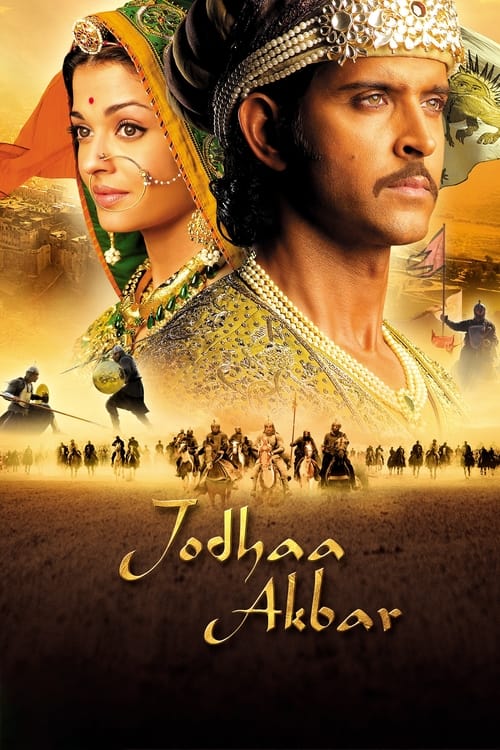
Jodhaa Akbar
A sixteenth century love story about a marriage of alliance that gave birth to true love between a Mughal emperor and a Rajput princess.
Despite its small-scale budget of $5.8M, Jodhaa Akbar became a box office success, earning $28.7M worldwide—a 395% return. The film's unique voice connected with viewers, showing that strong storytelling can transcend budget limitations.
38 wins & 35 nominations
Plot Structure
Story beats plotted across runtime


Narrative Arc
Emotional journey through the story's key moments
Story Circle
Blueprint 15-beat structure
Arcplot Score Breakdown
Weighted: Precision (70%) + Arc (15%) + Theme (15%)
Jodhaa Akbar (2008) demonstrates precise story structure, characteristic of Ashutosh Gowariker's storytelling approach. This structural analysis examines how the film's 15-point plot structure maps to proven narrative frameworks across 3 hours and 33 minutes. With an Arcplot score of 6.3, the film takes an unconventional approach to traditional narrative frameworks.
Characters
Cast & narrative archetypes

Jalaluddin Mohammad Akbar
Jodhaa Bai
Sharifuddin Hussain
Raja Bharmal
Sujamal
Maham Anga
Bairam Khan
Main Cast & Characters
Jalaluddin Mohammad Akbar
Played by Hrithik Roshan
Mughal Emperor who seeks to unite India through tolerance and political alliances, transforming from a conquering warrior to an enlightened ruler.
Jodhaa Bai
Played by Aishwarya Rai Bachchan
Rajput princess who marries Akbar for political alliance but maintains her identity and faith, eventually becoming his spiritual and political partner.
Sharifuddin Hussain
Played by Sonu Sood
Akbar's foster brother and chief advisor who harbors ambitions for power and plots against the emperor.
Raja Bharmal
Played by Kulbhushan Kharbanda
Jodhaa's father and King of Amer who arranges her marriage to Akbar for political alliance and peace.
Sujamal
Played by Purab Kohli
Jodhaa's brother who opposes the alliance with Akbar and leads a rebellion to preserve Rajput honor.
Maham Anga
Played by Ila Arun
Akbar's chief nurse and advisor who wielded significant political influence before her schemes were exposed.
Bairam Khan
Played by Rajesh Vivek
Akbar's mentor and regent who guided him in early rule but was later sent on pilgrimage.
Structural Analysis
The Status Quo at 3 minutes (1% through the runtime) establishes Emperor Akbar leads the Mughal army to a decisive victory, establishing him as a powerful but lonely conqueror seeking to unite all of Hindustan through military might.. The analysis reveals that this early placement immediately immerses viewers in the story world.
The inciting incident occurs at 27 minutes when Raja Bharmal of Amer, facing military defeat, offers his daughter Jodhaa in marriage to Akbar as a political alliance, devastating Jodhaa who was betrothed to another.. At 13% through the film, this Disruption is delayed, allowing extended setup of the story world. This beat shifts the emotional landscape, launching the protagonist into the central conflict.
The First Threshold at 54 minutes marks the transition into Act II, occurring at 25% of the runtime. This demonstrates the protagonist's commitment to Jodhaa and Akbar marry in a tense ceremony. She enters the Mughal palace as empress, choosing duty over personal desire, while Akbar chooses political alliance over romantic love., moving from reaction to action.
At 108 minutes, the Midpoint arrives at 51% of the runtime—precisely centered, creating perfect narrative symmetry. Structural examination shows that this crucial beat Akbar and Jodhaa fall deeply in love, consummating their marriage. False victory: they've found personal happiness, but court conspiracies against their union intensify, and religious tensions threaten everything., fundamentally raising what's at risk. The emotional intensity shifts, dividing the narrative into clear before-and-after phases.
The Collapse moment at 161 minutes (76% through) represents the emotional nadir. Here, Akbar publicly accuses and banishes Jodhaa, believing she betrayed him. Their love dies as she leaves the palace in disgrace. Akbar is consumed by rage and heartbreak, having lost the one person who saw him as a man, not an emperor., indicates the protagonist at their lowest point. This beat's placement in the final quarter sets up the climactic reversal.
The Second Threshold at 171 minutes initiates the final act resolution at 81% of the runtime. The true conspiracy is exposed - Sharifuddin manipulated everyone. Akbar realizes Jodhaa was innocent and that he failed to trust her. He understands that unity requires faith without proof, in both religion and love., demonstrating the transformation achieved throughout the journey.
Emotional Journey
Jodhaa Akbar's emotional architecture traces a deliberate progression across 15 carefully calibrated beats.
Narrative Framework
This structural analysis employs proven narrative structure principles that track dramatic progression. By mapping Jodhaa Akbar against these established plot points, we can identify how Ashutosh Gowariker utilizes or subverts traditional narrative conventions. The plot point approach reveals not only adherence to structural principles but also creative choices that distinguish Jodhaa Akbar within the romance genre.
Ashutosh Gowariker's Structural Approach
Among the 2 Ashutosh Gowariker films analyzed on Arcplot, the average structural score is 6.9, demonstrating varied approaches to story architecture. Jodhaa Akbar takes a more unconventional approach compared to the director's typical style. For comparative analysis, explore the complete Ashutosh Gowariker filmography.
Comparative Analysis
Additional romance films include South Pacific, Dirty Dancing: Havana Nights and The Evening Star. For more Ashutosh Gowariker analyses, see Swades.
Plot Points by Act
Act I
SetupStatus Quo
Emperor Akbar leads the Mughal army to a decisive victory, establishing him as a powerful but lonely conqueror seeking to unite all of Hindustan through military might.
Theme
Akbar's advisor suggests that true unity cannot be achieved through conquest alone but requires winning hearts - that respect and love are more powerful than fear.
Worldbuilding
Introduction to Akbar's court, his religious tolerance policies, political marriages as strategy, and Princess Jodhaa's world in Amer - a proud Rajput warrior princess devoted to Krishna.
Disruption
Raja Bharmal of Amer, facing military defeat, offers his daughter Jodhaa in marriage to Akbar as a political alliance, devastating Jodhaa who was betrothed to another.
Resistance
Jodhaa resists the marriage while Akbar debates accepting. Her brother creates conflict. Akbar grants unprecedented conditions allowing Jodhaa to maintain her Hindu faith and customs in his Muslim palace.
Act II
ConfrontationFirst Threshold
Jodhaa and Akbar marry in a tense ceremony. She enters the Mughal palace as empress, choosing duty over personal desire, while Akbar chooses political alliance over romantic love.
Mirror World
Jodhaa establishes her Krishna temple in the palace. Akbar observes her devotion with curiosity and respect, beginning their relationship as teacher and student about faith, culture, and love beyond politics.
Premise
Akbar and Jodhaa navigate palace life - initial coldness melts through cultural exchange, the sword-fighting lesson, shared meals, and growing mutual respect as they discover each other beyond political roles.
Midpoint
Akbar and Jodhaa fall deeply in love, consummating their marriage. False victory: they've found personal happiness, but court conspiracies against their union intensify, and religious tensions threaten everything.
Opposition
Sharifuddin and Maham Anga poison Akbar's mind with fabricated evidence that Jodhaa conspired to assassinate him. Political enemies exploit religious differences. Akbar's trust wavers under mounting pressure and manipulation.
Collapse
Akbar publicly accuses and banishes Jodhaa, believing she betrayed him. Their love dies as she leaves the palace in disgrace. Akbar is consumed by rage and heartbreak, having lost the one person who saw him as a man, not an emperor.
Crisis
Akbar suffers in darkness, realizing his mistake. Jodhaa endures the pain of false accusation. Both wrestle with grief, betrayal, and the recognition that love requires faith - the very lesson Akbar preaches about religious tolerance.
Act III
ResolutionSecond Threshold
The true conspiracy is exposed - Sharifuddin manipulated everyone. Akbar realizes Jodhaa was innocent and that he failed to trust her. He understands that unity requires faith without proof, in both religion and love.
Synthesis
Akbar executes the conspirators and rides to Amer to win Jodhaa back, not as emperor to subject, but as a man seeking forgiveness. He humbles himself, proving his love and transformed understanding of respect and faith.
Transformation
Jodhaa forgives Akbar. They reunite as true partners - emperor and empress united by love and mutual respect. Akbar, once a conqueror, has learned to win hearts, embodying the unity he sought for Hindustan.