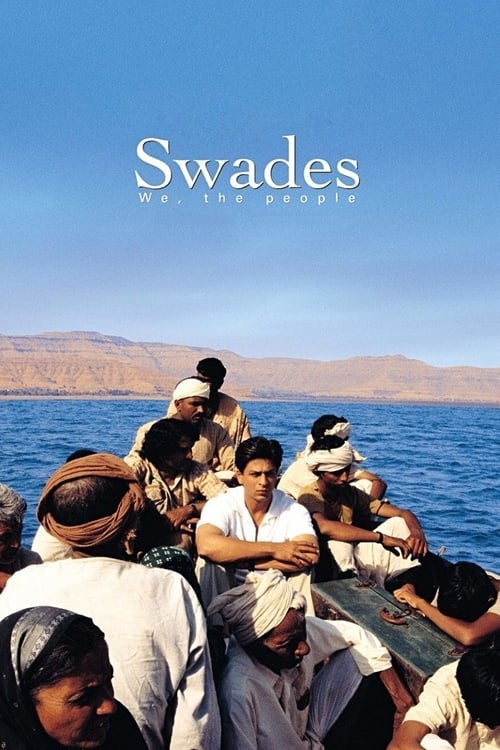
Swades
A successful Indian scientist returns home to his village to take his nanny back to America with him, and in the process rediscovers his roots.
Working with a tight budget of $2.9M, the film achieved a respectable showing with $4.8M in global revenue (+66% profit margin).


Plot Structure
Story beats plotted across runtime


Narrative Arc
Emotional journey through the story's key moments
Story Circle
Blueprint 15-beat structure
Arcplot Score Breakdown
Weighted: Precision (70%) + Arc (15%) + Theme (15%)
Swades (2004) exemplifies precise narrative architecture, characteristic of Ashutosh Gowariker's storytelling approach. This structural analysis examines how the film's 15-point plot structure maps to proven narrative frameworks across 3 hours and 15 minutes. With an Arcplot score of 7.6, the film showcases strong structural fundamentals.
Characters
Cast & narrative archetypes

Mohan Bhargava
Gita
Kaveri Amma
Fatima Bi
Haridas Bhai
Nivaran
Main Cast & Characters
Mohan Bhargava
Played by Shah Rukh Khan
NASA scientist who returns to India to bring his childhood caretaker back to America, but discovers his roots and purpose.
Gita
Played by Gayatri Joshi
Village schoolteacher who is educated, idealistic, and dedicated to improving her community through education.
Kaveri Amma
Played by Kishori Ballal
Mohan's elderly caretaker who raised him in childhood and still lives in their ancestral village.
Fatima Bi
Played by Lekh Tandon
Village matriarch who runs a local tea stall and provides wisdom and perspective to Mohan.
Haridas Bhai
Played by Rajesh Vivek
Village postmaster and educated elder who becomes Mohan's friend and guide to village realities.
Nivaran
Played by Daya Shankar Pandey
Young village boy who befriends Mohan and represents the younger generation's potential.
Structural Analysis
The Status Quo at 2 minutes (1% through the runtime) establishes Mohan Bhargava works as a successful project manager at NASA, living the American dream. He's accomplished, focused on the Mars mission, fully assimilated into American life.. Significantly, this early placement immediately immerses viewers in the story world.
The inciting incident occurs at 25 minutes when Mohan arrives in rural Charanpur village and experiences culture shock. The stark contrast between his American life and the poverty, lack of infrastructure, and social problems of rural India disrupts his expectations.. At 13% through the film, this Disruption is delayed, allowing extended setup of the story world. This beat shifts the emotional landscape, launching the protagonist into the central conflict.
The First Threshold at 50 minutes marks the transition into Act II, occurring at 26% of the runtime. This demonstrates the protagonist's commitment to Mohan makes the active choice to extend his stay and get involved with the village. He decides to help with the water problem and begins engaging with community issues rather than remaining a passive observer., moving from reaction to action.
At 99 minutes, the Midpoint arrives at 51% of the runtime—precisely centered, creating perfect narrative symmetry. The analysis reveals that this crucial beat False defeat: Mohan faces significant resistance from the villagers regarding his electricity project. Social divisions (caste issues) and superstitions create obstacles. He realizes that change is much harder than he thought - technical solutions aren't enough., fundamentally raising what's at risk. The emotional intensity shifts, dividing the narrative into clear before-and-after phases.
The Collapse moment at 147 minutes (75% through) represents the emotional nadir. Here, Mohan returns to America, leaving the village and Gita behind. The "death" is metaphorical - he abandons his commitment to the village and his newfound sense of purpose. He chooses comfort and career over community and love., demonstrates the protagonist at their lowest point. This beat's placement in the final quarter sets up the climactic reversal.
The Second Threshold at 157 minutes initiates the final act resolution at 81% of the runtime. Mohan has his breakthrough realization: his true home and purpose is in India, serving his community. He synthesizes his NASA skills with his newfound commitment to social change. He decides to return to India permanently., demonstrating the transformation achieved throughout the journey.
Emotional Journey
Swades's emotional architecture traces a deliberate progression across 15 carefully calibrated beats.
Narrative Framework
This structural analysis employs proven narrative structure principles that track dramatic progression. By mapping Swades against these established plot points, we can identify how Ashutosh Gowariker utilizes or subverts traditional narrative conventions. The plot point approach reveals not only adherence to structural principles but also creative choices that distinguish Swades within the drama genre.
Ashutosh Gowariker's Structural Approach
Among the 2 Ashutosh Gowariker films analyzed on Arcplot, the average structural score is 6.9, demonstrating varied approaches to story architecture. Swades represents one of the director's most structurally precise works. For comparative analysis, explore the complete Ashutosh Gowariker filmography.
Comparative Analysis
Additional drama films include After Thomas, South Pacific and Dirty Dancing: Havana Nights. For more Ashutosh Gowariker analyses, see Jodhaa Akbar.
Plot Points by Act
Act I
SetupStatus Quo
Mohan Bhargava works as a successful project manager at NASA, living the American dream. He's accomplished, focused on the Mars mission, fully assimilated into American life.
Theme
A colleague or conversation hints at the theme of roots and responsibility: what we owe to the place that shaped us, beyond personal achievement.
Worldbuilding
Establishing Mohan's comfortable American life at NASA, his work on the satellite project, his disconnect from India, and his decision to visit India to bring back Kaveri Amma, his childhood nanny.
Disruption
Mohan arrives in rural Charanpur village and experiences culture shock. The stark contrast between his American life and the poverty, lack of infrastructure, and social problems of rural India disrupts his expectations.
Resistance
Mohan debates staying longer than planned. He meets Gita (the schoolteacher), reconnects with Kaveri Amma, and begins observing village life. He resists emotional involvement, maintaining his identity as an outsider just visiting.
Act II
ConfrontationFirst Threshold
Mohan makes the active choice to extend his stay and get involved with the village. He decides to help with the water problem and begins engaging with community issues rather than remaining a passive observer.
Mirror World
Mohan's growing relationship with Gita deepens. She represents the mirror to his values - she stayed to serve her community despite having education and options. She embodies the theme of responsibility to one's roots.
Premise
Mohan works on village projects: trying to bring electricity, solving water issues, teaching kids. He experiences the joy and fulfillment of contributing to his community. Falls deeper in love with Gita and reconnects with Indian culture through festivals and daily life.
Midpoint
False defeat: Mohan faces significant resistance from the villagers regarding his electricity project. Social divisions (caste issues) and superstitions create obstacles. He realizes that change is much harder than he thought - technical solutions aren't enough.
Opposition
Mohan struggles against entrenched social problems: caste discrimination, bureaucratic corruption, villagers' resistance to change. His NASA deadline approaches. The tension between his two worlds intensifies - he must choose between returning to America or staying.
Collapse
Mohan returns to America, leaving the village and Gita behind. The "death" is metaphorical - he abandons his commitment to the village and his newfound sense of purpose. He chooses comfort and career over community and love.
Crisis
Back in America, Mohan is emotionally hollow. He goes through the motions at NASA but feels empty. He reflects on what he's lost - purpose, connection, love, identity. The dark night of realizing he made the wrong choice.
Act III
ResolutionSecond Threshold
Mohan has his breakthrough realization: his true home and purpose is in India, serving his community. He synthesizes his NASA skills with his newfound commitment to social change. He decides to return to India permanently.
Synthesis
Mohan executes his plan: resigns from NASA, returns to Charanpur, and successfully completes the electricity project. The village lights up for the first time. He reconciles with Gita and commits to staying and working for rural development.
Transformation
Final image mirrors the opening: Mohan is shown working on a project, but now it's in India, for his community. The Indian flag waves as electricity illuminates the village. He's transformed from a disconnected NRI to a committed nation-builder, home at last.