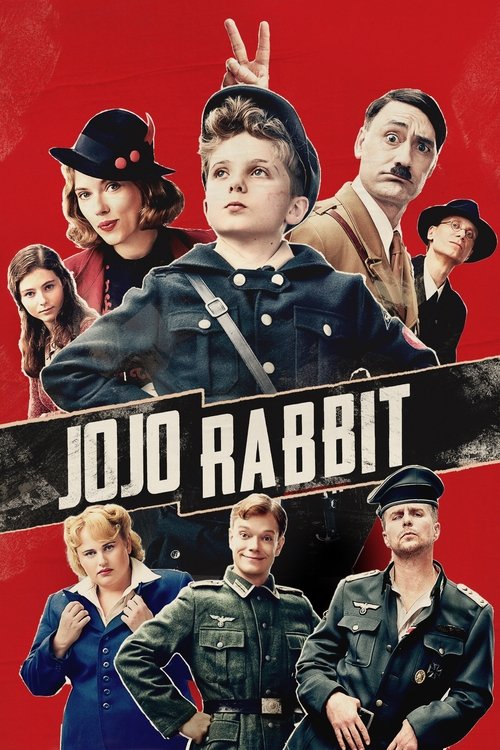
Jojo Rabbit
Jojo, a lonely German boy during World War II has his world shaken when he learns that his single mother is hiding a Jewish girl in their home. Influenced by a buffoonish imaginary version of Adolf Hitler, he begins to question his beliefs and confront the conflict between propaganda and his own humanity.
Despite its limited budget of $14.0M, Jojo Rabbit became a financial success, earning $82.5M worldwide—a 489% return. The film's unconventional structure resonated with audiences, proving that strong storytelling can transcend budget limitations.
1 Oscar. 53 wins & 191 nominations


Plot Structure
Story beats plotted across runtime


Narrative Arc
Emotional journey through the story's key moments
Story Circle
Blueprint 15-beat structure
Arcplot Score Breakdown
Weighted: Precision (70%) + Arc (15%) + Theme (15%)
Jojo Rabbit (2019) exhibits strategically placed dramatic framework, characteristic of Taika Waititi's storytelling approach. This structural analysis examines how the film's 15-point plot structure maps to proven narrative frameworks across 1 hour and 48 minutes. With an Arcplot score of 6.7, the film balances conventional beats with creative variation.
Characters
Cast & narrative archetypes

Jojo Betzler
Rosie Betzler
Elsa Korr
Adolf Hitler (Imaginary)
Captain Klenzendorf
Yorki
Fraulein Rahm
Main Cast & Characters
Jojo Betzler
Played by Roman Griffin Davis
A lonely 10-year-old boy in Nazi Germany whose imaginary friend is Adolf Hitler. Through discovering a Jewish girl hiding in his home, he confronts his indoctrinated beliefs.
Rosie Betzler
Played by Scarlett Johansson
Jojo's spirited, secretly anti-Nazi mother who hides a Jewish girl in their home. She tries to protect her son's innocence while resisting the regime.
Elsa Korr
Played by Thomasin McKenzie
A sharp-witted Jewish teenager hiding in the Betzler home. She challenges Jojo's Nazi beliefs through humor and humanity.
Adolf Hitler (Imaginary)
Played by Taika Waititi
Jojo's imaginary friend - a childish, buffoonish version of Hitler who represents his indoctrinated worldview and gradually loses influence.
Captain Klenzendorf
Played by Sam Rockwell
A disillusioned Wehrmacht captain running the Hitler Youth camp. He secretly undermines the Nazi regime while maintaining appearances.
Yorki
Played by Archie Yates
Jojo's best friend and fellow Hitler Youth member. A gentle, earnest boy who follows along without understanding the horror.
Fraulein Rahm
Played by Rebel Wilson
An enthusiastic instructor at the Hitler Youth camp who embodies fanatical devotion to Nazi ideology.
Structural Analysis
The Status Quo at 1 minutes (1% through the runtime) establishes Jojo Betzler, a fanatical 10-year-old Hitler Youth member, prepares for camp while his imaginary friend Adolf Hitler hypes him up. The German version of "I Want to Hold Your Hand" plays over Nazi rallies, establishing both the absurdist tone and Jojo's indoctrinated worldview.. Significantly, this early placement immediately immerses viewers in the story world.
The inciting incident occurs at 13 minutes when Jojo tries to prove himself by throwing a grenade but it bounces back and explodes near him, leaving him with a scarred face, a limp, and ending his dreams of becoming an elite Nazi soldier. His ordinary world is shattered.. At 12% through the film, this Disruption aligns precisely with traditional story structure. This beat shifts the emotional landscape, launching the protagonist into the central conflict.
The First Threshold at 27 minutes marks the transition into Act II, occurring at 25% of the runtime. This illustrates the protagonist's commitment to Jojo discovers Elsa, a teenage Jewish girl, hiding in the walls of his home—hidden by his own mother. Rather than report her immediately, he makes the choice to confront her himself, crossing into a new world where his beliefs will be tested., moving from reaction to action.
At 54 minutes, the Midpoint arrives at 50% of the runtime—precisely centered, creating perfect narrative symmetry. The analysis reveals that this crucial beat The Gestapo raids Jojo's home searching for Jews. In a tense sequence, Captain K covers for Elsa by pretending she is Jojo's deceased sister Inge. The stakes become life-and-death real, and Jojo realizes the true danger of the world he inhabits., fundamentally raising what's at risk. The emotional intensity shifts, dividing the narrative into clear before-and-after phases.
The Collapse moment at 81 minutes (75% through) represents the emotional nadir. Here, Jojo discovers his mother Rosie has been hanged in the town square for her resistance activities. The camera lingers on her distinctive shoes—the same shoes that danced with him. Jojo's world completely collapses; the whiff of death becomes devastatingly literal., demonstrates the protagonist at their lowest point. This beat's placement in the final quarter sets up the climactic reversal.
The Second Threshold at 86 minutes initiates the final act resolution at 80% of the runtime. The Allies begin their final assault on the town. Jojo must choose who he truly is. He confronts imaginary Hitler one last time, kicking him out a window—symbolically rejecting the hateful ideology. Jojo chooses love and humanity over fanaticism., demonstrating the transformation achieved throughout the journey.
Emotional Journey
Jojo Rabbit's emotional architecture traces a deliberate progression across 15 carefully calibrated beats.
Narrative Framework
This structural analysis employs a 15-point narrative structure framework that maps key story moments. By mapping Jojo Rabbit against these established plot points, we can identify how Taika Waititi utilizes or subverts traditional narrative conventions. The plot point approach reveals not only adherence to structural principles but also creative choices that distinguish Jojo Rabbit within the comedy genre.
Taika Waititi's Structural Approach
Among the 6 Taika Waititi films analyzed on Arcplot, the average structural score is 7.0, demonstrating varied approaches to story architecture. Jojo Rabbit takes a more unconventional approach compared to the director's typical style. For comparative analysis, explore the complete Taika Waititi filmography.
Comparative Analysis
Additional comedy films include The Bad Guys, Ella Enchanted and The Evening Star. For more Taika Waititi analyses, see Next Goal Wins, Thor: Love and Thunder and Hunt for the Wilderpeople.
Plot Points by Act
Act I
SetupStatus Quo
Jojo Betzler, a fanatical 10-year-old Hitler Youth member, prepares for camp while his imaginary friend Adolf Hitler hypes him up. The German version of "I Want to Hold Your Hand" plays over Nazi rallies, establishing both the absurdist tone and Jojo's indoctrinated worldview.
Theme
Rosie tells Jojo that his father is away "doing what he can" for the war effort. She subtly hints at the film's theme: the difference between blind loyalty and thinking for oneself, and that love is stronger than hate.
Worldbuilding
Jojo attends Hitler Youth camp led by Captain Klenzendorf and his assistant Finkel. The absurdity of Nazi indoctrination is on full display. Jojo struggles to fit in, refuses to kill a rabbit, and earns the mocking nickname "Jojo Rabbit" from the other boys.
Disruption
Jojo tries to prove himself by throwing a grenade but it bounces back and explodes near him, leaving him with a scarred face, a limp, and ending his dreams of becoming an elite Nazi soldier. His ordinary world is shattered.
Resistance
Recovering at home with his mother Rosie, Jojo is assigned to work distributing propaganda with Captain K. He explores his late sister Inge's room and discovers a hidden space behind the walls. Jojo is caught between his Nazi ideology and his mother's unspoken resistance.
Act II
ConfrontationFirst Threshold
Jojo discovers Elsa, a teenage Jewish girl, hiding in the walls of his home—hidden by his own mother. Rather than report her immediately, he makes the choice to confront her himself, crossing into a new world where his beliefs will be tested.
Mirror World
Elsa becomes Jojo's reluctant teacher about Jews, feeding him absurd lies that play into his propaganda-fed fears. Their relationship becomes the thematic heart of the film—the humanizing connection that will dismantle Jojo's hatred.
Premise
The "fun and games" of Jojo's secret arrangement with Elsa. He interviews her for his book about Jews while she manipulates his ignorance. Meanwhile, Rosie tries to show Jojo the beauty of life through dancing and whimsy. Jojo's friendship with Yorki provides comic relief.
Midpoint
The Gestapo raids Jojo's home searching for Jews. In a tense sequence, Captain K covers for Elsa by pretending she is Jojo's deceased sister Inge. The stakes become life-and-death real, and Jojo realizes the true danger of the world he inhabits.
Opposition
Jojo's conflicted feelings deepen. He develops genuine affection for Elsa while still clinging to Nazi ideology. Rosie continues her secret resistance work. The war closes in on the town. Imaginary Hitler grows more desperate and aggressive as Jojo's beliefs waver.
Collapse
Jojo discovers his mother Rosie has been hanged in the town square for her resistance activities. The camera lingers on her distinctive shoes—the same shoes that danced with him. Jojo's world completely collapses; the whiff of death becomes devastatingly literal.
Crisis
Jojo returns home in shock and grief. Elsa comforts him, and they hold each other. In his darkest moment, the connection with Elsa—the very person his ideology taught him to hate—becomes his only solace. His identity as a Nazi begins its final dissolution.
Act III
ResolutionSecond Threshold
The Allies begin their final assault on the town. Jojo must choose who he truly is. He confronts imaginary Hitler one last time, kicking him out a window—symbolically rejecting the hateful ideology. Jojo chooses love and humanity over fanaticism.
Synthesis
The battle for the town rages. Jojo survives with help from Captain K, who sacrifices his safety to protect him. When the war ends, Jojo lies to Elsa, telling her Germany won to keep her hidden a bit longer—a lie born of love, not hate. Finally, he tells her the truth: she's free.
Transformation
Elsa and Jojo step outside into the liberated town. Mirroring Rosie's lesson about dancing, they spontaneously begin to dance together in the street. The final image shows Jojo transformed—no longer a hateful fanatic, but a child capable of love, joy, and freedom.