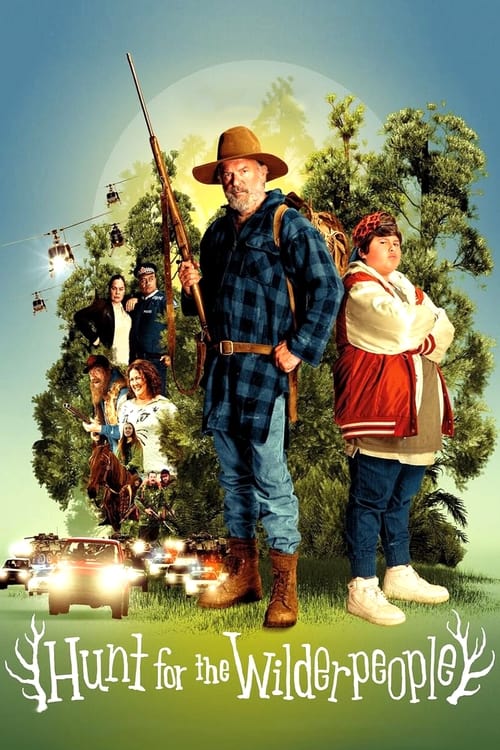
Hunt for the Wilderpeople
Ricky is a defiant young city kid who finds himself on the run with his cantankerous foster uncle in the wild New Zealand bush. A national manhunt ensues, and the two are forced to put aside their differences and work together to survive.
Despite its modest budget of $2.5M, Hunt for the Wilderpeople became a commercial juggernaut, earning $23.9M worldwide—a remarkable 856% return. The film's fresh perspective connected with viewers, proving that strong storytelling can transcend budget limitations.
24 wins & 26 nominations


Plot Structure
Story beats plotted across runtime


Narrative Arc
Emotional journey through the story's key moments
Story Circle
Blueprint 15-beat structure
Arcplot Score Breakdown
Weighted: Precision (70%) + Arc (15%) + Theme (15%)
Hunt for the Wilderpeople (2016) demonstrates deliberately positioned narrative design, characteristic of Taika Waititi's storytelling approach. This structural analysis examines how the film's 15-point plot structure maps to proven narrative frameworks across 1 hour and 41 minutes. With an Arcplot score of 7.6, the film showcases strong structural fundamentals.
Characters
Cast & narrative archetypes

Ricky Baker
Hector Faulkner (Uncle Hec)
Bella Faulkner (Aunt Bella)
Paula
Kahu
Psycho Sam
Main Cast & Characters
Ricky Baker
Played by Julian Dennison
A rebellious foster child who goes on the run in the New Zealand bush with his uncle.
Hector Faulkner (Uncle Hec)
Played by Sam Neill
A gruff bushman who reluctantly becomes Ricky's companion and protector in the wilderness.
Bella Faulkner (Aunt Bella)
Played by Rima Te Wiata
A warm-hearted woman who becomes Ricky's foster mother and shows him unconditional love.
Paula
Played by Rachel House
A rigid child welfare officer determined to bring Ricky back into state care at any cost.
Kahu
Played by Tioreore Ngatai-Melbourne
A spirited young girl who encounters Ricky and Hec in the bush and becomes an ally.
Psycho Sam
Played by Rhys Darby
An eccentric hermit living in the bush who helps Ricky and Hec evade authorities.
Structural Analysis
The Status Quo at 1 minutes (1% through the runtime) establishes Ricky Baker, a defiant foster kid in hip-hop gear, arrives at his latest placement in rural New Zealand. His case file reveals a history of rejection, petty crime, and failed placements. He's a city kid who doesn't belong anywhere.. Structural examination shows that this early placement immediately immerses viewers in the story world.
The inciting incident occurs at 12 minutes when Bella suddenly dies. The only person who ever truly loved Ricky is gone. Child services worker Paula arrives to take Ricky back into the system, informing him he'll be sent to juvenile detention. His brief taste of home is shattered.. At 11% through the film, this Disruption aligns precisely with traditional story structure. This beat shifts the emotional landscape, launching the protagonist into the central conflict.
The First Threshold at 24 minutes marks the transition into Act II, occurring at 24% of the runtime. This indicates the protagonist's commitment to When hunters discover them, Ricky makes an active choice: instead of going back to child services, he claims Hec is teaching him "the knack" of bush survival. They run together deeper into the wilderness, becoming fugitives. This is Ricky's conscious decision to stay with Hec and fight for his new life., moving from reaction to action.
At 51 minutes, the Midpoint arrives at 50% of the runtime—precisely centered, creating perfect narrative symmetry. Significantly, this crucial beat Ricky and Hec reach a high point in their adventure: they've successfully evaded capture for months, become legends, and genuinely bonded as family. Hec admits "You're not so bad, kid." This false victory moment represents peak freedom and connection - but the authorities are closing in and reality will soon intrude., fundamentally raising what's at risk. The emotional intensity shifts, dividing the narrative into clear before-and-after phases.
The Collapse moment at 74 minutes (73% through) represents the emotional nadir. Here, Ricky and Hec are finally surrounded and captured by Paula and armed police in a climactic confrontation. Their freedom dies. They're separated and taken into custody. Hec faces serious criminal charges. The dream of living free together in the bush is dead. Everything they've built is lost., indicates the protagonist at their lowest point. This beat's placement in the final quarter sets up the climactic reversal.
The Second Threshold at 80 minutes initiates the final act resolution at 79% of the runtime. At Hec's trial, Ricky provides testimony that reframes their story. He speaks truth about what happened and what Hec means to him. The revelation: family isn't about running away together - it's about choosing each other within society's rules. Ricky realizes he can honor Bella's love by accepting reality while maintaining connection., demonstrating the transformation achieved throughout the journey.
Emotional Journey
Hunt for the Wilderpeople's emotional architecture traces a deliberate progression across 15 carefully calibrated beats.
Narrative Framework
This structural analysis employs a 15-point narrative structure framework that maps key story moments. By mapping Hunt for the Wilderpeople against these established plot points, we can identify how Taika Waititi utilizes or subverts traditional narrative conventions. The plot point approach reveals not only adherence to structural principles but also creative choices that distinguish Hunt for the Wilderpeople within the adventure genre.
Taika Waititi's Structural Approach
Among the 6 Taika Waititi films analyzed on Arcplot, the average structural score is 7.0, demonstrating varied approaches to story architecture. Hunt for the Wilderpeople represents one of the director's most structurally precise works. For comparative analysis, explore the complete Taika Waititi filmography.
Comparative Analysis
Additional adventure films include The Black Stallion, The Bad Guys and Puss in Boots. For more Taika Waititi analyses, see Jojo Rabbit, Next Goal Wins and Thor: Love and Thunder.
Plot Points by Act
Act I
SetupStatus Quo
Ricky Baker, a defiant foster kid in hip-hop gear, arrives at his latest placement in rural New Zealand. His case file reveals a history of rejection, petty crime, and failed placements. He's a city kid who doesn't belong anywhere.
Theme
Bella tells Ricky: "No child is ever lost. You just have to know where to find them." This statement encapsulates the film's theme about finding family and belonging in unexpected places, and the transformative power of unconditional love.
Worldbuilding
Ricky meets his new foster parents: warm, loving Bella and gruff, reluctant Hec. Life on the remote farm is alien to Ricky. He tries to run away but Bella's kindness slowly wins him over. We see Ricky begin to settle in, celebrating his birthday, bonding with his dog Tupac, and finding a place he might call home.
Disruption
Bella suddenly dies. The only person who ever truly loved Ricky is gone. Child services worker Paula arrives to take Ricky back into the system, informing him he'll be sent to juvenile detention. His brief taste of home is shattered.
Resistance
Ricky refuses to return to the system and fakes his suicide before running into the bush. Hec, honoring Bella's memory, reluctantly goes after him. Hec finds Ricky and plans to bring him back, but breaks his ankle. They're forced to camp together in the wilderness while Hec heals. A massive manhunt begins as authorities assume Hec has abducted Ricky.
Act II
ConfrontationFirst Threshold
When hunters discover them, Ricky makes an active choice: instead of going back to child services, he claims Hec is teaching him "the knack" of bush survival. They run together deeper into the wilderness, becoming fugitives. This is Ricky's conscious decision to stay with Hec and fight for his new life.
Mirror World
As they journey deeper into the bush, Hec begins teaching Ricky genuine survival skills. Their relationship shifts from reluctant guardian and ward to something resembling father and son. Hec becomes the thematic mirror - a loner who also needs family but doesn't know how to accept it.
Premise
The "promise of the premise" - a mismatched duo on the run in the wilderness. Ricky and Hec evade authorities, encounter quirky locals, survive in the bush, and gradually bond. Ricky learns hunting and tracking. They meet psychotic hunter Kahu, steal supplies, and navigate the wild landscape. Media coverage turns them into folk heroes - "the Wilderpeople."
Midpoint
Ricky and Hec reach a high point in their adventure: they've successfully evaded capture for months, become legends, and genuinely bonded as family. Hec admits "You're not so bad, kid." This false victory moment represents peak freedom and connection - but the authorities are closing in and reality will soon intrude.
Opposition
The manhunt intensifies with military-level resources. Paula becomes increasingly obsessed with capturing them. Ricky and Hec encounter Kahu again in a tense confrontation. They meet a young girl named Kahu who briefly joins them, but complications arise. The authorities get closer. The fun is over; the pressure mounts. Their supplies dwindle and options narrow.
Collapse
Ricky and Hec are finally surrounded and captured by Paula and armed police in a climactic confrontation. Their freedom dies. They're separated and taken into custody. Hec faces serious criminal charges. The dream of living free together in the bush is dead. Everything they've built is lost.
Crisis
Ricky sits in child services facility, processed back into the system. Hec faces trial. Both are separated and despondent. Ricky processes the loss of his second family and the death of his dream. He confronts the reality that he might never see Hec again.
Act III
ResolutionSecond Threshold
At Hec's trial, Ricky provides testimony that reframes their story. He speaks truth about what happened and what Hec means to him. The revelation: family isn't about running away together - it's about choosing each other within society's rules. Ricky realizes he can honor Bella's love by accepting reality while maintaining connection.
Synthesis
The finale resolves their story: Hec receives a light sentence. Ricky is placed with a new foster family - one who understands and accepts him. The resolution synthesizes the film's themes: Ricky has learned to accept love and belonging, Hec has learned to open his heart, and both have been transformed by their journey together.
Transformation
Hec visits Ricky at his new home. They plan a proper hunting trip - legal this time, with permission. Ricky, once a defiant city kid who belonged nowhere, is now grounded, loved, and home. The closing image mirrors the opening but shows transformation: same kid, different soul. He's been found.