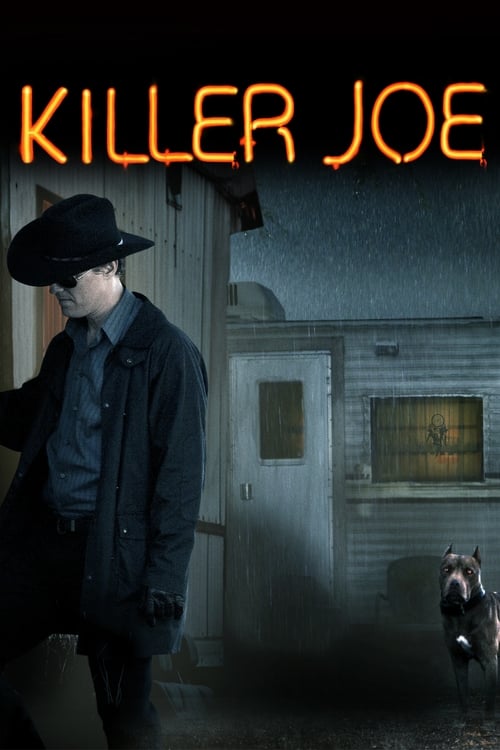
Killer Joe
A cop who moonlights as a hit man agrees to kill the hated mother of a desperate drug dealer in exchange for a tumble with the young man's virginal sister.
The film financial setback against its modest budget of $10.0M, earning $4.6M globally (-54% loss). While initial box office returns were modest, the film has gained appreciation for its unique voice within the crime genre.
9 wins & 21 nominations


Plot Structure
Story beats plotted across runtime


Narrative Arc
Emotional journey through the story's key moments
Story Circle
Blueprint 15-beat structure
Arcplot Score Breakdown
Weighted: Precision (70%) + Arc (15%) + Theme (15%)
Killer Joe (2012) exemplifies meticulously timed narrative architecture, characteristic of William Friedkin's storytelling approach. This structural analysis examines how the film's 15-point plot structure maps to proven narrative frameworks across 1 hour and 42 minutes. With an Arcplot score of 7.4, the film balances conventional beats with creative variation.
Characters
Cast & narrative archetypes

Joe Cooper
Chris Smith
Dottie Smith
Ansel Smith
Sharla Smith
Main Cast & Characters
Joe Cooper
Played by Matthew McConaughey
A Dallas police detective and contract killer who operates with cold precision and disturbing ritualistic behavior.
Chris Smith
Played by Emile Hirsch
A desperate drug dealer drowning in debt who hires Joe to kill his mother for insurance money.
Dottie Smith
Played by Juno Temple
Chris's innocent, childlike younger sister who becomes Joe's disturbing "retainer" and romantic obsession.
Ansel Smith
Played by Thomas Haden Church
The weak-willed, ineffectual father of Chris and Dottie who allows his family to spiral into chaos.
Sharla Smith
Played by Gina Gershon
Ansel's trashy, manipulative wife and Chris's stepmother who schemes for her own survival.
Structural Analysis
The Status Quo at 1 minutes (1% through the runtime) establishes Chris Smith stands in the rain outside his family's trailer, locked out and desperate. The opening image establishes the trashy, violent, debt-ridden world of a dysfunctional family at rock bottom.. Notably, this early placement immediately immerses viewers in the story world.
The inciting incident occurs at 12 minutes when Chris proposes hiring a contract killer to murder their mother for the insurance money. Ansel agrees to the plan, crossing a moral threshold that sets the nightmare in motion.. At 12% through the film, this Disruption aligns precisely with traditional story structure. This beat shifts the emotional landscape, launching the protagonist into the central conflict.
The First Threshold at 26 minutes marks the transition into Act II, occurring at 26% of the runtime. This demonstrates the protagonist's commitment to The family agrees to give Dottie to Joe as collateral. This active choice to pimp out an innocent family member for a murder plot marks their irreversible descent into moral horror., moving from reaction to action.
At 51 minutes, the Midpoint arrives at 50% of the runtime—precisely centered, creating perfect narrative symmetry. The analysis reveals that this crucial beat The mother is murdered. What seemed like a theoretical plan becomes horrifying reality. The stakes raise dramatically as the family must now face the consequences of what they've done, and Joe's hold over them tightens., fundamentally raising what's at risk. The emotional intensity shifts, dividing the narrative into clear before-and-after phases.
The Collapse moment at 77 minutes (76% through) represents the emotional nadir. Here, Joe arrives for a reckoning dinner, fully aware of the betrayal. The family is trapped with a psychopathic killer who owns them. All hope of escaping consequences dies. The "whiff of death" permeates as Joe prepares to exact punishment., reveals the protagonist at their lowest point. This beat's placement in the final quarter sets up the climactic reversal.
The Second Threshold at 83 minutes initiates the final act resolution at 82% of the runtime. Chris snaps and attacks Joe with a fire poker. This desperate act of violence breaks the paralysis and triggers the chaotic finale. The family chooses violent resistance over submission., demonstrating the transformation achieved throughout the journey.
Emotional Journey
Killer Joe's emotional architecture traces a deliberate progression across 15 carefully calibrated beats.
Narrative Framework
This structural analysis employs structural analysis methodology used to understand storytelling architecture. By mapping Killer Joe against these established plot points, we can identify how William Friedkin utilizes or subverts traditional narrative conventions. The plot point approach reveals not only adherence to structural principles but also creative choices that distinguish Killer Joe within the crime genre.
William Friedkin's Structural Approach
Among the 10 William Friedkin films analyzed on Arcplot, the average structural score is 7.2, reflecting strong command of classical structure. Killer Joe represents one of the director's most structurally precise works. For comparative analysis, explore the complete William Friedkin filmography.
Comparative Analysis
Additional crime films include The Bad Guys, Rustom and The Whole Ten Yards. For more William Friedkin analyses, see Cruising, Sorcerer and Jade.
Plot Points by Act
Act I
SetupStatus Quo
Chris Smith stands in the rain outside his family's trailer, locked out and desperate. The opening image establishes the trashy, violent, debt-ridden world of a dysfunctional family at rock bottom.
Theme
Ansel tells Chris about owing money and being in deep trouble. The theme emerges: desperation drives people to make monstrous choices, and using people as commodities destroys everyone involved.
Worldbuilding
We meet the Smith family: Chris (drug dealer in debt), Ansel (dim-witted father), Sharla (trashy stepmother), and Dottie (innocent younger sister). Chris owes $6,000 to dangerous people and learns his mother has a $50,000 life insurance policy with Dottie as beneficiary.
Disruption
Chris proposes hiring a contract killer to murder their mother for the insurance money. Ansel agrees to the plan, crossing a moral threshold that sets the nightmare in motion.
Resistance
Chris and Ansel meet with Killer Joe Cooper, a detective who moonlights as a contract killer. Joe is methodical, professional, and terrifying. They negotiate terms but cannot pay his $25,000 fee upfront. Joe proposes taking Dottie as a "retainer" until payment.
Act II
ConfrontationFirst Threshold
The family agrees to give Dottie to Joe as collateral. This active choice to pimp out an innocent family member for a murder plot marks their irreversible descent into moral horror.
Mirror World
Joe takes Dottie on a "date" and begins a disturbing relationship with her. Dottie represents innocence and purity, serving as a mirror to Joe's controlled darkness and the family's corruption. Their relationship carries the film's thematic weight.
Premise
Joe integrates himself into the family, courting Dottie while maintaining his predatory control. The family waits for the murder to happen. Joe's relationship with Dottie becomes increasingly possessive and sexual, while the family's desperation and dysfunction deepen.
Midpoint
The mother is murdered. What seemed like a theoretical plan becomes horrifying reality. The stakes raise dramatically as the family must now face the consequences of what they've done, and Joe's hold over them tightens.
Opposition
The plan falls apart: the insurance policy beneficiary was changed to Rex, not Dottie. Chris discovers Sharla orchestrated everything and is with Rex. Joe becomes enraged at being used and unpaid. The family's lies and betrayals close in as Joe demands payment or revenge.
Collapse
Joe arrives for a reckoning dinner, fully aware of the betrayal. The family is trapped with a psychopathic killer who owns them. All hope of escaping consequences dies. The "whiff of death" permeates as Joe prepares to exact punishment.
Crisis
Joe subjects the family to psychological and physical torture, particularly humiliating Sharla in a brutal scene involving a chicken leg. The family sits paralyzed in their darkest moment, realizing they are completely powerless against the monster they hired.
Act III
ResolutionSecond Threshold
Chris snaps and attacks Joe with a fire poker. This desperate act of violence breaks the paralysis and triggers the chaotic finale. The family chooses violent resistance over submission.
Synthesis
Chaos erupts: Chris attacks Joe, Ansel joins the fight, Sharla is killed by Joe, and the violence escalates. Dottie reveals she may have orchestrated everything all along. In the final moments, Dottie shoots Chris and stands with Joe, suggesting marriage and a baby.
Transformation
Dottie points a gun at Joe and says "Bang" as the screen cuts to black. The innocent girl from the opening has become a willing participant in violence and manipulation. Corruption is complete; innocence has been murdered more thoroughly than any body.