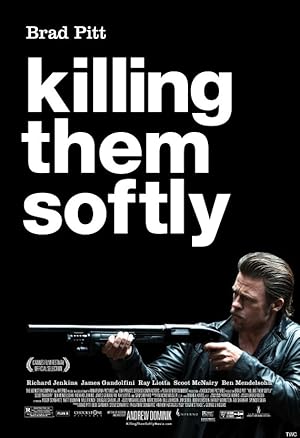
Killing Them Softly
Three amateurs stickup a Mob protected card game, causing the local criminal economy to collapse. Brad Pitt plays the hitman hired to track them down and restore order.
Despite a respectable budget of $15.0M, Killing Them Softly became a commercial success, earning $37.9M worldwide—a 153% return.
3 wins & 9 nominations


Plot Structure
Story beats plotted across runtime


Narrative Arc
Emotional journey through the story's key moments
Story Circle
Blueprint 15-beat structure
Arcplot Score Breakdown
Weighted: Precision (70%) + Arc (15%) + Theme (15%)
Killing Them Softly (2012) demonstrates meticulously timed story structure, characteristic of Andrew Dominik's storytelling approach. This structural analysis examines how the film's 15-point plot structure maps to proven narrative frameworks across 1 hour and 37 minutes. With an Arcplot score of 7.4, the film balances conventional beats with creative variation.
Structural Analysis
The Status Quo at 1 minutes (1% through the runtime) establishes Obama's 2008 campaign speech plays over images of post-industrial decay. A beaten man stumbles through a desolate urban landscape, establishing the film's bleak economic and moral wasteland.. The analysis reveals that this early placement immediately immerses viewers in the story world.
The inciting incident occurs at 12 minutes when Frankie and Russell execute the card game robbery, wearing rubber gloves and masks. They steal approximately $30,000 from Markie's game, setting the criminal economy into motion.. At 13% through the film, this Disruption is delayed, allowing extended setup of the story world. This beat shifts the emotional landscape, launching the protagonist into the central conflict.
The First Threshold at 23 minutes marks the transition into Act II, occurring at 23% of the runtime. This shows the protagonist's commitment to Jackie Cogan accepts the contract to restore order to the criminal economy. He commits to a methodical plan: make an example of Markie, find the real robbers, and eliminate them efficiently., moving from reaction to action.
At 47 minutes, the Midpoint arrives at 49% of the runtime—precisely centered, creating perfect narrative symmetry. Notably, this crucial beat Mickey arrives but is completely dysfunctional - drunk, paranoid, soliciting prostitutes, and unreliable. Jackie realizes he can't depend on him. The plan is falling apart, mirroring the broader economic collapse playing on TVs throughout., fundamentally raising what's at risk. The emotional intensity shifts, dividing the narrative into clear before-and-after phases.
The Collapse moment at 71 minutes (73% through) represents the emotional nadir. Here, Jackie is forced to kill Mickey himself - a burned out, pathetic shell of a man in a hotel room. The "whiff of death" is literal but utterly unglamorous. This is murder as garbage disposal, reflecting complete moral collapse., illustrates the protagonist at their lowest point. This beat's placement in the final quarter sets up the climactic reversal.
The Second Threshold at 76 minutes initiates the final act resolution at 79% of the runtime. Jackie accepts that professional detachment is impossible. He must do the work himself, get his hands dirty, and complete the job regardless of his personal code. He synthesizes efficiency with necessity., demonstrating the transformation achieved throughout the journey.
Emotional Journey
Killing Them Softly's emotional architecture traces a deliberate progression across 15 carefully calibrated beats.
Narrative Framework
This structural analysis employs proven narrative structure principles that track dramatic progression. By mapping Killing Them Softly against these established plot points, we can identify how Andrew Dominik utilizes or subverts traditional narrative conventions. The plot point approach reveals not only adherence to structural principles but also creative choices that distinguish Killing Them Softly within the crime genre.
Andrew Dominik's Structural Approach
Among the 2 Andrew Dominik films analyzed on Arcplot, the average structural score is 7.4, reflecting strong command of classical structure. Killing Them Softly exemplifies the director's characteristic narrative technique. For comparative analysis, explore the complete Andrew Dominik filmography.
Comparative Analysis
Additional crime films include The Bad Guys, Rustom and The Whole Ten Yards. For more Andrew Dominik analyses, see The Assassination of Jesse James by the Coward Robert Ford.
Plot Points by Act
Act I
SetupStatus Quo
Obama's 2008 campaign speech plays over images of post-industrial decay. A beaten man stumbles through a desolate urban landscape, establishing the film's bleak economic and moral wasteland.
Theme
Driver lectures Frankie about business and the economy while discussing the card game robbery. "This is a business" - the central thesis that crime, like America, operates purely on economic principles without sentiment.
Worldbuilding
Introduction to the criminal underworld: Johnny Amato pitches Frankie and Russell on robbing Markie Trattman's card game. The world is cynical, cash-strapped, and everyone is looking for an angle. Markie is established as having robbed his own game before.
Disruption
Frankie and Russell execute the card game robbery, wearing rubber gloves and masks. They steal approximately $30,000 from Markie's game, setting the criminal economy into motion.
Resistance
Word spreads about the robbery. Criminal financiers debate what to do. Driver brings in Jackie Cogan as a professional problem-solver. Jackie assesses the situation, concludes Markie must be killed (even though he didn't do it) because "appearance matters."
Act II
ConfrontationFirst Threshold
Jackie Cogan accepts the contract to restore order to the criminal economy. He commits to a methodical plan: make an example of Markie, find the real robbers, and eliminate them efficiently.
Mirror World
Jackie meets with Driver repeatedly at various diners and bars. Driver represents the bureaucratic, corporate side of crime - always concerned with costs, committees, and procedures. This relationship embodies the theme: crime as soulless business.
Premise
The promise of the premise: watching a professional criminal methodically execute a job. Markie is brutally beaten and killed. Jackie identifies the real robbers. He brings in Mickey (James Gandolfini), a washed-up hitman, to kill Russell because Jackie doesn't like to kill people he's spoken to.
Midpoint
Mickey arrives but is completely dysfunctional - drunk, paranoid, soliciting prostitutes, and unreliable. Jackie realizes he can't depend on him. The plan is falling apart, mirroring the broader economic collapse playing on TVs throughout.
Opposition
Jackie must adjust his approach. Mickey is too broken to function. The bureaucracy (Driver) is haggling over costs. Russell is paranoid and hard to locate. Everything is harder and messier than it should be. The system is grinding and inefficient.
Collapse
Jackie is forced to kill Mickey himself - a burned out, pathetic shell of a man in a hotel room. The "whiff of death" is literal but utterly unglamorous. This is murder as garbage disposal, reflecting complete moral collapse.
Crisis
Jackie processes what he must do: personally kill Russell and Frankie despite his preference for emotional distance. The job has become everything he wanted to avoid - intimate, messy, and uncomfortably personal.
Act III
ResolutionSecond Threshold
Jackie accepts that professional detachment is impossible. He must do the work himself, get his hands dirty, and complete the job regardless of his personal code. He synthesizes efficiency with necessity.
Synthesis
Jackie systematically eliminates the targets. Russell is killed in a car (Jackie shoots from a distance with a shotgun). Frankie is executed clinically. Jackie meets Driver for final payment, demanding his full fee despite Driver's attempts to negotiate down.
Transformation
Jackie's final monologue over Obama's victory speech: "America is not a country, it's a business. Now fucking pay me." The idealistic opening is now answered with pure cynicism. The transformation is complete degradation of hope into transactional nihilism.