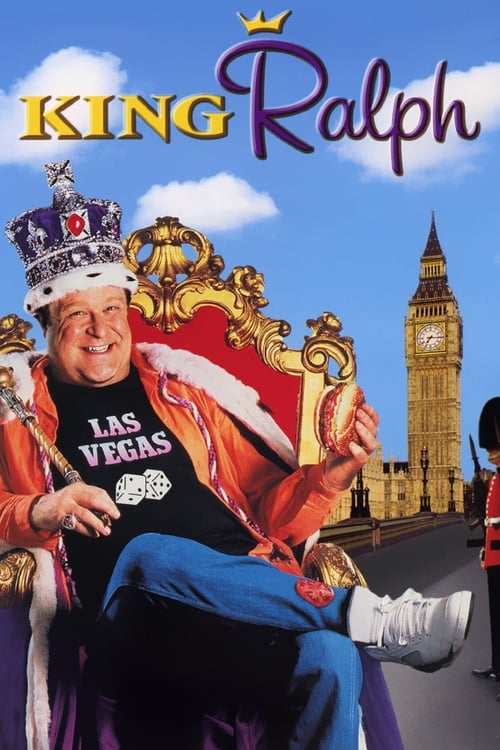
King Ralph
As the only relative in line to ascend the Royal throne, a down-on-his-luck American slob must learn the ways of the English.
Despite a mid-range budget of $23.0M, King Ralph became a financial success, earning $52.5M worldwide—a 128% return.


Plot Structure
Story beats plotted across runtime


Narrative Arc
Emotional journey through the story's key moments
Story Circle
Blueprint 15-beat structure
Arcplot Score Breakdown
Weighted: Precision (70%) + Arc (15%) + Theme (15%)
King Ralph (1991) exhibits meticulously timed dramatic framework, characteristic of David S. Ward's storytelling approach. This structural analysis examines how the film's 15-point plot structure maps to proven narrative frameworks across 1 hour and 37 minutes. With an Arcplot score of 7.3, the film balances conventional beats with creative variation.
Structural Analysis
The Status Quo at 1 minutes (1% through the runtime) establishes Ralph Jones performs as a lounge singer in Las Vegas, living a carefree, undignified life of burgers, beer, and cheap entertainment—completely unaware of his royal heritage.. Significantly, this early placement immediately immerses viewers in the story world.
The inciting incident occurs at 11 minutes when The entire royal family is electrocuted in a freak accident during a group photograph, wiping out the line of succession and creating a constitutional crisis for Britain.. At 12% through the film, this Disruption aligns precisely with traditional story structure. This beat shifts the emotional landscape, launching the protagonist into the central conflict.
The First Threshold at 25 minutes marks the transition into Act II, occurring at 26% of the runtime. This indicates the protagonist's commitment to Ralph makes the active choice to accept the crown and travels to England, committing to become king despite his complete lack of preparation. He crosses into the world of royalty., moving from reaction to action.
At 49 minutes, the Midpoint arrives at 50% of the runtime—precisely centered, creating perfect narrative symmetry. Structural examination shows that this crucial beat Ralph delivers a successful public appearance or speech, winning over some of the British public. He seems to be finding his footing as king, and his relationship with Miranda deepens. False victory—things appear to be working out., fundamentally raising what's at risk. The emotional intensity shifts, dividing the narrative into clear before-and-after phases.
The Collapse moment at 72 minutes (74% through) represents the emotional nadir. Here, Ralph is confronted with proof that he's unfit to be king—either through a major scandal involving Miranda or a public humiliation. He faces abdication or removal. His dream of proving himself worthy dies, and he prepares to return to his old life., indicates the protagonist at their lowest point. This beat's placement in the final quarter sets up the climactic reversal.
The Second Threshold at 77 minutes initiates the final act resolution at 80% of the runtime. Ralph discovers Lord Graves's treachery or realizes that being a good king means being true to himself while serving his people. He synthesizes his common-man values with royal duty, finding new resolve to fight for the throne on his own terms., demonstrating the transformation achieved throughout the journey.
Emotional Journey
King Ralph's emotional architecture traces a deliberate progression across 15 carefully calibrated beats.
Narrative Framework
This structural analysis employs a 15-point narrative structure framework that maps key story moments. By mapping King Ralph against these established plot points, we can identify how David S. Ward utilizes or subverts traditional narrative conventions. The plot point approach reveals not only adherence to structural principles but also creative choices that distinguish King Ralph within the comedy genre.
David S. Ward's Structural Approach
Among the 5 David S. Ward films analyzed on Arcplot, the average structural score is 7.1, reflecting strong command of classical structure. King Ralph represents one of the director's most structurally precise works. For comparative analysis, explore the complete David S. Ward filmography.
Comparative Analysis
Additional comedy films include The Bad Guys, Ella Enchanted and The Evening Star. For more David S. Ward analyses, see Major League II, Major League and The Program.
Plot Points by Act
Act I
SetupStatus Quo
Ralph Jones performs as a lounge singer in Las Vegas, living a carefree, undignified life of burgers, beer, and cheap entertainment—completely unaware of his royal heritage.
Theme
Lord Graves or another royal advisor comments on the importance of duty and tradition, stating that nobility is about service and responsibility, not privilege—establishing the film's central question about what makes someone worthy of leadership.
Worldbuilding
The entire British royal family is introduced at a formal event. We see the rigid protocols of monarchy, the expectations of nobility, and the British establishment. Ralph's ordinary life in Vegas is contrasted with royal grandeur.
Disruption
The entire royal family is electrocuted in a freak accident during a group photograph, wiping out the line of succession and creating a constitutional crisis for Britain.
Resistance
Royal genealogists search desperately for an heir. Ralph is located in Las Vegas and informed of his heritage. He resists, debates whether to accept, and is coached by Lord Willingham on royal protocol. Ralph is clearly unprepared and out of his depth.
Act II
ConfrontationFirst Threshold
Ralph makes the active choice to accept the crown and travels to England, committing to become king despite his complete lack of preparation. He crosses into the world of royalty.
Mirror World
Ralph meets Miranda Greene, a commoner and stripper who becomes his love interest. She represents the authentic, unpretentious world Ralph came from and will teach him that he can be both himself and a good king.
Premise
Ralph's fish-out-of-water comedy as king: he breaks protocol, embarrasses advisors, eats with his hands, plays darts in pubs, and brings American casualness to British formality. The "promise of the premise"—watching an everyman fumble through being king.
Midpoint
Ralph delivers a successful public appearance or speech, winning over some of the British public. He seems to be finding his footing as king, and his relationship with Miranda deepens. False victory—things appear to be working out.
Opposition
Lord Graves schemes to remove Ralph from the throne. The press turns hostile. Ralph's relationship with Miranda is exposed and scandalized. The establishment closes ranks against him. His common-man approach is increasingly seen as a liability rather than an asset.
Collapse
Ralph is confronted with proof that he's unfit to be king—either through a major scandal involving Miranda or a public humiliation. He faces abdication or removal. His dream of proving himself worthy dies, and he prepares to return to his old life.
Crisis
Ralph contemplates giving up the throne and returning to Las Vegas. He reflects on whether he truly belongs in this world, processes the pain of failure and loss of Miranda, and wrestles with his identity—is he Ralph the lounge singer or King Ralph?
Act III
ResolutionSecond Threshold
Ralph discovers Lord Graves's treachery or realizes that being a good king means being true to himself while serving his people. He synthesizes his common-man values with royal duty, finding new resolve to fight for the throne on his own terms.
Synthesis
Ralph confronts Lord Graves and the establishment, exposes the conspiracy, and makes a final speech or action that demonstrates he has become a true king—one who combines dignity with humanity. He wins back public support and reconciles with Miranda.
Transformation
Ralph, now confident and regal but still authentically himself, is shown as a beloved king who has transformed the monarchy. The closing image mirrors the opening but shows a man who has grown from irresponsible entertainer to responsible leader without losing his soul.