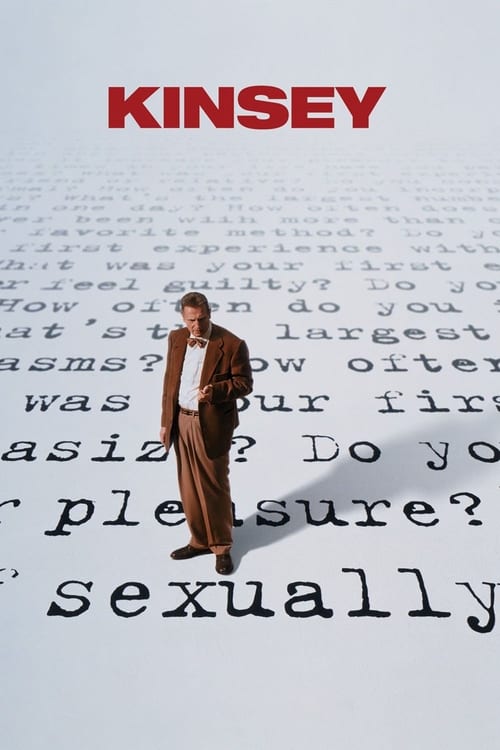
Kinsey
Kinsey is a portrait of researcher Alfred Kinsey, driven to uncover the most private secrets of a nation. What begins for Kinsey as a scientific endeavor soon takes on an intensely personal relevance, ultimately becoming an unexpected journey into the mystery of human behavior.
Working with a small-scale budget of $11.0M, the film achieved a respectable showing with $17.1M in global revenue (+55% profit margin).
Nominated for 1 Oscar. 17 wins & 51 nominations


Plot Structure
Story beats plotted across runtime


Narrative Arc
Emotional journey through the story's key moments
Story Circle
Blueprint 15-beat structure
Arcplot Score Breakdown
Weighted: Precision (70%) + Arc (15%) + Theme (15%)
Kinsey (2004) showcases strategically placed story structure, characteristic of Bill Condon's storytelling approach. This structural analysis examines how the film's 15-point plot structure maps to proven narrative frameworks across 1 hour and 58 minutes. With an Arcplot score of 7.3, the film balances conventional beats with creative variation.
Characters
Cast & narrative archetypes

Alfred Kinsey
Clara McMillen
Clyde Martin
Alfred Seguine Kinsey Sr.
Wardell Pomeroy
Paul Gebhard
Thurman Rice
Main Cast & Characters
Alfred Kinsey
Played by Liam Neeson
A biology professor who revolutionizes the study of human sexuality through groundbreaking research, challenging societal norms and his own repressed upbringing.
Clara McMillen
Played by Laura Linney
Kinsey's intelligent and supportive wife who becomes his research collaborator and challenges traditional views on marriage and sexuality.
Clyde Martin
Played by Peter Sarsgaard
A charming graduate student who becomes Kinsey's principal research assistant and develops complex personal relationships within the research team.
Alfred Seguine Kinsey Sr.
Played by John Lithgow
Kinsey's strict, authoritarian father whose rigid religious views on morality create lasting psychological impact on his son.
Wardell Pomeroy
Played by Chris O'Donnell
A loyal member of Kinsey's research team who conducts thousands of sexual history interviews with methodical precision.
Paul Gebhard
Played by Timothy Hutton
A scholarly researcher who joins Kinsey's team and provides anthropological perspective to the sexuality studies.
Thurman Rice
Played by Tim Curry
A conservative professor and moral guardian who opposes Kinsey's research and represents institutional resistance to sexual science.
Structural Analysis
The Status Quo at 1 minutes (1% through the runtime) establishes Young Alfred Kinsey listens to his authoritarian father's fire-and-brimstone sermon condemning modern vices. Establishes repressive moral environment and Kinsey's curiosity despite strict religious upbringing.. Significantly, this early placement immediately immerses viewers in the story world.
The inciting incident occurs at 13 minutes when Students approach Kinsey with sexual questions he cannot answer with scientific data. Realizes shocking lack of factual information about human sexuality despite universal importance - ignorance is harming people.. At 11% through the film, this Disruption aligns precisely with traditional story structure. This beat shifts the emotional landscape, launching the protagonist into the central conflict.
The First Threshold at 29 minutes marks the transition into Act II, occurring at 24% of the runtime. This reveals the protagonist's commitment to Kinsey makes the active choice to begin conducting sex history interviews, developing his standardized questionnaire. Commits fully to sexuality research despite professional risk and social taboo., moving from reaction to action.
At 58 minutes, the Midpoint arrives at 50% of the runtime—precisely centered, creating perfect narrative symmetry. Significantly, this crucial beat Publication of "Sexual Behavior in the Human Male" becomes massive bestseller. Kinsey achieves fame, appears on cover of Time magazine. False victory - success seems complete but consequences are brewing., fundamentally raising what's at risk. The emotional intensity shifts, dividing the narrative into clear before-and-after phases.
The Collapse moment at 88 minutes (75% through) represents the emotional nadir. Here, Rockefeller Foundation withdraws funding due to political pressure. Kinsey's life work faces extinction. Whiff of death - his research legacy, professional reputation, and life's purpose are dying. Team must disband., demonstrates the protagonist at their lowest point. This beat's placement in the final quarter sets up the climactic reversal.
The Second Threshold at 94 minutes initiates the final act resolution at 80% of the runtime. Clara and Kinsey reconcile emotionally. He realizes his human connections matter as much as the data. Synthesis of scientific objectivity with emotional truth - both are necessary. Decides to continue despite opposition., demonstrating the transformation achieved throughout the journey.
Emotional Journey
Kinsey's emotional architecture traces a deliberate progression across 15 carefully calibrated beats.
Narrative Framework
This structural analysis employs a 15-point narrative structure framework that maps key story moments. By mapping Kinsey against these established plot points, we can identify how Bill Condon utilizes or subverts traditional narrative conventions. The plot point approach reveals not only adherence to structural principles but also creative choices that distinguish Kinsey within the drama genre.
Bill Condon's Structural Approach
Among the 10 Bill Condon films analyzed on Arcplot, the average structural score is 7.0, reflecting strong command of classical structure. Kinsey represents one of the director's most structurally precise works. For comparative analysis, explore the complete Bill Condon filmography.
Comparative Analysis
Additional drama films include After Thomas, South Pacific and Dirty Dancing: Havana Nights. For more Bill Condon analyses, see The Twilight Saga: Breaking Dawn - Part 1, Dreamgirls and The Good Liar.
Plot Points by Act
Act I
SetupStatus Quo
Young Alfred Kinsey listens to his authoritarian father's fire-and-brimstone sermon condemning modern vices. Establishes repressive moral environment and Kinsey's curiosity despite strict religious upbringing.
Theme
Kinsey's biology professor states: "The truth is what we observe, not what we believe." Theme of scientific objectivity versus moral dogma is introduced through academic mentorship.
Worldbuilding
Kinsey becomes a professor specializing in gall wasps, collecting thousands of specimens. His meticulous scientific methodology, awkward social skills, and dedication to empirical observation are established. Introduction to university life and marriage course.
Disruption
Students approach Kinsey with sexual questions he cannot answer with scientific data. Realizes shocking lack of factual information about human sexuality despite universal importance - ignorance is harming people.
Resistance
Kinsey debates whether to shift from gall wasp research to human sexuality. Resistance from colleagues and administration. His courtship and marriage to Clara McMillen reveals personal sexual difficulties, strengthening his conviction about need for research.
Act II
ConfrontationFirst Threshold
Kinsey makes the active choice to begin conducting sex history interviews, developing his standardized questionnaire. Commits fully to sexuality research despite professional risk and social taboo.
Mirror World
Clyde Martin, a charismatic young student, becomes Kinsey's first research assistant. Their relationship (professional and personal) embodies the central tension between scientific detachment and human emotional complexity.
Premise
The research team conducts thousands of interviews across America, uncovering vast diversity in sexual behavior. "Fun and games" of revolutionary discovery - homosexuality prevalence, female sexuality, societal hypocrisy revealed through data.
Midpoint
Publication of "Sexual Behavior in the Human Male" becomes massive bestseller. Kinsey achieves fame, appears on cover of Time magazine. False victory - success seems complete but consequences are brewing.
Opposition
Backlash intensifies. Conservative groups attack Kinsey's morality. Personal complications from team's sexual openness strain relationships. Clara struggles with open marriage arrangement. Funding pressures mount as McCarthy-era politics turn hostile.
Collapse
Rockefeller Foundation withdraws funding due to political pressure. Kinsey's life work faces extinction. Whiff of death - his research legacy, professional reputation, and life's purpose are dying. Team must disband.
Crisis
Kinsey suffers physical and emotional breakdown. Confronts the personal costs of his work - damaged relationships, health problems, professional isolation. Dark introspection about whether pursuit of truth was worth the destruction.
Act III
ResolutionSecond Threshold
Clara and Kinsey reconcile emotionally. He realizes his human connections matter as much as the data. Synthesis of scientific objectivity with emotional truth - both are necessary. Decides to continue despite opposition.
Synthesis
Kinsey publishes "Sexual Behavior in the Human Female" despite obstacles. Final interview scenes show him more humble, acknowledging limits of science. Continues teaching and advocating for sex education until his death approaches.
Transformation
Elderly Kinsey in forest, observing nature with Clara - mirrors opening but transformed. No longer the rigid scientist or repressed child. Has integrated scientific curiosity with human compassion. Legacy endures despite controversy.